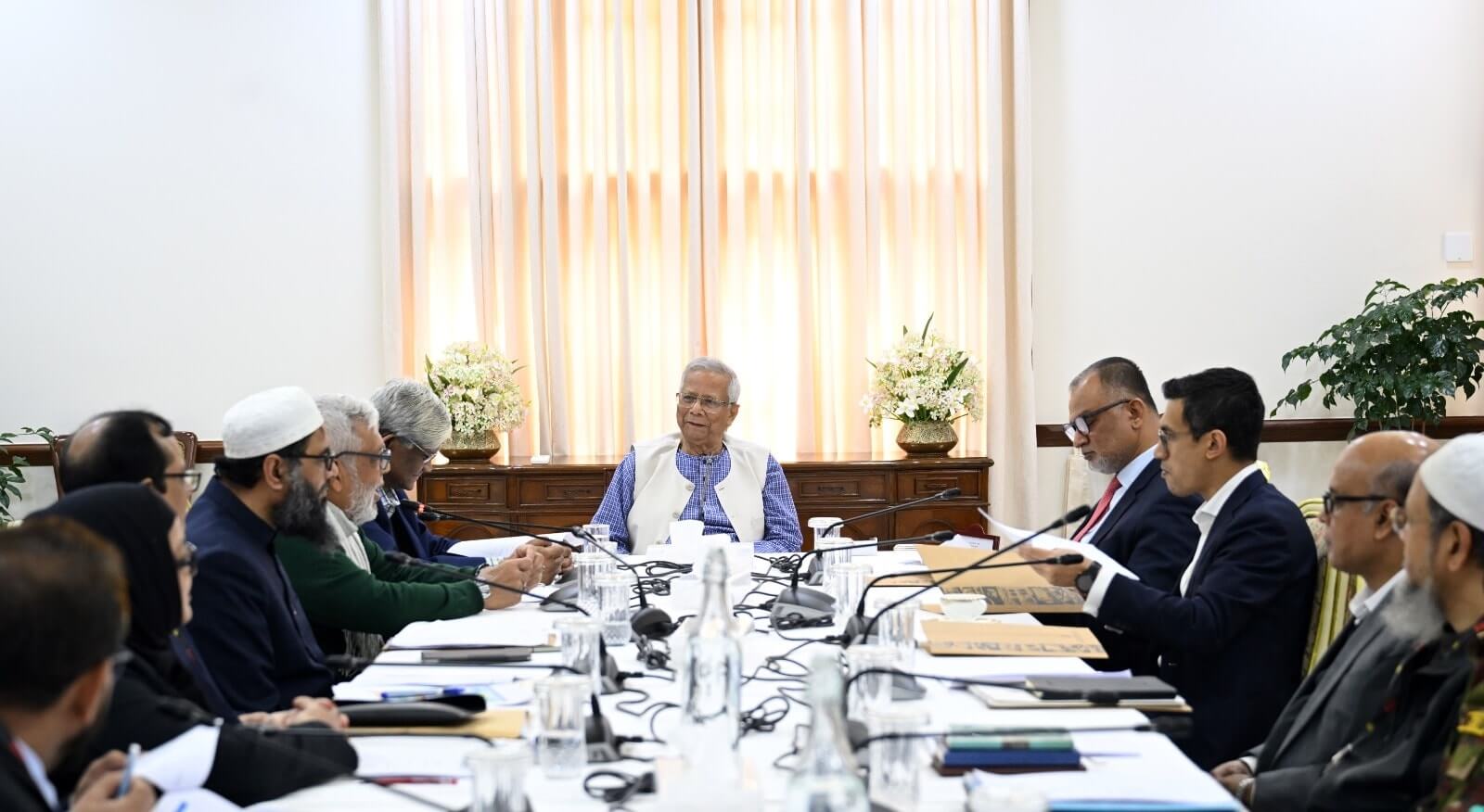
Chief Adviser Professor Muhammad Yunus on Tuesday (January 7) directed authorities to establish an independent research and development institution for Bangladesh’s power and energy sectors, stressing that it must function outside ministerial control to support evidence-based policymaking.
He gave the instruction while presiding over a meeting on the Power and Energy Sector Master Plan 2026–2050 at the State Guest House Jamuna. Prof Yunus said the new body should maintain strong links with global research institutions and assist the government in long-term policy formulation.
Describing power and energy as the “lifeline of the economy,” the Chief Adviser said past initiatives in the sector were fragmented and poorly planned. “We must rethink everything from the beginning. Wrong locations and flawed structures must not be repeated,” he said, also calling for expanded research into alternative energy sources.

According to a BSS report, the Ministry of Power, Energy and Mineral Resources presented the master plan, which aims to ensure reliable, affordable and sustainable energy through optimal use of domestic resources, improved efficiency, enhanced energy security and environmental responsibility.
The plan will be implemented in three phases—2026–2030, 2030–2040 and 2040–2050. Priority projects in the first phase include offshore exploration, boosting gas production, securing LNG supply, expanding refinery capacity and increasing strategic energy storage.
Long-term strategies cover offshore gas development, petrochemical expansion, hydrogen and ammonia infrastructure, geothermal energy, and tidal and ocean wave-based power generation.
Electricity demand is projected to rise from 17 gigawatts to 59 gigawatts by 2050. While total emissions will increase, cleaner technologies are expected to cut emissions intensity from 0.62 to 0.35 tonnes of CO₂ per megawatt-hour, with potential reductions of 64.5 million tonnes annually by 2050.
The master plan estimates investment needs of US$70–85 billion for the energy sector and US$107.25 billion for the power sector between 2026 and 2050.
BOB Post