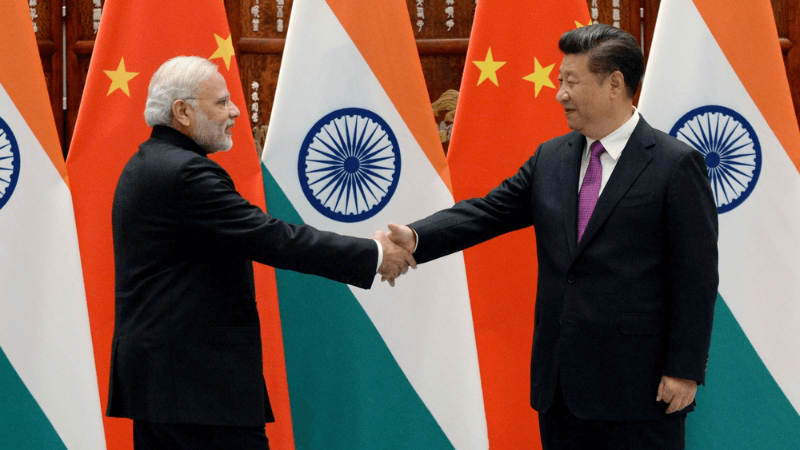
China is becoming more influential in the Indian Ocean area, as seen by its recent increased attempts to strengthen security relations with those nations. Notably, China demonstrated its strategic expansion by signing a new security deal with the Maldives. Without providing any specifics, the Maldives Ministry of Defense declared the agreement on March 4, 2024, to strengthen bilateral relations. Parallel to this, a Chinese military team left on a ten-day visit of the Maldives, Sri Lanka, and Nepal, where they held talks on bilateral defense cooperation and common regional security issues.
India, however, is adjusting its approach in reaction to China's forceful actions. Following the request of Maldivian President Mohamed Muizzu, India has made a significant move by beginning the evacuation of over 80 security troops stationed in the Maldives. This change in staff is a strategic maneuver by India as it manages China's growing influence in the area. India is afraid of possible naval deployments based on new information because of the possibility of increased Chinese activity in the Indian Ocean, including research vessel visits.
According to analysts, China's recent actions are a component of a longer-term, more comprehensive plan to strengthen its security presence in the area. Australian National University senior research fellow David Brewster emphasizes China's opportunistic strategy, which takes advantage of political factors in target nations like the Maldives. Furthermore, China's support for the Maldives' sovereignty and autonomous cooperation with all parties was reiterated by Wang Wenbin, a spokesman for the Chinese Foreign Ministry.
India is acting proactively to protect its interests in the Indian Ocean, aware of the consequences of China's growing dominance. Building a new naval facility on Minicoy, the southernmost island in India's Lakshadweep archipelago, and enhancing marine capabilities are examples of recent attempts. Vice President of Studies and Foreign Policy at the Observer Research Foundation Harsh Pant highlights India's multipronged strategy that combines building out its infrastructure, being cognizant of the sea, and forming strategic alliances with other democratic nations.
China and India are engaged in a fierce struggle for control of the Indian Ocean area, which is highlighted by the changing dynamics in the region. The region is set up for significant geopolitical contestation shortly due to China's ambitious ambitions for increased naval presence and India's aggressive actions to counterweight. The Indian Ocean may see increased strategic conflicts between major countries, as suggested by Srikanth Kondapalli, a professor of China studies at Jawaharlal Nehru University in India.
BOB Post