The historically calm waters of the Bay of Bengal are undergoing significant changes as China's emergence as a global power reshapes the region's maritime landscape. This transformation is marked by strategic moves, infrastructure developments, and military partnerships that have potential implications for regional security.
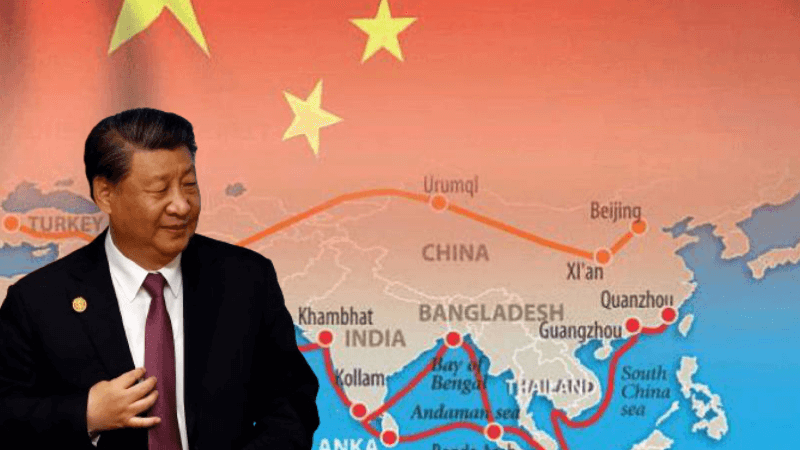
China's expanding footprint in the Bay of Bengal includes the establishment of naval bases in Djibouti and Ream (Cambodia), providing strategic outposts to safeguard vital trade routes. Additionally, infrastructure projects such as pipelines from Myanmar and port development in Kyaukphyu aim to reduce China's dependence on the vulnerable Malacca Strait, a critical passage for global trade. The region's geopolitical significance is further underscored by China's involvement in Myanmar's naval modernization, raising concerns about potential proxy utilization. Economic initiatives like the China-Pakistan Economic Corridor and projects on Ramree Island in Myanmar are knitting China more closely to the Bay of Bengal.
As maritime trade arteries like the Malacca Strait, Lombok Strait, and Six Degree Channel remain crucial for the economies of Asia, any disruptions at these choke points could have severe consequences. While the Bay of Bengal has historically been spared major conflicts, the assertive actions of China and regional tensions have raised concerns about the possibility of the region becoming a battleground for larger power struggles. Key uncertainties include whether China will station warships in Myanmar, how India will respond to encirclement concerns, and the potential for regional cooperation to ensure stability and shared prosperity.
The Bay of Bengal is no longer a tranquil backwater. The rising competition, increased military presence, and dependence on critical maritime trade routes make the region susceptible to potential flashpoints. Collaborative efforts and dialogue among regional powers are crucial for maintaining stability and preventing escalation in this new era of great power politics.
BOB Post