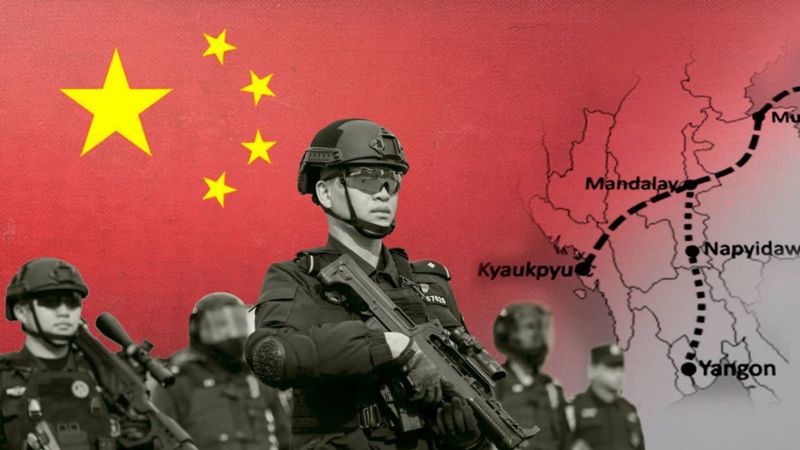
China’s proposal to establish a joint security company with Myanmar’s military junta has stirred controversy, raising questions about national sovereignty and highlighting the junta's perceived inability to maintain security.
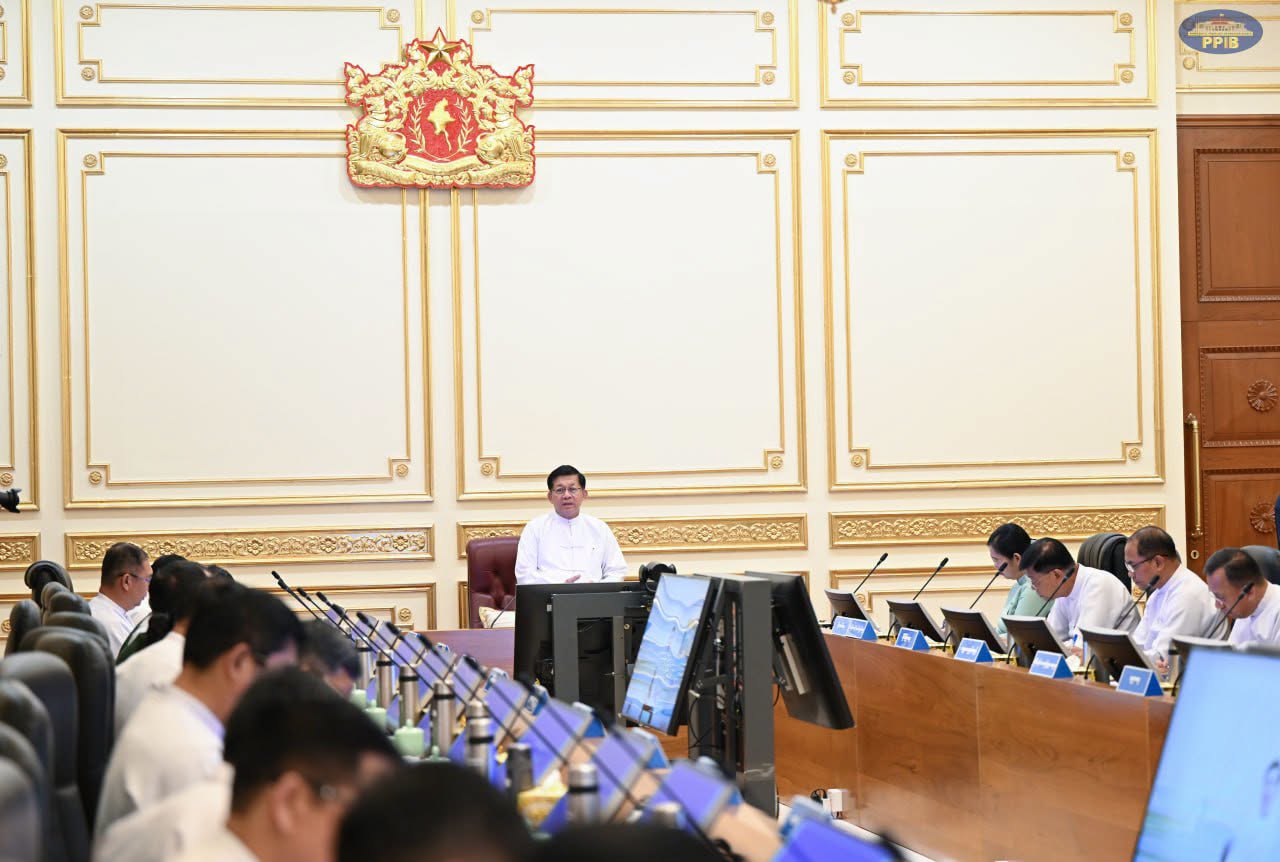
A Myanmar Gazette report on November 8 revealed that the junta formed a 13-member committee on October 22 to evaluate China’s proposal and draft a memorandum of understanding (MoU). The committee has been tasked with reviewing logistics, such as the import of weapons and security equipment, while attempting to preserve Myanmar’s sovereignty.
Triggered by Security Concerns
Observers suggest the move may stem from the October 18 bombing of China’s consulate in Mandalay, emphasizing Beijing's growing unease over its investments in Myanmar amidst political unrest.
“China’s primary concern in Myanmar is stability for its Belt and Road Initiative projects,” said a Myanmar scholar who spoke anonymously due to safety concerns. “The junta’s inability to quell the revolution has pushed China to seek alternative security measures.”
The scholar noted that the proposal strategically avoids referencing foreign troops to circumvent constitutional restrictions, framing it as a private venture. However, critics view it as a thinly veiled breach of sovereignty, putting even the junta in a politically uncomfortable position.
Struggles to Secure Chinese Investments
China’s investments under the China-Myanmar Economic Corridor (CMEC) have increasingly become targets amid Myanmar’s conflict. Attacks, such as the January 2022 assault on a nickel-processing plant, illustrate rising threats to infrastructure critical to Beijing's interests.
Jason Tower, Burma country director at the United States Institute of Peace, highlighted the junta’s weakening control, pointing to the daylight attack on China’s Mandalay consulate as evidence of deteriorating security.
“China was deeply shocked and strongly condemned the attack,” Tower noted, reflecting growing Chinese frustration with the junta’s failings.
China’s Reluctant Intervention
Thomas Kean, a senior consultant at the International Crisis Group, explained that Beijing has maintained delicate ties with the junta, ethnic armed organizations, and opposition groups, underscoring its strategic focus on stability.
However, Beijing’s military aid, including combat aircraft, suggests a shift as the junta loses territorial control. “China doesn’t want a disorderly collapse in Myanmar,” said Kean. “But deeper involvement risks alienating both the public and regional powers like India.”
Junta Overstretched Amid Widespread Unrest
Security expert Abdul Rahman Yaacob noted the junta’s overstretched military forces, fighting on multiple fronts. “They are resorting to conscripts, but numbers don’t guarantee quality,” he said.
He added that opposition groups are increasingly operating in urban areas, posing new challenges for the regime.
A Pivotal Decision for Beijing
Experts caution that introducing Chinese security forces could escalate tensions in Myanmar’s already volatile landscape. “The joint security proposal is a potential game-changer for revolutionary forces and ethnic armed groups,” the Myanmar scholar warned, urging opposition groups to prepare.
As Beijing navigates the complexities of safeguarding its investments, it faces a precarious balancing act between long-term economic interests and immediate political stability in Myanmar.
BOB Post