Recent reports indicate that China has intensified its presence in the ASEAN region, particularly in the Indian Ocean and Bay of Bengal, as part of a broader strategy to bolster its influence in managing water resources in the future.
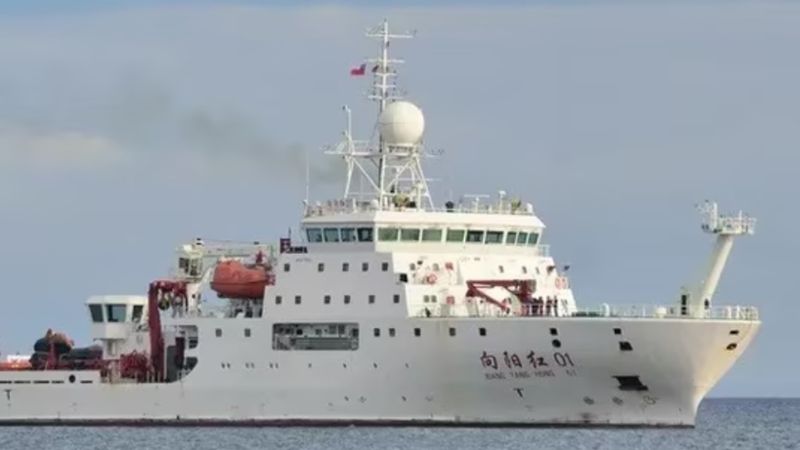
According to the Hindustan Times, a Chinese "spy ship" has been deployed in the Bay of Bengal for approximately one month, marking a significant development in China's maritime activities in the area. The vessel in question, identified as the high endurance surveillance vessel Xiang Yang Hong 01, is currently stationed approximately 600 miles west of the Andaman Islands, positioned in international waters. It is reported to be engaged in trials of high endurance autonomous underwater vehicles capable of operating at depths of nearly 12km for extended periods, facilitating ocean bed mapping and collection of oceanographic data, which could be vital for future submarine operations.
The Xiang Yang Hong 01 entered the Bay of Bengal around March 7–8 and has since remained in the area, conducting its operations.
In addition to the Xiang Yang Hong 01, another Chinese survey ship, the Xiang Yang Hong 03, has been observed utilizing unmanned systems for ocean observation and hydrographic surveying in the vicinity of the Maldives, approximately 350 miles away. This activity coincides with the current administration in Male, enhancing China's collaboration in the region.
Furthermore, a third Chinese vessel, named Da Yang Hao, has been identified approximately 1,200 miles south of Port Louis in Mauritius, though specific activities of this vessel have not been disclosed.
Despite concerns raised by regional stakeholders, including India, about China's growing maritime presence, there are limitations to taking action against these vessels as they operate within international waters. This situation underscores the complexities of managing maritime activities in strategically significant regions and the challenges in regulating foreign naval operations in open seas.
BOB Post