Chief Adviser Muhammad Yunus has directed the immediate implementation of e-learning facilities in at least 100 schools across the Chittagong Hill Tracts (CHT) by the end of 2025, underscoring the government’s commitment to inclusive and technology-driven education in underdeveloped regions.
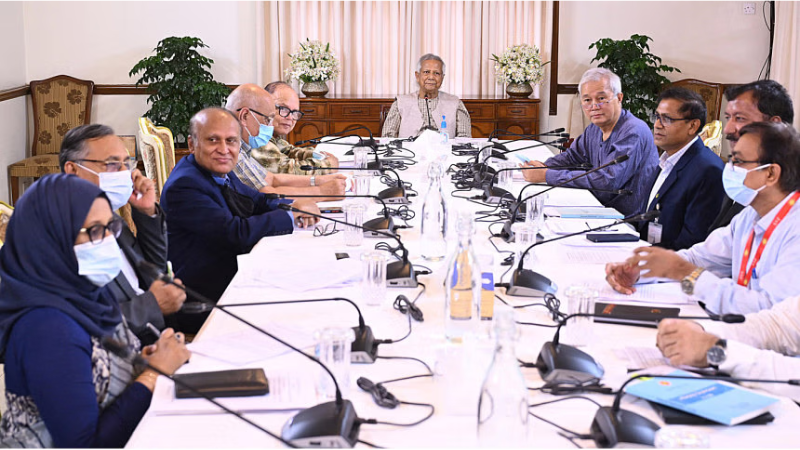
The directive came during a high-level meeting held today at the State Guesthouse Jamuna in the capital. Attendees included CHT Affairs Adviser Supradeep Chakma, Liberation War and Disaster Management Adviser Faruq-e-Azam, Food and Land Adviser Ali Imam Majumder, Principal Secretary to the Chief Adviser Siraj Uddin Mia, and top officials from the Department of Primary and Secondary Education.

Officials at the meeting highlighted three key obstacles to virtual education rollout in the CHT: lack of electricity in remote areas, limited internet access, and a shortage of trained teachers.
To overcome these hurdles, CA Yunus proposed deploying solar power systems to mitigate power shortages, and leveraging mobile networks and satellite services like Starlink to bridge the connectivity gap. He also called for the hiring of contract-based instructors, selected according to an updated list of schools prepared by the education department.
“To ensure quality education in underdeveloped areas of CHT, we must first identify 100 schools where internet-based education can be introduced,” said CA Yunus. “We need a detailed list of what each school lacks—whether internet, equipment, or other resources—and begin implementation immediately. Classes must start within this year.”

He added that skilled teachers from reputed urban institutions could deliver live or recorded lessons in subjects like mathematics, science, and English, offering equal learning opportunities to students in the hill districts.
“If given access to good teachers and resources, many talented students from these areas will excel,” he stressed.
Adviser Supradeep Chakma also briefed the meeting on ongoing initiatives to boost sustainable livelihoods and conserve the environment in the three CHT districts—Rangamati, Bandarban, and Khagrachari.
The Chief Adviser instructed all relevant ministries to work in tandem, calling for integrated development plans that promote both education and economic empowerment in the region.
This initiative is part of the government’s broader push to narrow regional disparities and ensure that no community is left behind in the digital era. The CHT region, long challenged by geographical isolation and infrastructural gaps, is now being positioned as a priority zone for inclusive development.
“Through innovative solutions and coordinated action, the government remains committed to unlocking the potential of the Chittagong Hill Tracts,” CA Yunus concluded.
BOB Post