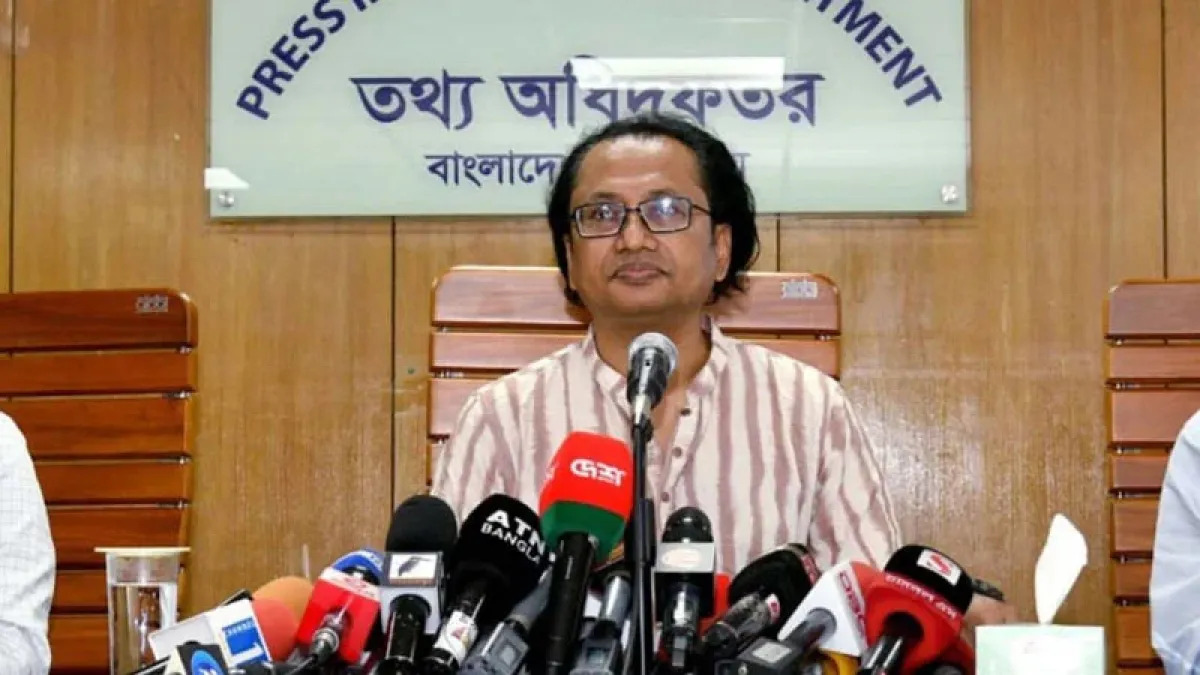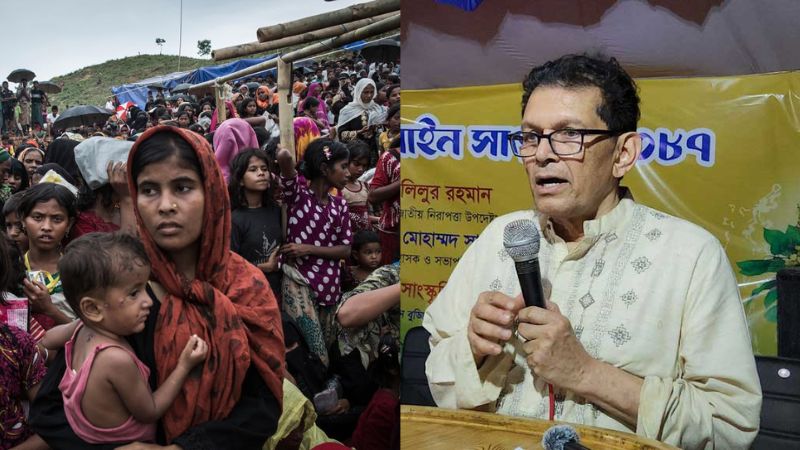
Khalilur Rahman, the chief advisor’s top aide, has stated that the current situation in Myanmar’s Rakhine State remains unsuitable for the safe and dignified return of Rohingya refugees.
"All doors remain open, and we’re in active dialogue with all concerned parties,” he told reporters in Cox’s Bazar on Friday evening, following his participation in the traditional Maha Sangrain Poweh — the Rakhine community’s vibrant water festival.
Earlier that day, Khalilur visited the Rohingya refugee camp in Ukhiya.
“We’re working with all stakeholders to restore peace and stability in Arakan, with the goal of creating an environment conducive to repatriation,” he said. He emphasized that only through collective international efforts can the repatriation process move forward effectively.
On April 4, the Chief Advisor’s Office revealed that Myanmar’s Deputy Prime Minister and Foreign Minister U Than Shwe had informed Bangladesh that a partial verification of a list of 800,000 Rohingya refugees was complete.
Myanmar has identified 180,000 individuals as eligible for return, a move Khalilur described as "timely." The update was shared during a meeting between Than Shwe and Khalilur on the sidelines of the recent BIMSTEC Summit in Bangkok.
He also noted that the verification process for another 70,000 Rohingya is underway, involving thorough cross-checks of names and photographs. Myanmar has also pledged to accelerate verification of the remaining 550,000 on the list.
During his visit to the camp, Khalilur briefed Rohingya leaders about an upcoming United Nations conference, where provisions have been made for their meaningful and unified participation.
“They will have a platform to share their hopes and aspirations for the future,” he said.
“We remain hopeful,” Khalilur added. “Our chief advisor has reiterated the commitment to helping the Rohingya celebrate their next Eid in their homeland.”
Since the military crackdown on August 25, 2017, over 750,000 Rohingya have fled Rakhine and taken refuge in Bangladesh, joining some 400,000 others already living in crowded camps near Cox’s Bazar. Today, the region hosts one of the largest refugee settlements in the world.
In response to global pressure, Myanmar’s former civilian government, led by Aung San Suu Kyi, signed a repatriation deal with Bangladesh in late 2017. However, attempts to begin repatriation in 2019 failed, as refugees refused to return without assurances of safety, rights, and citizenship.
The situation worsened following the 2021 military coup in Myanmar, which derailed diplomatic efforts. Subsequent mediation attempts, including those by China, have also faltered.
Fresh outbreaks of violence in Rakhine have since triggered a new wave of displacement. Chief Advisor Muhammad Yunus recently confirmed that over 80,000 more refugees have crossed into Bangladesh amid the latest conflict.
Yunus has called for renewed international focus and proposed a high-level conference during the upcoming 79th UN General Assembly. The event aims to gather key stakeholders — including donor countries and regional powers — to explore actionable solutions for repatriation.
UN Secretary-General António Guterres, who visited the Rohingya camps earlier this month, shared Iftar with displaced families and reaffirmed the UN’s dedication to ensuring a “voluntary, safe, and sustainable return” for the refugees.
“The ultimate solution lies in Myanmar,” Guterres emphasized.
Meanwhile, Khalilur visited several Kyangs (monasteries) in Cox’s Bazar as part of the Rakhine community's New Year celebrations.
Extending his greetings, he said: “Bangladesh is a nation rich in religious, ethnic, and cultural diversity. The country is in a festive mood, and we hope such celebrations will continue to strengthen our cultural harmony.”
BOB Post