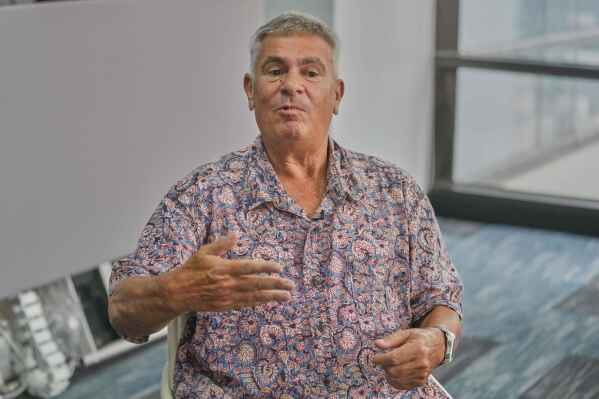
The Committee to Protect Journalists (CPJ) has issued an urgent demand for Thai authorities to immediately drop criminal defamation charges against Australian journalist Murray Hunter, warning that the country’s legal system is being weaponized to enforce foreign censorship.
In a statement released this week, the press freedom watchdog described the prosecution as a glaring example of "transnational legal intimidation." The CPJ urged Bangkok to return Hunter’s confiscated passport and stop its courts from becoming a venue for political vendettas originating outside its borders.
Hunter, a veteran Thailand-based reporter who contributes to various international publications, was indicted in Bangkok on November 17. Unusually, the complaint was not filed by a Thai national or entity, but by a representative of the Malaysian Communications and Multimedia Commission (MCMC). The charges stem from four articles Hunter published on his Substack blog between April 13 and 29 of last year, which critically analyzed the MCMC’s operations and alleged the regulator had become politicized.

According to Thai Lawyers for Human Rights, the pro bono group representing Hunter, Thai police claim these articles could mislead the public into believing the Malaysian regulator "operates unlawfully" or is "hostile to democratic governance."
The case has drawn sharp rebuke from media advocates who see it as a dangerous expansion of Thailand’s strict defamation laws. The Foreign Correspondents Club of Thailand noted that this appears to be the first time the country’s criminal defamation statutes have been used to prosecute a journalist for reporting on a foreign government agency.
Shawn Crispin, CPJ’s senior Southeast Asia representative, called for an immediate end to the proceedings. "Thai laws shouldn’t be used to threaten and try journalists who report critically on the governments and state agencies of other countries," Crispin said. "Thai courts shouldn’t be a venue for Malaysia’s SLAPP suits."
The term SLAPP-Strategic Lawsuit Against Public Participation refers to legal maneuvers designed to silence critics by burdening them with the cost and stress of a legal defense.
The pressure on Hunter has been mounting for months. On September 29, he was detained at Bangkok’s Suvarnabhumi Airport and subsequently released on 20,000 baht (US$620) bail. However, he remains under strict travel restrictions with his passport held by authorities ahead of a trial scheduled for December 21. If convicted, he faces up to two years in prison and a trial process that could drag on for years.
The MCMC, which has already blocked Hunter’s blog within Malaysia for three years, had previously secured a civil defamation ruling against him in October last year,a hearing Hunter and his lawyers say took place without his knowledge.
This cross-border legal assault raises profound questions about press freedom in the region. By allowing a foreign regulator to utilize Thai criminal courts against a journalist for work published internationally, observers fear a chilling effect that extends well beyond Thailand's borders. As of Wednesday, neither the MCMC nor the Thai criminal court had responded to requests for comment.
BOB Post