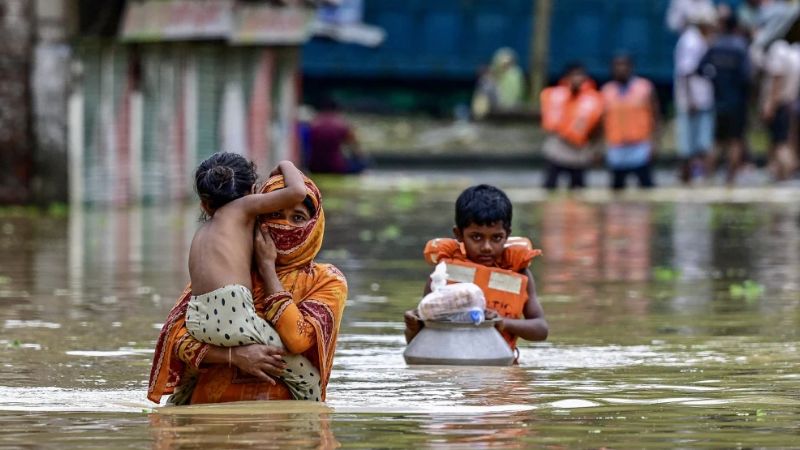
The death toll from the ongoing floods in Bangladesh climbed to 71 on Tuesday, with millions of people still trapped in flood-ravaged areas. As the waters begin to recede, concerns are mounting over potential outbreaks of waterborne diseases.
Triggered by relentless monsoon rains and upstream water runoff, the floods have wreaked havoc over the past two weeks, leaving a trail of destruction and impacting approximately five million residents.
More than 580,000 families remain stranded across 11 flood-affected districts, urgently in need of food, clean water, medicine, and dry clothing.
Nearly 500 medical teams have been deployed to provide care, while the army, air force, navy, and border guards are actively involved in the relief efforts.
Authorities are now prioritizing efforts to prevent the spread of waterborne diseases, which are common after such disasters. Ensuring access to clean drinking water has become a critical concern.
The Directorate General of Health Services reported that nearly 5,000 people were hospitalized within the past 24 hours due to cases of diarrhea, skin infections, and snake bites.
In the capital city of Dhaka, heavy rainfall on Tuesday submerged numerous districts, leading to knee-deep to waist-high flooding on roads, causing severe traffic disruptions as vehicles struggled through waterlogged streets.
According to a preliminary assessment by the Ministry of Agriculture, crops worth 33.5 billion taka ($282 million) have been damaged, impacting more than 1.4 million farmers.
A 2015 analysis by the World Bank Institute estimated that 3.5 million people in Bangladesh are at risk of annual river flooding, a threat that has only intensified in recent years due to climate change.
The United Nations Children's Fund (UNICEF) has expressed grave concerns, stating that two million children are at risk from what has been described as Bangladesh's most severe flooding in three decades. UNICEF has launched an urgent appeal for $35 million to provide essential supplies to those affected.
"Year after year, millions of children in Bangladesh are facing devastation from floods, heatwaves, and cyclones. Climate change is undeniably altering their lives," said Emma Brigham, Deputy Representative of UNICEF Bangladesh.
BOB Post