

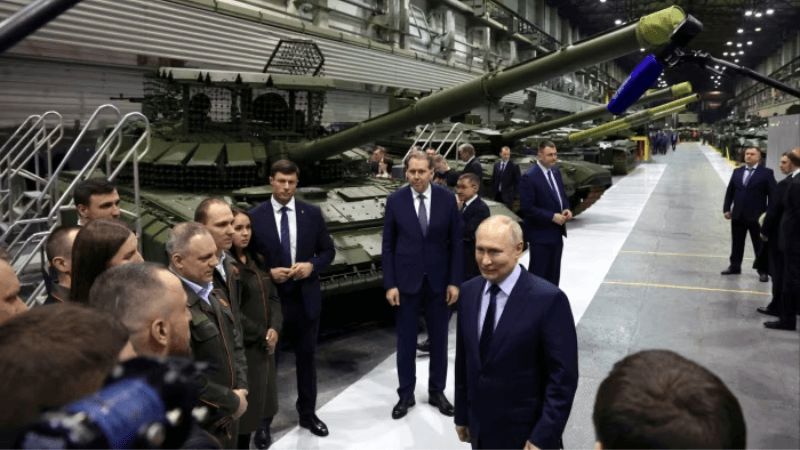


The European Union has ratified a new set of sanctions against Russia, marking the 13th round of punitive measures in response to Moscow's full-scale invasion of Ukraine. Notably, this latest package includes Chinese and Indian entities for the first time, accused of supporting Russia's military endeavors.
European Commission president Ursula von der Leyen emphasized the necessity of maintaining pressure on the Kremlin, stating, "We must keep degrading [Vladimir] Putin’s war machine… [and] keep the pressure high on the Kremlin." She highlighted the focus of these measures on impeding Russia's access to drones.
While discussions continue regarding additional sanctions, particularly in light of the recent death of Russian opposition figure Alexei Navalny, the UK has already imposed sanctions on six officials from the Siberian prison where Navalny died.
The decision to target Chinese and Indian companies reflects the EU and its G7 partners' efforts to counter Russia's exploitation of third-party nations and transit routes to circumvent existing sanctions. Despite initial reluctance, spurred by concerns from member states such as Germany, the EU has now opted to include mainland Chinese companies due to Russia's persistent capacity to procure weaponry despite trade bans.
The sanctions will affect businesses in several countries, including mainland China, India, Sri Lanka, Turkey, Thailand, Serbia, and Kazakhstan. These entities stand accused of facilitating the supply of crucial components, particularly electronics and microchips, used by Russia in its military endeavors.
The agreement reached by EU ambassadors allows for formal approval of the measures before the second anniversary of Russia's full-scale invasion on February 24. The names of the individuals and entities targeted will be made public upon publication in the EU's legal journal.
This latest round of sanctions brings the total number of individuals and entities sanctioned by the EU in response to Russia's aggression against Ukraine to approximately 2,000.
In a separate development, the EU has decided not to renew sanctions against Arkady Volozh, the founder of Russian tech giant Yandex, when they expire next month. Volozh, who condemned Putin's invasion of Ukraine, would become the first person removed from EU sanctions lists for speaking out against the war.
This move follows the UK's decision last year to lift sanctions against Oleg Tinkov, another prominent Russian businessman critical of the invasion. Volozh, who relocated to Israel following Russia's annexation of Crimea in 2014 and has not returned to Russia since the invasion of Ukraine, was sanctioned in 2022 over Yandex's alleged complicity in the war.
BOB Post