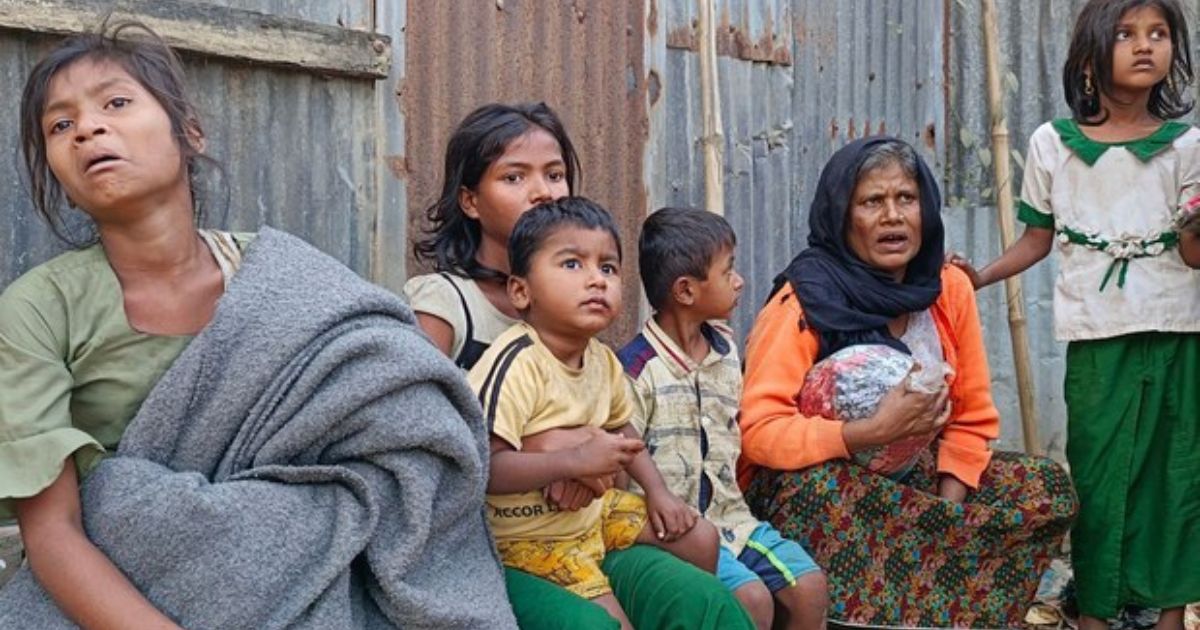
The Rohingya, a stateless minority already facing severe persecution, are now trapped in escalating violence in Myanmar, according to reports from two prominent expert organizations released on Tuesday. The latest crackdown has resulted in the deaths of children among other civilians.
Back in 2017, hundreds of thousands of Rohingya were forced to flee Myanmar to Bangladesh due to a military campaign now under investigation by the United Nations for possible genocide. However, approximately 600,000 Rohingya remain in Myanmar's Rakhine State, where they are caught in the intensifying conflict between Myanmar's military junta and the rebel Arakan Army.
The situation has worsened with the Myanmar military reportedly coercing Rohingya into joining the fight against the Arakan Army, with over 2,000 recruits allegedly being drawn from refugee camps in Bangladesh.
Fortify Rights, a human rights watchdog, reported that recent eyewitness accounts indicate the Arakan Army launched a deadly attack using drones and mortars on Rohingya civilians earlier this month. The assault, which targeted individuals near the Bangladesh border, claimed the lives of over 100 men, women, and children.
Fortify Rights stated, "The use of a surveillance drone before launching this attack suggests the Arakan Army deliberately targeted a civilian group."
Despite these allegations, the Arakan Army has denied any involvement in the attack, releasing statements on August 7 and again ten days later through its political wing.
The International Crisis Group, another influential think tank, reported that many Rohingya on the ground hold the Arakan Army responsible for this attack and other acts of violence against their community.
"The combination of rhetoric and alleged actions has deepened divisions, leading more Rohingya to join military or armed groups," the group noted.
These reports were issued just days after the UN Human Rights Office disclosed evidence of serious human rights violations by both Myanmar's military and the Arakan Army against the Rohingya. The abuses reportedly include extrajudicial killings, abductions, forced recruitment, indiscriminate bombardments, and arson.
UN Human Rights Chief Volker Turk stressed the importance of preventing a repeat of past atrocities, calling it a "moral duty."
The Arakan Army, which seeks greater autonomy for the ethnic Rakhine population, has made significant territorial gains this year near the Bangladesh border, further complicating the situation.
Meanwhile, Bangladesh, which hosts around 1 million Rohingya refugees primarily from the 2017 exodus, is facing its own political upheaval. This month saw the ousting of autocratic leader Sheikh Hasina, who fled to India. Nobel laureate Muhammad Yunus has since taken charge of an interim government ahead of upcoming elections.
Yunus has pledged continued support for the Rohingya refugees in Bangladesh but emphasized the need for "sustained international community efforts" to address the ongoing crisis.
BOB Post