Japanese Ambassador to Bangladesh, Saida Shinichi, has reiterated Japan’s unwavering support for resolving the Rohingya crisis, emphasizing both continued financial aid and collaborative efforts with the Bangladesh government and international organizations.
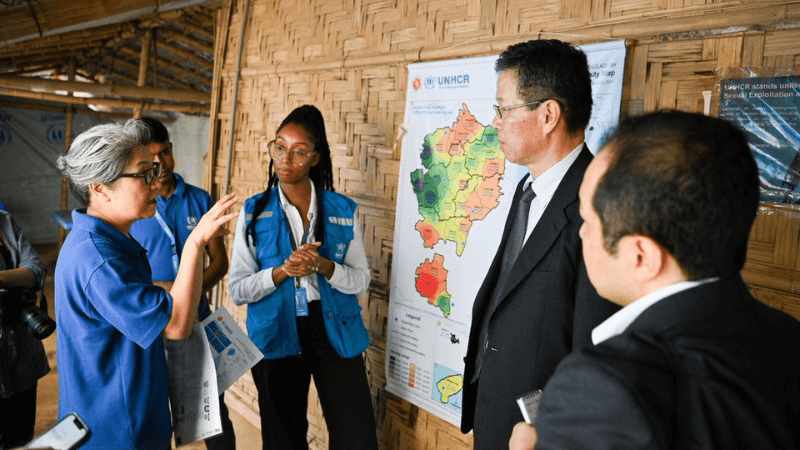
During his recent visit to the Rohingya refugee camps in Cox’s Bazar, Ambassador Saida witnessed first-hand the dire conditions in the camps, which have been exacerbated by a steady reduction in international support. "I understand the current situation in the camps impacted by the reduction of international support," said the Ambassador, expressing concern over the diminishing global attention to a crisis now entering its eighth year.
Ambassador Saida visited several key facilities within the camps, including registration and food distribution centres, a women-led community centre, and a skills development hub. He lauded the efficient utilization of Japanese aid by the Bangladesh government, UN agencies, and NGOs, noting how critical each dollar of support has become as humanitarian needs escalate.
Since the mass influx of Rohingya refugees in August 2017, Japan has contributed over $250 million to support relief efforts in Cox’s Bazar and Bhasan Char. This assistance has covered a broad spectrum of life-saving services including food security, healthcare, WASH (water, sanitation and hygiene), shelter, and protection, with a strong emphasis on gender mainstreaming.
The Ambassador also highlighted Japan’s recent contribution of $1 million through UNHCR and UNICEF in response to flash floods in both the northern and southeastern regions of Bangladesh — an effort that included aid to Rohingya refugees.
In a meeting with the Refugee Relief & Repatriation Commissioner (RRRC) and Armed Police Battalion (APBN), Ambassador Saida underlined the need for sustained coordination and security in maintaining camp management and humanitarian access.
He also inaugurated a new project under the Japan International Cooperation Agency (JICA) for the improvement of the fish landing center of the Bangladesh Fisheries Development Corporation in Cox’s Bazar — a development aimed at supporting host communities affected by the prolonged crisis.
Ambassador Saida's visit comes at a critical juncture, as international attention on the Rohingya crisis has significantly waned amid a crowded global agenda marked by wars, natural disasters, and new refugee flows in other regions.
“While multiple emergencies are taking place around the world, it is essential to keep the attention of the global community on the Rohingya crisis,” he said. “If the world looks away, both the refugees and host communities will bear the weight of prolonged neglect.”
Human rights advocates and policy experts have echoed this sentiment, calling for renewed global pressure on Myanmar to create conditions for safe and dignified repatriation, alongside sustained funding for humanitarian operations in Bangladesh.
As the crisis persists, international pressure — particularly from influential donor nations and multilateral platforms — remains pivotal. The collective voice of the global community not only bolsters diplomatic efforts but also helps ensure that humanitarian support continues to reach those most in need.
With Japan maintaining its commitment, the spotlight now turns to other nations to uphold their responsibilities and ensure that the Rohingya crisis remains a priority on the global humanitarian agenda.