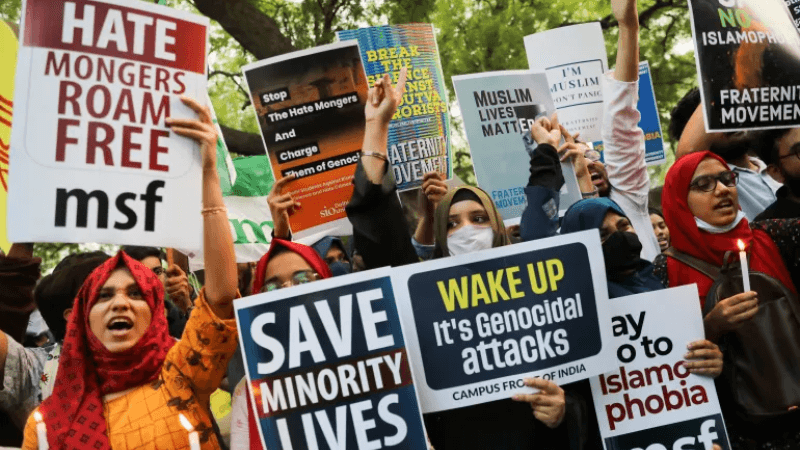
Hindutva Watch, a US-based platform tracking hate crimes against India's religious minorities, has faced blocking in India ahead of the upcoming national election. The website's X account was blocked earlier this month, preventing Indians from accessing the site. This move has drawn criticism from human rights groups, alleging an attempt to stifle dissent and free speech. The Indian government has not officially commented on the matter. Hindutva Watch, founded by journalist Raqib Hameed Naik, documents hate crimes and speeches against religious minorities in India, particularly those involving radicalized Hindus and Hindutva militia groups.
The blocking of Hindutva Watch is part of a larger pattern of internet censorship in India, where the government has been accused of using opaque laws to censor online content and silence critics. The government has also faced criticism for its handling of hate crimes and religious violence in the country.
Naik was informed by users in India that both the Hindutva Watch and India Hate Lab websites had become inaccessible on multiple servers. Notices were issued for blocking the websites under section 69A of the Information Technology (IT) Act, citing concerns for the "interest of sovereignty, integrity, and security" of India. The blocking follows the withholding of Hindutva Watch's X account on January 16, as ordered by the government under the IT Act. India Hate Lab's X account was still accessible in India as of Wednesday morning.
The blocking of these websites has sparked concerns about growing censorship involving X accounts in India, especially since Elon Musk took over the platform in November 2022. Critics argue that the Indian government is attempting to suppress free press and critical voices, creating a challenging environment for documenting hate crimes and human rights abuses. The move comes as India heads towards a national election, raising concerns about the use of hate speeches to incite people in the run-up to the elections.
Hindutva Watch, launched by Naik in April 2021, has grown into a significant database documenting hate speech and violence against India's religious minorities. The platform has been documenting a rising number of hate crimes, with a focus on incidents receiving little mainstream press coverage. Critics of the platform accuse it of bias against Prime Minister Narendra Modi's Bharatiya Janata Party (BJP) and its political ideology, Hindutva.
The blocking of Hindutva Watch's website and X account in India aligns with a broader climate of censorship involving social media platforms and independent news outlets. India's ranking in the 2023 World Press Freedom Index slipped to 161 out of 180 countries, reflecting concerns about press freedom in the country. Critics argue that the government's actions are stifling independent points of view and pose a threat to India's democratic functioning.
As concerns grow about the suppression of information related to hate crimes against minorities, activists emphasize the need to recognize projects like Hindutva Watch as allies rather than adversaries. The blocking of such platforms raises questions about the government's intentions in shielding those involved in illegal acts against the constitution and whether it is an attempt to "shoot the messenger" by criminalizing Hindutva Watch.
In the past, attempts to monitor hate crimes through databases initiated by media organizations faced criticism and ceased operations due to pressure from Hindu nationalists. Hindutva Watch's recent posts on X and its website highlighting hate speech and attacks on minorities are now inaccessible in India, prompting concerns about the government's approach to independent documentation and reporting. Activists call for a broader understanding of the dangers posed to India's democratic functioning and the urgent need for awareness and action.
BOB Post