Myanmar's Rakhine State is facing an escalating humanitarian crisis as a military blockade and ongoing conflict disrupt essential supply routes. Already reeling from extreme poverty and the aftermath of Cyclone Mocha, the region is now gripped by critical shortages of food, medicine, and fuel, endangering thousands of lives.
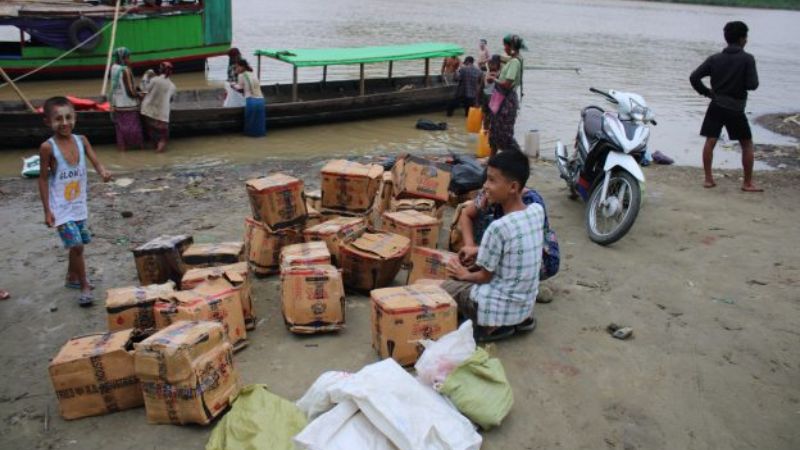
In Paletwa, a southern town in Chin State, the Kaladan River has become a lifeline. Boats laden with smuggled goods from India arrive daily, offering desperately needed supplies such as cooking oil and medicines. Traders and laborers rush to unload these essential items, but inconsistent availability and soaring prices have heightened tensions among the population.
Severe Shortages of Essentials
The Myanmar military, seeking to weaken the Arakan Army (AA), has imposed a blockade that has left residents dependent on smuggled goods from India and Bangladesh. This has caused a sharp rise in costs, with diesel prices skyrocketing from 12,000 kyats ($5.71) to 40,000 kyats ($19.06) per liter. The lack of affordable fuel has compounded the scarcity of medical supplies, leading to a healthcare crisis.
At a health center in an AA-controlled area, a doctor described the dire conditions: “We’re running out of even the most basic medicines. People are afraid to come to clinics because of the constant threat of airstrikes.”
Internally Displaced Persons (IDPs) in camps report similarly dire circumstances. Than Tin Hlaing, a 25-year-old injured by a landmine, is unable to receive treatment for his wounds due to depleted medical supplies. “He suffers unbearable pain daily, but we have no medicine left,” his father lamented.
Reliance on Smuggling and Border Trade
Despite the blockade, Rakhine remains self-sufficient in staples like rice, vegetables, and salt. However, it relies heavily on imports for fuel, medicine, and other essentials. The Kaladan River has become a critical channel for smuggled goods, particularly during the dry season when trade peaks.
While India’s Mizoram state serves as a relatively stable source of supplies, logistical hurdles and local ethnic tensions frequently disrupt the flow. Border trade with Bangladesh also plays a crucial role, though instability in those regions makes the supply chain unreliable.
Warnings of Famine and Economic Collapse
The United League of Arakan (ULA) has warned of an impending famine, predicting domestic food production will meet only 20% of the region’s needs in the coming year. Compounding the crisis, the military has cut electricity, internet access, and banking services, bringing economic activity to a near standstill.
“The cost of living is spiraling out of control,” said Phroe Zaw, ULA’s deputy director of humanitarian affairs. “Without immediate international assistance, we risk facing a catastrophe.”
Urgent Global Action Required
The ongoing conflict and blockade suggest that relief will remain inconsistent, leaving the population increasingly reliant on smuggled goods. Although appeals for international aid have been made, global response remains limited, further deepening the region’s plight.
As 2024 ends, Arakan’s worsening crisis calls for urgent humanitarian intervention and sustained international engagement to prevent a full-scale disaster. The world’s attention is needed now to alleviate the suffering of its people.
Regional Role in Supporting Arakan’s Struggle
India, Bangladesh, and Thailand could play pivotal roles in alleviating the crisis and supporting the Arakan revolution. India, with its proximity to Rakhine and strategic interests in the Kaladan Multi-Modal Transit Transport Project, can facilitate humanitarian aid and ensure smoother trade flows through Mizoram. Bangladesh, sharing cultural and historical ties with Rakhine, could offer critical border relief while mediating for broader international support. Thailand, leveraging its regional influence and connections within ASEAN, can advocate for humanitarian corridors and negotiations to ease the blockade. Coordinated efforts from these neighboring countries could provide not only immediate relief but also bolster the Arakan Army’s long-term aspirations for autonomy and stability in the region.
BOB Post