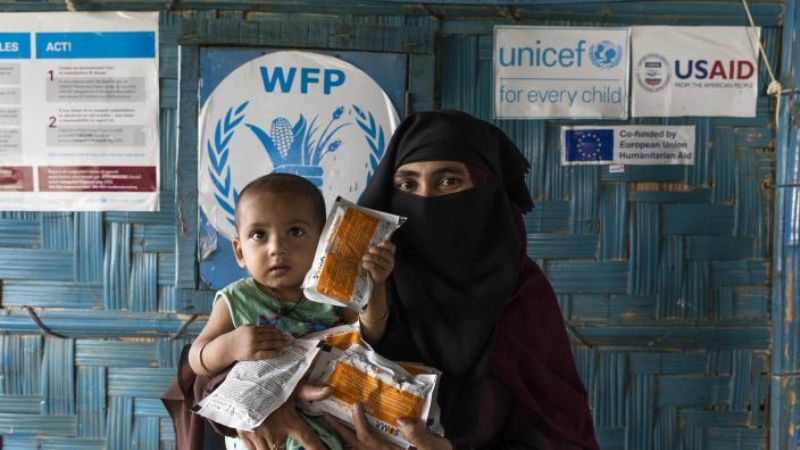
In a move that has sparked outrage among human rights organizations, the World Food Programme (WFP) has announced drastic cuts to food rations for Rohingya refugees in Bangladesh, effective April 1, 2025. The Bangladesh Food Security Network, KHANI, has condemned the decision as an absolute injustice, warning of an imminent food security crisis that threatens the lives of over a million displaced Rohingya people.
According to KHANI, the WFP’s monthly food assistance per refugee will be reduced from $12.50 to $6 due to severe funding shortfalls, leaving thousands at risk of malnutrition and starvation. The organization has called on the United Nations to uphold the full spectrum of human rights for Rohingya refugees by urgently addressing the funding gap, restoring essential services, and ensuring sustainable support that promotes self-reliance.
“This is an absolute and inappropriate decision that violates basic human rights,” said Nurul Alam Masud, secretary of KHANI Bangladesh. “Food security is not just a necessity but a fundamental human right, as enshrined in Article 25(1) of the Universal Declaration of Human Rights. The global community must take responsibility for ensuring food security for the Rohingya as long as they remain in these camps.”
Funding Shortfall and Humanitarian Consequences
The situation for Rohingya refugees in Bangladesh has already reached a critical point. In 2024, Bangladesh appealed for $275 million in humanitarian aid for the Rohingyas, but only $118 million was received, leaving a staggering 57% funding gap. With overcrowded camps, barbed-wire restrictions, and a complete lack of legal rights to work or move freely, the Rohingyas are entirely dependent on humanitarian aid.
KHANI has raised alarm over the devastating impact of these ration cuts, warning that they could lead to a sharp increase in malnutrition, child mortality, and social instability within the refugee camps.
“In 2023, rations were already reduced from $12 to $8 per person, leading to a rapid decline in food consumption and worsening malnutrition. Now, with further cuts, Rohingya refugees in Cox’s Bazar are experiencing the worst levels of malnutrition since the 2017 mass displacement,” KHANI reported.
Recent statistics paint a grim picture. Malnutrition rates among children have exceeded 15%, with severe acute malnutrition cases rising by 25% in January 2025 compared to the same month in 2024, followed by an even steeper 27% increase in February. The deteriorating security situation, underfunding, prolonged monsoon rains, and disease outbreaks have only worsened the crisis.
International Call for Action
KHANI has urged the international community to take immediate action to prevent further deterioration in the humanitarian conditions faced by the Rohingya people. The organization emphasized the need for timely, flexible, and adequate funding to sustain food security and prevent further disaster.
“To sustain full rations, $15 million is required for April, and $81 million is needed until the end of 2025,” KHANI stated.
Without urgent intervention, food insecurity could escalate into increased human trafficking, arrests within the camps, and life-threatening border crossings in desperate search of survival. KHANI has called for immediate measures to secure adequate food assistance, alongside long-term strategies for rehabilitation and dignified repatriation.
“We stand in solidarity with the Rohingya community and call for urgent global action to uphold their fundamental rights and dignity. The world cannot turn a blind eye to this humanitarian catastrophe,” KHANI declared.
The United Nations and global donors now face mounting pressure to respond to this growing crisis before it spirals further out of control. The question remains—will the international community step up in time, or will the Rohingya be left to suffer another devastating blow?
BOB Post