Artist Carmen Rose, a veteran drag queen who used to perform regularly in Malaysia, faced a setback when a police raid last year abruptly halted her shows, reflecting heightened concerns within the LGBTQ community amidst the rising influence of Islamists in politics. Following the raid, during which several attendees were arrested, Rose has refrained from performing and rarely appears in public in costume due to safety concerns. Expressing the constant risk associated with dressing in drag, Rose highlighted the lack of recourse in case of a raid and the stigma faced by the LGBTQ community as perceived "sexual deviants or sinners."
Despite Prime Minister Anwar Ibrahim's reputation as a progressive reformer, LGBTQ communities in Malaysia continue to face heightened scrutiny and discrimination under his government. Anwar, who assumed office following a November general election, is under pressure to strengthen his Islamic credentials among the Muslim majority, particularly due to the rising influence of an ultra-conservative opposition bloc, which includes the Islamist party PAS. With the most number of seats in parliament for the first time, PAS advocates for a strict interpretation of sharia law and opposes LGBTQ rights, further solidifying its political influence through recent gains in state elections.
A recent statement by a PAS lawmaker advocating for the classification of LGBTQ individuals as "mentally ill" reflects the ongoing discrimination faced by the community in Malaysia. Additionally, another PAS leader called for the cancellation of a Coldplay concert due to the band's support for queer rights. Analysts suggest that Prime Minister Anwar Ibrahim, feeling politically vulnerable, is compelled to adopt a more Islamic stance amidst pressure from the ultra-conservative opposition bloc. In Malaysia, sodomy is considered a criminal offense, and Islamic sharia laws prohibit same-sex acts and cross-dressing, reflecting the country's dual-track legal system. Despite Anwar's history of advocating for an inclusive society during his tenure in the opposition, he has not expressed support for LGBTQ rights, disappointing activists who expected greater tolerance from him.
"When Anwar took office, there was a certain amount of optimism that the reform agenda would permeate the system," stated Dhia Rezki Rohaizad, deputy president of JEJAKA, a group that advocates for homosexual, bisexual, and queer males.
"The fact that it hasn't occurred is unfortunate. We had thought, at the very least, that they would just stop aggressively persecuting us and leave us alone."
This year, Prime Minister Anwar Ibrahim reiterated Malaysia's stance against LGBTQ rights, leading to discriminatory actions by his government. Book bans targeting content deemed to promote the LGBTQ lifestyle, detainment of demonstrators advocating for queer rights, and confiscation of Pride-themed watches by Swiss watchmaker Swatch reflect the extent of discrimination faced by the LGBTQ community. Additionally, a music festival was abruptly halted by authorities after the frontman of British pop band The 1975 kissed a male bandmate onstage and criticised Malaysia's anti-LGBTQ laws.
Government spokesperson and communications minister Fahmi Fadzil affirmed that Prime Minister Anwar Ibrahim's statements represent the official position of the government regarding LGBTQ rights. Analysts speculate that Anwar's firm stance against LGBTQ rights may be influenced by efforts to dispel doubts surrounding his own sexuality, which emerged during his imprisonment for sodomy. Anwar maintains that the charges were fabricated and politically motivated, but some political opponents continue to challenge his Islamic values.
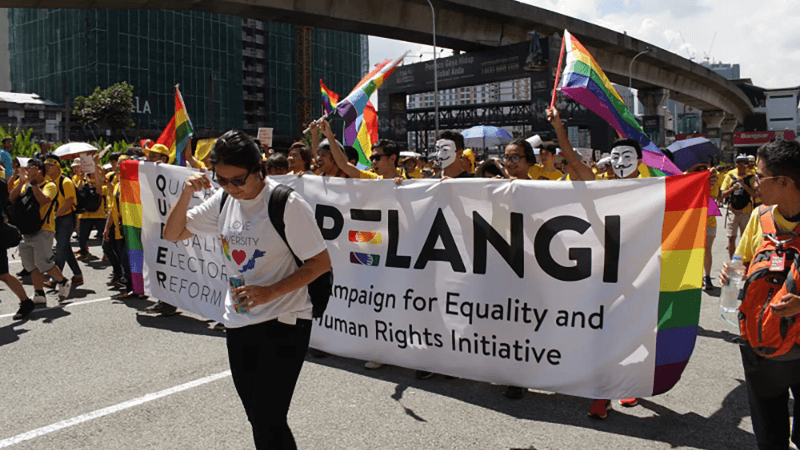
Activists highlight the prevalence of online harassment and death threats targeting queer Malaysians on social media, with reports of undercover police presence at LGBTQ-friendly events. To safeguard participants, many groups now ensure legal representation is available in case of raids. Thilaga Sulathireh, founder of LGBTQ advocacy group Justice for Sisters, criticizes the government's rejection of queer Malaysians as a human rights violation, asserting that it emboldens conservatives and permits discrimination and violence against the LGBTQ community with impunity.
Justice for Sisters reports an increase in inquiries from LGBTQ Malaysians seeking asylum abroad, citing growing concerns within the community. They note a rise in self-censorship as individuals aim to avoid detection. Drag queen Carmen Rose, expressing apprehension over potential crackdowns, recently cancelled a show and is contemplating relocating from Malaysia, occasionally performing in nearby Singapore.
"This is not me running away. I'm just tired and I have to also think about myself and my own happiness," she said.
BOB Post