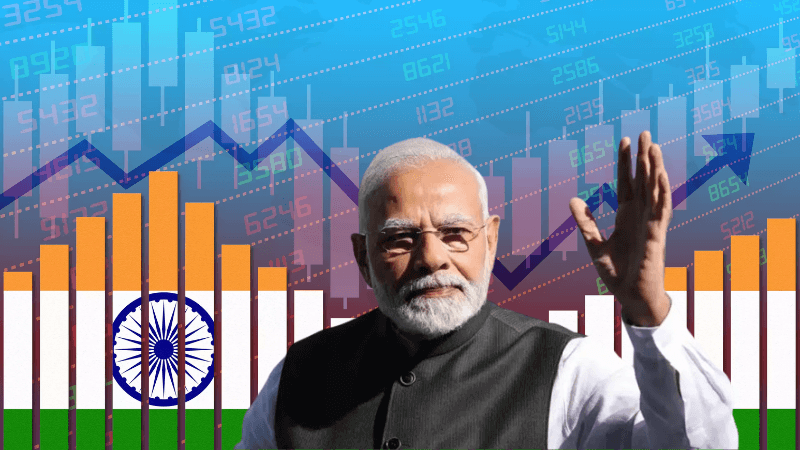
India is set for an annual growth rate of 7.3% in the fiscal year ending March 2024, marking the highest among major global economies, according to the National Statistical Office's early projections. This positive outlook provides Prime Minister Narendra Modi with a significant boost ahead of the upcoming national elections scheduled before May.
The National Statistical Office clarified that these are preliminary estimates for 2023/24, and subsequent revisions may be influenced by improved data coverage, actual tax receipts, and state subsidies spending.
This forecast follows last month's upward revision by the Reserve Bank of India (RBI) to 7%, surpassing the earlier estimate of 6.5%. Analysts highlight that achieving growth above 7% for the third consecutive year amid a global economic slowdown reflects well on Modi's economic management, potentially strengthening his chances for a third term.
Rahul Bajoria, an economist at Barclays Investment Bank, commented, “This growth comes at a time when global conditions remain weak, and its credit goes to how the government is managing the economy.”
S&P Global Ratings predicts India will maintain its position as the fastest-growing major economy for the next three years, positioning it to become the world's third-largest economy by 2030, surpassing Japan and Germany.
India's economy exhibited growth rates of 7.2% in 2022/23 and 8.7% in 2021/22. Finance Minister Nirmala Sitharaman is set to present an interim annual budget on Feb. 1, with expectations of increased infrastructure spending fueled by rising tax receipts, while aiming to reduce the fiscal deficit from 5.9% of GDP in the current fiscal year.
Key economic indicators for 2023/24 reveal a projected 4% year-on-year increase in government spending, compared to a 0.1% rise in the previous fiscal year. Private investment is anticipated to grow by 10.3%, slightly lower than the 11.4% rise in the previous year. Meanwhile, private consumption, constituting nearly 58% of GDP, is expected to expand by 4.4% year-on-year, down from 7.5% in the previous fiscal year.
BOB Post