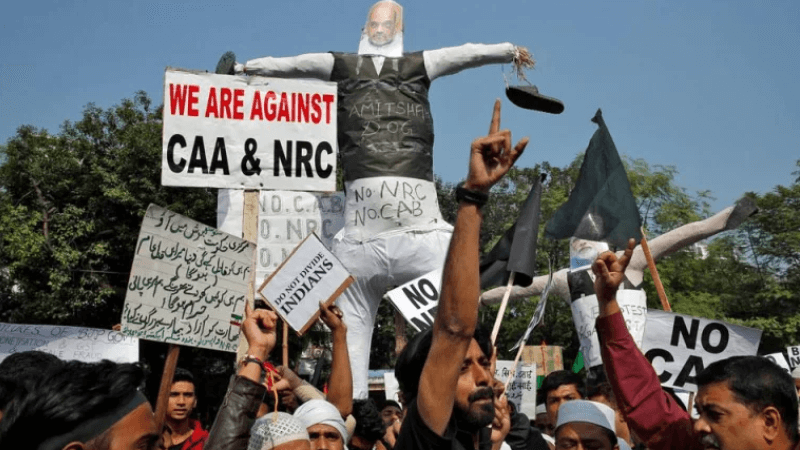
In a move set to ignite political tensions ahead of the upcoming Lok Sabha elections, the Indian government has officially announced the implementation of the controversial Citizenship Amendment Act (CAA). This act, which introduces religion as a criterion for citizenship for the first time, was passed by the Indian parliament in December 2019 amidst widespread protests resulting in over 100 casualties and staunch opposition from non-BJP states and political figures.
With the issuance of this notification, the government now possesses the authority to grant citizenship to non-Muslim migrants from Bangladesh, Pakistan, and Afghanistan who entered India before 2015. This decision follows Indian Home Minister Amit Shah's recent assertion that the CAA would be enforced nationwide before the elections, triggering a sharp response from West Bengal Chief Minister Mamata Banerjee, who adamantly opposes its implementation in her state.
Despite the passage of the CAA in 2019, its enforcement had been stalled due to delays in framing the necessary rules. Now, the entire process of applying for Indian citizenship is slated to be conducted online via a dedicated web portal, with no documentation required from applicants.
The BJP has long championed the implementation of the CAA, viewing it as a crucial electoral strategy, particularly in West Bengal. In the last two years, several states have been granted authority to grant citizenship to non-Muslim minorities from neighboring countries under the Citizenship Act of 1955, separate from the CAA.
As the implementation of the Citizenship Act coincides with the upcoming Lok Sabha elections, Prime Minister Narendra Modi's party seeks to secure a third consecutive term, underscoring the political significance of this development amidst heightened electoral fervor.
BOB Post