The Modi government has taken significant steps to strengthen national security, including in Arunachal Pradesh and across the country, by initiating a major fencing project along the India-Myanmar border. This endeavor, set to be the largest of its kind in India, aims to enhance border security.
According to reports from various media outlets, the Border Roads Organization (BRO) will complete the project within the next 10 years. The construction will be carried out in phases, eventually securing approximately 83 kilometers of the Arunachal Pradesh border with barbed wire the longest such stretch for a single project in India to date.
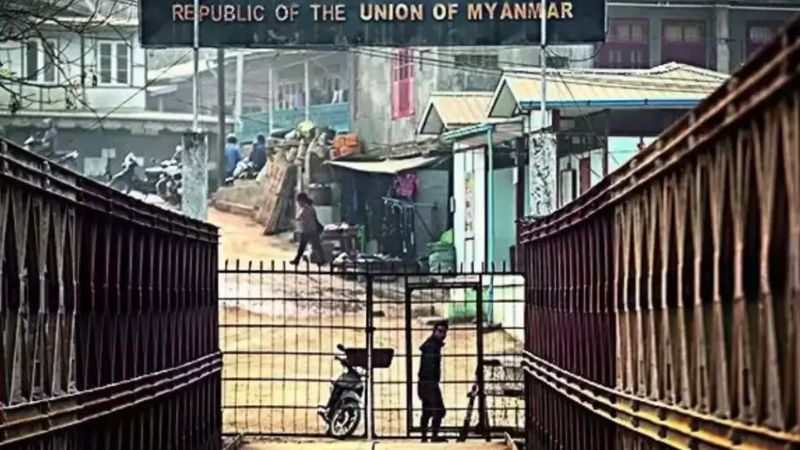
Currently, only about 10 kilometers of the India-Myanmar border are fenced, located near the Moreh area in Manipur. Recently, an additional 20 kilometers of fencing were completed along the Manipur-Myanmar border. Under the new project, the stretch from Border Post (BP) 168 to BP 175 in Arunachal Pradesh, covering approximately 83 kilometers, will be secured with barbed wire.
India shares an unsecured border of 1,643 kilometers with Myanmar, of which Arunachal Pradesh accounts for the largest segment at 520 kilometers. The remaining border runs through Mizoram (510 kilometers), Manipur (398 kilometers), and Nagaland (215 kilometers).
Last week, representatives from BRO held discussions with technical experts regarding this project. They were instructed to prepare a detailed project report (DPR) and outline the preparations necessary for implementing the fencing along the designated 83-kilometer stretch in Arunachal Pradesh.
This initiative gains urgency against the backdrop of ongoing ethnic unrest in Myanmar over the past year, which has reportedly resulted in the deaths of hundreds of people. The instability has also led to increased infiltration of Rohingya refugees into India. There are allegations that the "Free Movement Regime" (FMR) agreement between the two countries has been exploited, exacerbating tensions in states like Manipur.
Under the FMR, citizens of India and Myanmar can cross the border without documentation and move freely within 16 kilometers of each other's territories. However, with rising security concerns, particularly the misuse of FMR to incite unrest in northeastern states, New Delhi is prioritizing securing the border.
The ongoing crisis in Myanmar has significantly contributed to an increase in cross-border crimes, including smuggling, illegal immigration, and other illicit activities along the India-Myanmar border. The political turmoil and ethnic unrest in Myanmar have created a fertile ground for human trafficking, drug smuggling, and arms trade, as non-state actors exploit the porous border. Reports indicate that displaced populations, including Rohingya refugees, are often targeted by criminal networks, leading to a rise in illegal immigration into India. Additionally, the instability has made it easier for insurgent groups to smuggle weapons and narcotics into northeastern states like Manipur, Mizoram, and Nagaland, further destabilizing the region and posing severe challenges to law enforcement and national security.
BOB Post