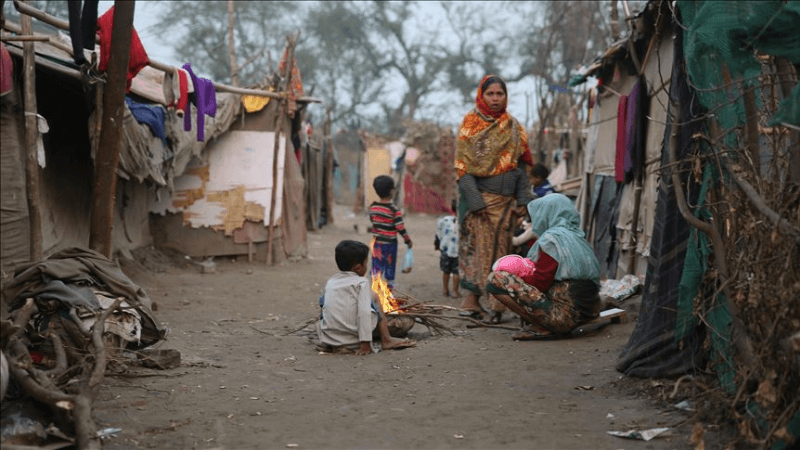
In a statement to the Supreme Court, the Union government has declared that illegal Rohingya Muslim migrants do not possess a fundamental right to reside and settle in India. Emphasizing that the judiciary should not interfere with legislative and policy matters, the government clarified that a separate category cannot be created for granting refugee status to such individuals.
India's stance on the issue was underscored by citing various judgments of the Supreme Court, which emphasized that while foreigners enjoy the right to life and liberty under Article 21 of the Constitution, the right to reside and settle in the country is exclusively reserved for Indian citizens. Additionally, the government highlighted that India does not recognize UNHCR refugee cards, invalidating the claims made by some Rohingya Muslims using these cards.
The government's affidavit further highlighted the grave security ramifications posed by the continued illegal migration of Rohingyas into India. Citing credible intelligence, it pointed out that many Rohingyas are involved in activities such as obtaining fake Indian identity documents, human trafficking, and subversive activities across the country, posing threats to internal and national security.
Responding to a plea for the release of detained Rohingyas, the government reiterated its commitment to handle illegal entrants in accordance with the provisions of the Foreigners Act. Moreover, since India is not a signatory to the 1951 Refugee Convention and its Protocol relating to the Status of Refugees, the government stated that it would handle the issue of Rohingyas based on its own domestic framework.
Rejecting comparisons to refugees from Tibet and Sri Lanka, the government emphasized that the recognition of refugee status is a policy decision within the legislative framework. It firmly asserted that the right to equality is not applicable to foreigners and illegal migrants, reaffirming its stance on the treatment of Rohingyas in India.
BOB Post