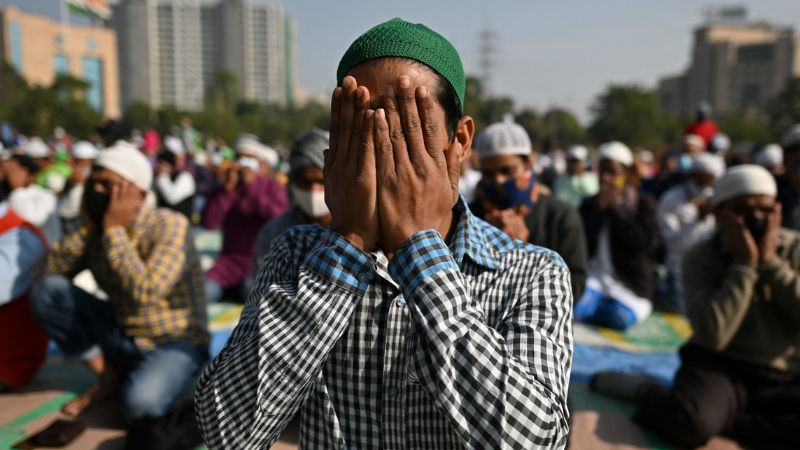
Muslims in India have reported being fired from their jobs and facing the closure of their businesses after two states implemented a controversial policy requiring restaurants to publicly display the names of all employees.
The policy was first introduced by Yogi Adityanath, the hardline Hindu monk and chief minister of Uttar Pradesh. Last month, Himachal Pradesh, governed by the opposition Congress party, followed suit, announcing that all restaurants must display the names of their workers.

While both state governments claim the policy is to ensure compliance with health and safety regulations, locals and activists have alleged that it targets Muslim workers and businesses. In India, names are often indicative of religion and caste, sparking concerns that this policy will lead to attacks or economic boycotts by hardline Hindu groups.
“This order is dangerous, it forces us to wear our religion on our sleeve,” said Tabish Aalam, 28, a chef in Lucknow. “I am sure the government knows this, and that is why it is being exploited.”
Uttar Pradesh, governed by the Hindu nationalist Bharatiya Janata Party (BJP), has introduced several policies under Adityanath that have been criticized for enabling the targeting of Muslims. Since 2017, his administration has been accused of fueling anti-Muslim conspiracy theories.

Photograph: Sanjay Kanojia/AFP/Getty Images
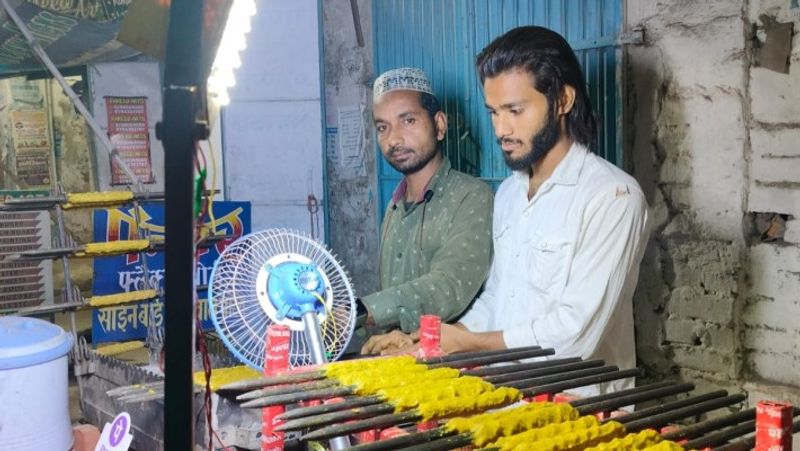
Muslim business owners in Uttar Pradesh report firing staff out of fear of becoming targets. Rafiq, a restaurant owner in Muzaffarnagar, said he let go of four Muslim employees after police demanded he display their names on a sign outside. “I had to fire my Muslim staff because I was concerned for their safety following the order,” he said. “Displaying names makes us vulnerable and a very easy target.”
Rafiq further speculated on the intent behind the policy: “Displaying names will identify people’s religions, which I suspect is intended to discourage people from eating at Muslim-owned or Muslim-staffed restaurants.”
Calls for economic boycotts of Muslims have been growing in Uttar Pradesh. Last month, the state leader of Bajrang Dal, a right-wing Hindu vigilante group, was caught on video encouraging attendees at a meeting to pledge: “I will not buy goods from any Muslim shopkeeper.”
)
Photograph: Boaz Rottem/Alamy
Muslim workers, like Idrees Ahmed, 31, have also been directly affected. Ahmed, a cook who worked for seven years in a restaurant in Uttar Pradesh, said he was fired after the policy took effect. “The owner called me and other Muslim staff members and apologised before asking us to go home,” he said, adding that he has struggled to find another job due to his religion.
In some areas, Muslim-owned businesses allege that they are being selectively targeted by the authorities. Mohammad Azeem, a roadside vendor in Muzaffarnagar, said, “The administration is deliberately trying to create a divide. Why did they ask me selectively?”
Despite these accusations, BJP spokesperson Praveen Garg defended the policy, claiming it was implemented to ensure restaurant hygiene. “Nobody is being denied permission to work,” Garg said, adding that the action was necessary after reports of food contamination.
Allegations that Muslim vendors had mixed spit and urine with food recently went viral, leading to arrests. However, despite claims by right-wing Hindu groups of a “spit jihad,” no evidence has surfaced to prove these incidents were specifically aimed at Hindus.
India’s Supreme Court intervened in July, blocking a separate order from the Uttar Pradesh and Uttarakhand governments that required restaurants along a Hindu pilgrimage route to display the names of their owners. A petition against the order labeled it “discriminatory on grounds of religion.”
Despite ongoing controversy, Himachal Pradesh’s Congress-led government recently announced it would follow Uttar Pradesh’s example. Vikramaditya Singh, a Congress leader, cited concerns over food hygiene and an “influx of migrants” as reasons for the policy but acknowledged that the matter was still under discussion. “There will be no compromise with the internal security of the state,” Singh said, while adding that alternative measures might be explored if the display of names raises widespread concerns.
Muslim business owners in Himachal Pradesh have expressed disappointment with the Congress party, which traditionally promotes secularism. Sharik Ali, 27, who runs a small restaurant in Shimla, said, “I will not feel safe after displaying my name on my stall. We have seen how Muslims across India have been attacked in the last 10 years of Modi’s rule, but I was not expecting this from the Congress government. They know what will fetch them votes.”
BOB Post
Narrated from The Guardian