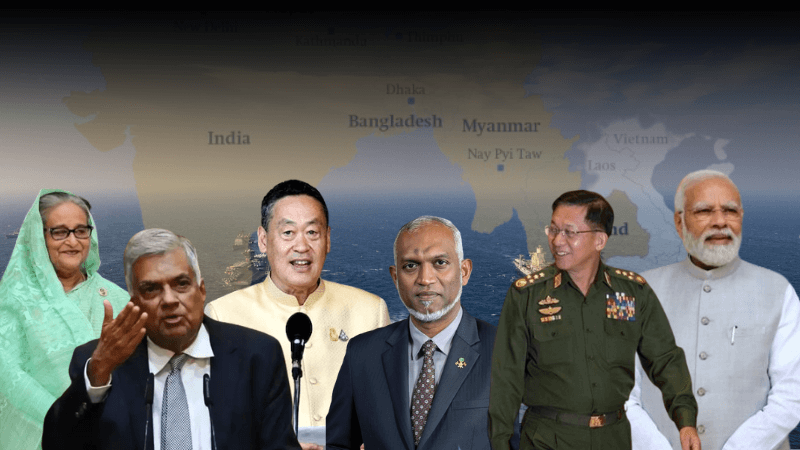
The Bay of Bengal, a shimmering jewel nestled within the Indian Ocean, cradles a diverse tapestry of nations – India, Bangladesh, Sri Lanka, Myanmar, Thailand, and the Andaman and Nicobar Islands. These countries, once washed by the tides of colonial empires, now navigate a new chapter in their maritime saga, one intertwined with the rising tide of the Indo-Pacific. The Bay of Bengal whispers tales of ancient maritime empires. From the Chola dynasty's seafaring prowess to the Mughals' trade networks, these waters were arteries of cultural and economic exchange. European colonialism then carved its mark, leaving behind a legacy of port cities and trade routes. This shared historical tapestry, though marked by conflict and divergence, forms a foundation for understanding contemporary interactions.
The Bay of Bengal is no longer just a historical stage, but a buzzing marketplace. The region boasts some of the world's fastest-growing economies, fueled by burgeoning industries and burgeoning populations. India, the anchor of the Bay, is a rising economic giant, while Bangladesh and Sri Lanka are witnessing their own trajectories of growth. This economic dynamism translates into a web of trade and investment, with ports like Colombo and Chittagong emerging as vital nodes in the global supply chain. But beneath the surface of economic prosperity, however, lie currents of security challenges. Piracy, maritime terrorism, and illegal fishing pose threats to the Bay's stability. The increasing presence of extra-regional powers, vying for influence and strategic dominance, adds a layer of complexity to the security landscape. Balancing these competing interests and ensuring maritime security becomes a collective imperative for the Bay of Bengal nations.
Recognizing the need for collaboration, several regional initiatives have emerged. The Bay of Bengal Initiative for Multi-Sectoral Technical and Economic Cooperation (BIMSTEC) fosters cooperation in areas like trade, tourism, and disaster management. The South Asian Association for Regional Cooperation (SAARC) and the Indian Ocean Rim Association (IORA) offer frameworks for broader regional engagement. These initiatives, though facing challenges, represent a commitment to shared prosperity and security in the Bay of Bengal.
The future of the Bay of Bengal is not without its challenges. Climate change poses a significant threat, with rising sea levels and intensifying storms impacting coastal communities and ecosystems. Managing marine resources sustainably and mitigating environmental degradation require regional cooperation and innovative solutions. Despite these challenges, the Bay of Bengal also brims with opportunities. The region's potential for renewable energy, particularly offshore wind, holds immense promise. Investments in blue technology and sustainable fisheries can unlock new avenues for economic growth and environmental stewardship.
The Bay of Bengal nations find themselves at the crossroads of two great oceans. The rise of China and the increasing engagement of the United States create a complex geopolitical landscape. Navigating this evolving dynamic requires strategic partnerships and a commitment to a rules-based order that ensures freedom of navigation and economic prosperity.
The Bay of Bengal is no longer a passive stage for historical dramas. It is a dynamic arena where the future of nations, economies, and ecosystems are intertwined. Embracing the Indo-Pacific vision requires the Bay of Bengal nations to harness their collective strengths, address shared challenges, and forge a future where the Bay whispers not just of history's echoes, but of a vibrant, secure, and sustainable future for all its inhabitants.
BOB Post