On February 14, 2024, Indonesia is poised to host one of the world's most significant election days, involving over 205 million eligible voters who will play a pivotal role in shaping the future of the nation. This election goes beyond selecting the next president, as voters will also determine executive and legislative representatives at various administrative levels across Indonesia.
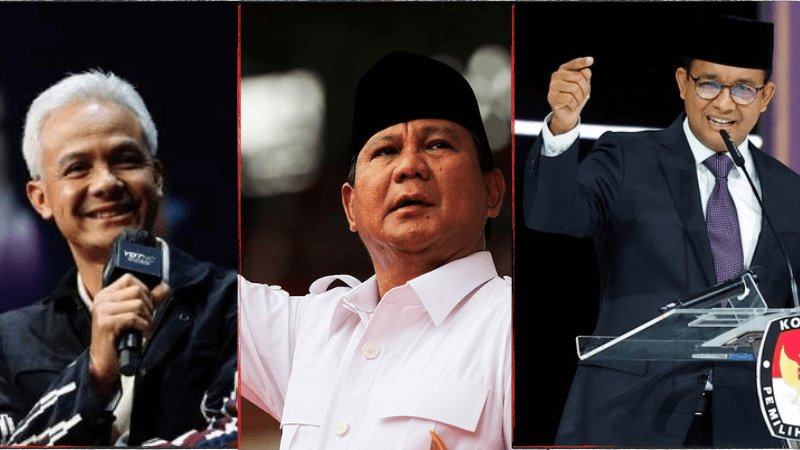
Three prominent candidates are in the running for the presidency, each with distinct profiles and policy agendas:
Ganjar Pranowo:

the former Governor of East Java province and current presidential candidate in Indonesia's upcoming election, envisions transforming the nation into a maritime powerhouse. His proposal involves bolstering sea connectivity, advancing the marine industry, and promoting coastal tourism. However, Pranowo faced international scrutiny for refusing to host the Israeli team during the Under-20 FIFA World Cup in 2023, a decision that influenced his popularity. Running alongside Muhammad Mahfud, the recently resigned chief security minister, Pranowo is directing his campaign toward the upcoming election, emphasizing key economic and security initiatives.
Prabowo Subianto:

Indonesia's current Defense Minister and a former army general, is making his third bid for the presidency after previous unsuccessful attempts in 2014 and 2019. As the frontrunner in the upcoming election, Subianto pledges to carry forward the political legacies of the incumbent President Joko Widodo (Jokowi). His running mate is Gibran Rakabuming Raka, Jokowi's eldest son. Subianto aims to secure the highest office, emphasizing stability and continuity in the country's development plans.
Anies Baswedan:

A former Jakarta governor and a progressive Muslim intellectual, brings a platform centered on advocating for change and equality to the Indonesian presidential race. Known for opposing the relocation of Indonesia's capital from Jakarta to a new capital named Nusantara, Baswedan emphasizes broader economic changes and infrastructure development to ensure prosperity for all. Running alongside Muhaimin Iskandar, the chairman of the National Awakening Party, Baswedan aims to carve a distinct path in the election, setting himself apart from the other candidates with his progressive vision for the nation.
Indonesia's election dynamics for the upcoming presidential race involve an open proportional election system since 2009, allowing voters to directly select candidates for legislative members. To secure the presidency, a candidate must achieve a simple majority, surpassing 50 percent of the votes, and obtain 20 percent of the votes in at least half of the country's 38 provinces. In the absence of a candidate meeting these criteria, a potential run-off vote in June between the top two contenders will determine the final outcome, eliminating the third pair from the competition.
Public sentiment in Indonesia ahead of the presidential election indicates that none of the candidates is likely to secure the required minimum of half the votes. Surveys show the Prabowo-Gibran pair hovering around the mid-40 percent mark, suggesting the potential for a run-off. Prabowo Subianto leads the race with 45.8 percent support, while Anies Baswedan has experienced a notable rise in popularity, gaining 25.5 percent backing. These dynamics underscore the likelihood of a competitive election landscape and the possibility of a run-off vote in June.
Youth engagement has emerged as a pivotal factor in Indonesia's upcoming election, with candidates strategically utilizing social media platforms, particularly TikTok, to connect with young voters. The demographic significance is highlighted by the 106 million Indonesians aged between 17 and 40, constituting 52 percent of eligible voters. Ganjar Pranowo and Anies Baswedan have actively engaged on TikTok, amassing millions of followers, while Prabowo Subianto has employed AI-generated artwork to craft an online persona, aiming to resonate with the younger generation. This focus underscores the candidates' recognition of the influential role young voters play in shaping the election outcome.
The upcoming Indonesian election is marked by challenges and considerations, notably the absence of incumbent President Jokowi due to constitutional limitations on seeking a third term. This introduces an element of transition and sets the stage for new leadership. Against the backdrop of economic growth, the nation faces democratic challenges, including concerns related to cronyism and dynastic politics. The role of social media in shaping public opinion adds another layer to the electoral landscape, with candidates adapting to contemporary campaigning methods to navigate these complexities.
With diverse candidates and a highly engaged electorate, the outcome will not only determine the next president but also influence the trajectory of Indonesia's democratic journey. The newly elected president is set to take office in October 2024, ushering in a new chapter for Southeast Asia's largest economy.
BOB Post