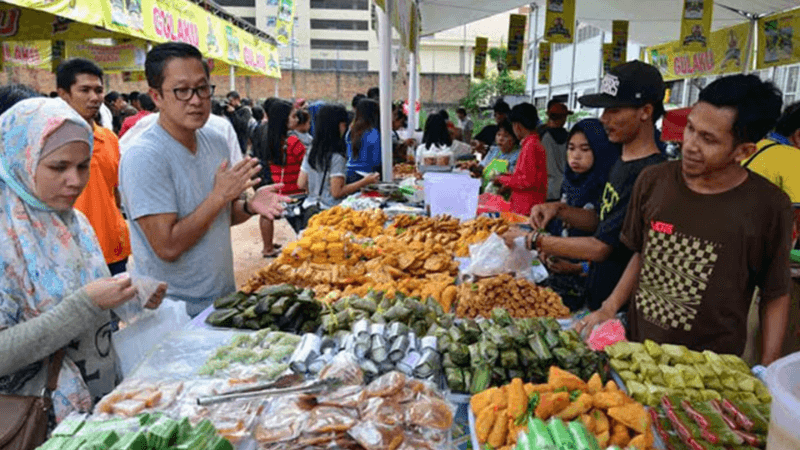
Indonesians are gearing up for Ramadan amidst a backdrop of soaring food prices, with economists warning of further increases in the months ahead. Despite these concerns, the government has vowed to maintain the affordability of essential staples.
Data from the Bank Indonesia (BI) National Strategic Food Price Information Center reveals that, just days before Ramadan, the price of mid-quality rice has surged nearly 10 percent year-to-date, reaching Rp 16,000 (US$1.02) per kilogram. This price surge has persisted above the government's established ceiling range, a trend attributed to last year's El Niño phenomenon, which brought drought and harvest delays.
Key staple foods such as chili peppers, eggs, cooking oil, and poultry have seen significant price hikes this year, adding pressure on household budgets. However, I Gusti Ketut Astawa of the National Food Agency (Bapanas) reassures the public that essential food supplies remain ample to meet demand during Ramadan and beyond.
Efforts are underway to stabilize prices, with measures including low-cost food programs and improved distribution channels. Farmers have been encouraged to plant crops earlier to alleviate price pressures. However, challenges persist, including data discrepancies and inadequate post-harvest technology.
Economists warn that rising food demand may outpace supply enhancements, potentially leading to further inflation. Despite this, authorities remain optimistic, with Bank Indonesia (BI) projecting controlled inflation in the coming months. Coordinating Economic Minister Airlangga Hartarto announced plans to secure additional rice supplies from overseas and expedite cash aid disbursements before Idul Fitri.
To bolster food security, the government is considering a standby food budget allocation, enabling state agencies to access loans at favorable rates for food procurement. These efforts aim to mitigate price fluctuations and ensure food availability for all Indonesians during Ramadan and beyond.
BOB Post