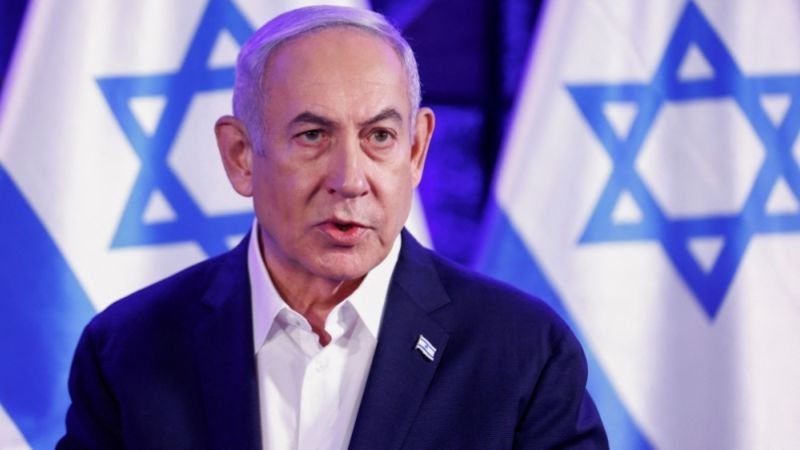
Israel and Iran exchanged threats after Iran's first direct attack on Israel escalated tensions in the region. The ongoing Gaza war continued with no signs of a ceasefire. Israeli military warned Iran of consequences for launching missiles at Israel. Iran claimed its attack was in self-defense after an Israeli air strike in Syria. Both sides vowed to respond if necessary, with Iran stating the matter would be considered closed unless Israel retaliated.
Iran's President issued a warning of severe retaliation for actions against Iran's interests. US President reaffirmed commitment to Israel's security and aims to prevent conflict escalation. Washington, Israel's ally, will not participate in any attack on Iran. Global leaders are calling for restraint and de-escalation of tensions.
Putin urged Iran and Israel to avoid further conflict to prevent devastating consequences in the region. UK's Sunak also emphasized the need for calm to prevent escalation, while Israel continued to bomb Gaza, which has suffered extensive damage after months of war and a blockade.
Israel is considering its next steps after recent attacks by Iran. Netanyahu has consulted with his war cabinet following a deadly attack by Hamas in Gaza. The Iranian drone and missile assault, though intercepted by Israeli defenses with help from international allies, has raised concerns about potential Israeli retaliation. The possibility of strikes against Iran, its allies, or interests in various countries is being considered amid ongoing regional tensions.
Hezbollah claimed responsibility for an attack using explosive drones near a northern Israeli town, injuring three people. In retaliation, Israel struck and killed a local Hezbollah commander in southern Lebanon, leading to further casualties. Hezbollah responded by launching rockets at Israel. Israel justified a previous strike in Damascus that killed seven Iranian Revolutionary Guards as a counter-terrorism measure. Israeli Foreign Minister Israel Katz called for increased sanctions on Iran, a sentiment echoed by the EU and the US Treasury Secretary. The situation highlights ongoing tensions in the region and the potential for further escalation between the parties involved.
The Israeli military has declared that the ongoing conflict in Gaza, which aims to destroy Hamas and return the captives abducted during the Hamas invasion more than six months ago, will not be diverted by the tensions with Iran.
Netanyahu informed incoming army recruits on Tuesday that Israeli forces were battling Hamas "without mercy."
After Hamas rejected the most recent plan, truce negotiations seem to be at a standstill. 1,170 people, primarily civilians, lost their lives as a result of the Hamas strike that sparked the conflict on October 7, according to Israeli officials.
About 250 hostages were also taken by the terrorists; of these, Israel says that 129 are still in Gaza, 34 of whom are thought to be dead. The health ministry in the Hamas-run enclave of Gaza reports that at least 33,843 individuals have died as a result of Israel's retaliatory operation, the majority of them were women and children.
According to the government, Khan Yunis, a city in the south, saw the deaths of fifteen individuals on Tuesday, including several children.
According to the Israeli army, its tanks destroyed "a number of terrorists identified advancing towards them" during the continuing fighting in central Gaza.
Growing international criticism of Israel has been directed towards the ceaseless conflict that has left large swathes of Gaza in ruins and precipitated a catastrophic humanitarian crisis there. Even after the International Court of Justice ordered Israel to allow in additional aid, the United Nations agency for Palestinian refugees, UNRWA, stated that there had been "no significant change" in the amount of humanitarian relief entering Gaza. The UN announced that it would make a plea for US$2.8 billion on Wednesday in order to support Gaza and the West Bank. Its humanitarian branch, OCHA, stated that because it was so difficult to bring aid to Gazans, it had to lower its original goal of raising US$4 billion.
UN Women stated on Tuesday that 10,000 Palestinian women, including 6,000 mothers, had died six months into the conflict. The organization stated that around 19,000 children were left orphaned.
Wissam Dawad was among hundreds of people in Gaza City who stood in line for hours on end to purchase bread from a bakery that had just reopened.
He told AFP, "We started eating corn and barley when Israel prevented us from getting flour, until it reached the point where we had to eat some animal feed."
BOB Post