The Arakan Army (AA) has taken control of several towns in northern Rakhine State since initiating an offensive against the regime in western Myanmar last November. Notably, Ponnagyun and Rathedaung, bordering the state capital of Sittwe, have fallen under AA's control. This marks a significant advancement in AA's campaign, with progress also observed in Buthidaung and Maungdaw townships as it moves south along the coast, aiming to capture Sittwe and gain authority over the entire state.
Even before launching the offensive, the Rakhine ethnic armed group held sway over much of rural Rakhine. As clashes persist, the majority of residents in northern Rakhine seek refuge in villages, where they encounter severe food shortages and other adversities.
After intense bombing assaults, communication was severed in Rathedaung, near Sittwe, leaving the town abandoned since January. After taking over, the Arakan Army (AA) began clearing the region. Following the AA's takeover, there has been no gunfire in Ponnagyun, northeast of Sittwe; nonetheless, sporadic bombs serve as evidence of the AA's authority. Residents are unable to go back home since the AA continues dismantling mines. Ramree, which is governed by AA as well, warns locals to avoid the area because of landmines. The settlement of Mrauk-U is in ruins as a result of airstrikes on March 17, and the AA has forbidden residents from returning to stop theft.
In Sittwe, the capital of Rakhine State, both government officials and civilians have fled amidst the advancing offensive by the Arakan Army (AA) in northern Rakhine. The town now has a significantly reduced population, with many residents seeking safety elsewhere. Junta shelling has resulted in casualties in urban areas of Sittwe, while the Myanmar Navy has resorted to firing on individuals attempting to escape by boat.
Currently, only Rohingya Muslims remain in the town, facing dire circumstances as they have no means of fleeing and lack citizenship identification. Exploiting their vulnerability, the regime has coerced Muslim residents from various areas, including Sittwe, Buthidaung, Maungdaw, and Kyaukphyu, into undergoing military training. Following the seizure of towns, the Arakan Army (AA) and its political counterpart, the United League of Arakan, have continued to administer local affairs, including judiciaries, as they did before the recent escalation of hostilities on November 13. However, with the current focus on military operations, the AA's attention has shifted, leading to displacement among the local population in Rakhine.
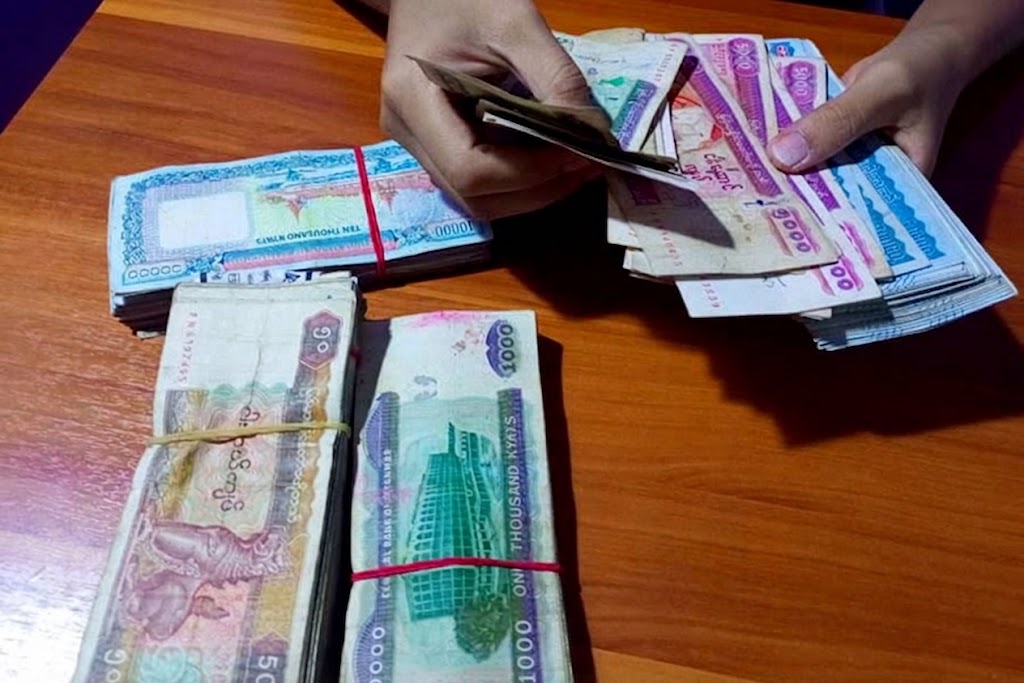
The conflict in Rakhine has dealt a severe blow to the local economy, leaving residents struggling to make ends meet. While some farmers managed to harvest their crops before the outbreak of fighting in November, those in areas near junta positions were unable to do so safely. Additionally, transportation disruptions have hindered farmers' ability to bring their produce to market, exacerbating the economic strain. Border trade routes through Buthidaung and Maungdaw have remained closed for months due to ongoing hostilities, further limiting economic activity. Moreover, government blockades on roads and waterways have impeded trade between Rakhine and other regions of the country.
As the conflict stretches into its fourth month since erupting in November, residents in Rakhine are grappling with a challenging food situation exacerbated by soaring prices. With many facing irregular income and frequent displacement, making ends meet has become increasingly difficult. Staples like salt, pepper, onion, and garlic are in short supply, while rice stocks dwindle. While charities provide some relief in the form of rice and food aid, the majority of displaced individuals must fend for themselves. Some have turned to cultivating vegetables and bananas in their own yards, while others resort to fishing in nearby rivers and creeks. Despite the adversity, communities are employing various strategies to combat hunger and ensure their survival.
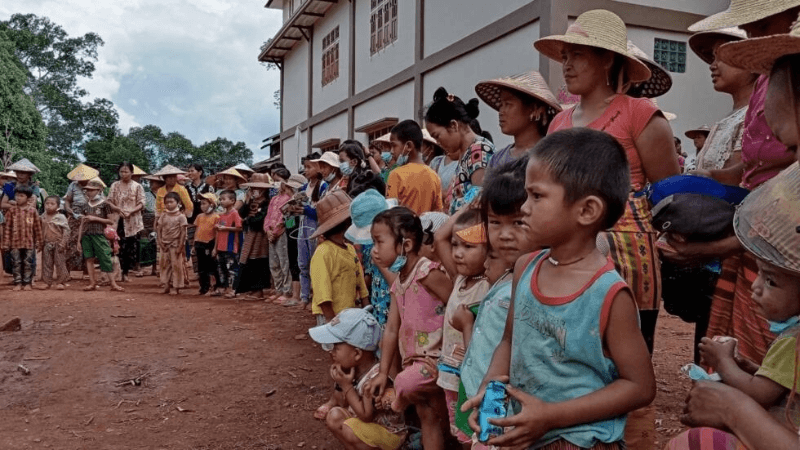
While there is no official tally of the displaced population in Rakhine, all towns in the northern region, including Kyauktaw, Mrauk-U, Minbya, Rathedaung, Myebon, Sittwe, and Pauktaw, have been deserted. Residents have sought refuge with relatives, relocated to rural areas, or fled to urban centers like Yangon for those who can afford it. The vast majority of northern Rakhine's population has been displaced from their homes. Some individuals have found shelter in areas under the control of the Arakan Army with permission, while others reside in makeshift tents along roadways. Additionally, some seek refuge in schools, monasteries, and other religious buildings. Although formal displacement camps do not exist, the Arakan Army offers basic food supplies to those in need, particularly the disabled.
Access to healthcare services is limited in northern Rakhine, with some individuals resorting to nearby hospitals and clinics for treatment using whatever medicines are available. Others seek assistance from unlicensed practitioners due to the lack of communication services, preventing contact with relatives and friends in other towns. Healthcare needs take a backseat as people prioritize finding safe shelter and meeting basic survival needs.
Transportation routes in northern Rakhine have been disrupted, although with the Arakan Army's victories over junta forces, travel by motorbike between villages in Mrauk-U, Kyauktaw, and Minbya townships has become possible. However, high fuel prices and shortages deter extensive travel, with a liter of fuel fetching exorbitant prices. Despite the availability of inter-village, inter-district, and inter-township roads, travel remains infrequent due to the prohibitive cost of fuel.With internet and phone services severed, locals rely on radios and PSI satellite dishes for information dissemination.
People in Rakhine support the Arakan Army (AA) but suffer from the regime's tactics. They're relieved by AA's successes but yearn for an end to the conflict due to dire conditions, including food shortages.
BOB Post