In India's Kandhamal district, the remnants of brutal attacks on Christians 16 years ago resurface as church walls crumble, reflecting lingering concerns among survivors about their minority status in a Hindu-majority nation. With the upcoming election and the anticipated victory of Hindu nationalist Prime Minister Narendra Modi, many Christians fear a resurgence of violence targeting their community.
Deepti was among those targeted during the 2008 violence in India's Odisha state, triggered by the murder of a Hindu priest and his followers, widely blamed on Christians. Aged 19 at the time, she was gang raped by a mob enraged over her uncle's refusal to renounce Catholicism. Now 35 and working as a domestic worker, Deepti (pseudonym) still vividly recalls the traumatic event and has since relocated to the state capital, Bhubaneswar.
Deepti was one of numerous women who endured sexual assault during the violence in the district, as reported by community leaders. The mobs targeted numerous churches, prayer halls, and Christian residences, prompting tens of thousands to flee their homes in fear.
Last year, the Vatican approved the commencement of the beatification process for 35 individuals killed during the Kandhamal violence, recognized by the Church as the "Kandhamal martyrs." Local Archbishop John Barwa of Odisha views this development as a "source of renewed faith and hope." In the village of Tiangia, a simple memorial has been erected in honor of the victims, bearing the inscription "Where there is hatred, let me sow love," quoting Saint Francis of Assisi.
Prasanna Bishnoi, leader of Kandhamal's survivors' association, acknowledges the significance of the church's recognition of those who "died because of their faith." However, he emphasizes that honoring the deceased does little to alleviate the ongoing concerns of the living.
"Otherwise, I don't think it is going to benefit our people," Bishnoi said.
Starting April 19, a marathon six-week voting period commences for India's general elections, but the outcome on June 4 appears largely predetermined, with the ruling Bharatiya Janata Party (BJP) expected to secure another victory after a decade in power. Critics accuse Prime Minister Narendra Modi's BJP of harboring intentions to transform officially secular India into a Hindu nation, a claim Modi refutes. However, many Christians express concerns amid longstanding allegations by right-wing Hindu groups of forced conversions, leading to attacks, which the Christian community vehemently denies.
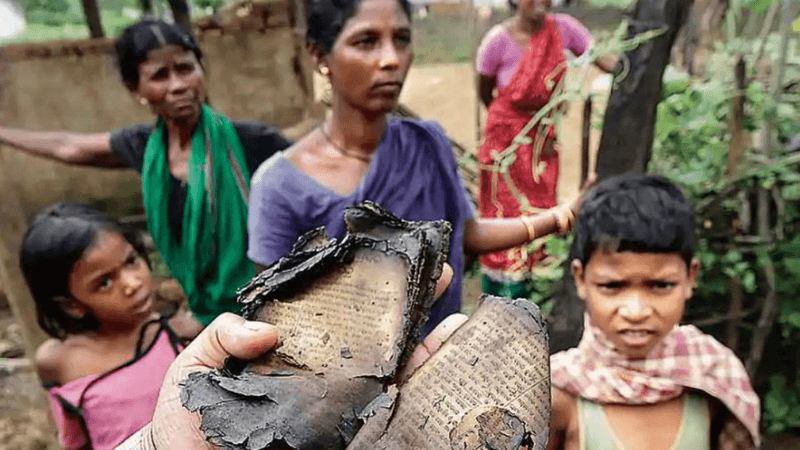
With a population of 1.4 billion, India is home to over 2% Christians, tracing their presence back nearly two millennia to the arrival of apostle Thomas in AD 52. The United Christian Forum (UCF) reported 731 attacks against Christians in India last year, citing "vigilante mobs comprising religious extremists." In Kandhamal, survivors of the 2008 attack still grapple with trauma and fear of potential future targeting. Raheli Digal, 40, points to the remains of her home in Irpiguda village, alongside the ruins of the local church, indicating the persistent danger faced by the community.
"When we remember those old scenes, and watch the news (about ongoing incidents of violence against Christians), we feel scared," she added. "They have been saying for a long time that they won't let Christians live here."
Since the 2008 violence, Raheli has resided in a nearby resettlement camp, avoiding her village out of fear. She tearfully recounts witnessing a mob chanting anti-Christian slogans while they set fire to her home during the attacks. Raheli remains apprehensive about interacting with Hindus.
"We had nothing — not even a piece of cloth, not even water or food," she added. "We had small children with us — we grabbed them, and ran into the forest."
When Modi unveiled a grand temple dedicated to the deity Ram in Ayodhya in January, triggering Hindu festivities across the country, Raheli Digal and her community chose to remain indoors. The temple stands at the site of a centuries-old mosque demolished by Hindu extremists in 1992, igniting sectarian violence that claimed 2,000 lives, primarily Muslims. While the BJP acknowledges a "level of threat perception," it asserts efforts to mitigate such concerns. BJP national spokesman Mmhonlumo Kikon emphasized the importance of dispelling such apprehensions, advocating for inclusivity in the nation.
Modi has been "engaging with the Christian community and the leaders to reassure them this country is for everyone — it is not just for the majority community," Kikon said.
Bishnoi, representing the survivors' association, expressed a sense of reassurance upon witnessing Modi's interactions with Christians, yet he remains unsettled by reports of ongoing violence, which evoke doubts in his mind. He voiced concerns about the potential for increased pressure on minorities if the current government retains power.
BOB Post