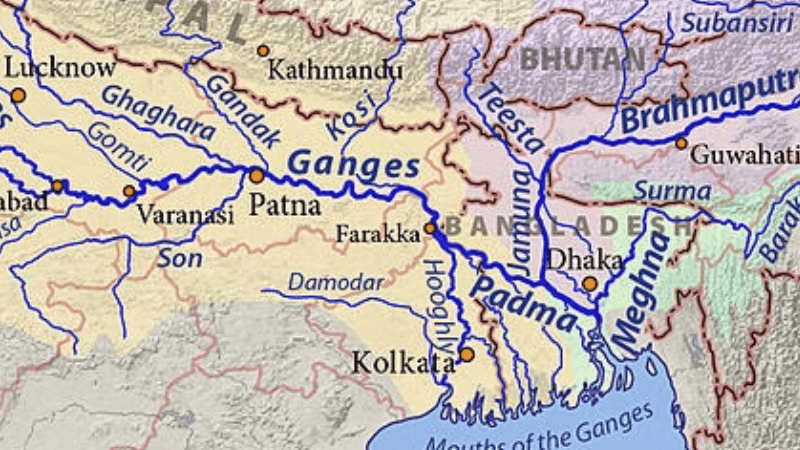
A recent study reveals that an earthquake approximately 2,500 years ago might have significantly altered the course of the Padma River. This earthquake, with a possible magnitude between 7 and 8, redirected the river's main channel in what is now Bangladesh, an area known for significant seismic activity. Michael Steckler, a geophysicist at the Lamont-Doherty Earth Observatory, Columbia Climate School, US, noted, "I don’t think we have ever seen such a big one (earthquake) anywhere."
For those visiting Bangladesh or planning to do so, the dynamic landscape shaped by ancient seismic activities offers a fascinating exploration opportunity. The study's findings illuminate the region's dynamic geography and highlight the potential for future seismic events to reshape the landscape. As climate change and human activities continue to impact river systems globally, insights from this ancient earthquake could prove valuable in managing the Padma's shifting course in the future.
Published in Nature Communications, the study suggests that a powerful earthquake 2,500 years ago, possibly with a magnitude of 7-8, dramatically altered the course of the Padma River in present-day Bangladesh. This significant geological event may have inundated anything in its path. The Padma River, originating in the Himalayas, merges with the Brahmaputra and Meghna rivers before flowing into the Bay of Bengal, forming the world’s second-largest river system after the Amazon.
While river course changes, or avulsions, are common and often triggered by earthquakes, this study is the first to confirm an earthquake causing avulsion in a major delta, according to lead author Elizabeth L. Chamberlain of Wageningen University, Netherlands.
Using satellite imagery, researchers identified the former main channel of the Padma, located about 100 km south of Dhaka, Bangladesh. This low-lying area, approximately 1.5 km wide and extending for about 100 km, runs almost parallel to the current river course. It frequently floods and is primarily used for rice cultivation. In 2018, researchers found seismites in this area, indicating past earthquake activity. Chemical analyses of the sand and mud suggest that a 7-8 magnitude earthquake struck around 2,500 years ago.
The quake's origin might be from a subduction zone to the south and east, where an oceanic crust plate is pushing under Bangladesh, Myanmar, and northeastern India, or from faults at the Himalayas' base, which are rising due to the Indian subcontinent's collision with Asia. A 2016 study led by Steckler showed these zones building stress, capable of producing earthquakes similar to the one 2,500 years ago. Such an event today would impact around 140 million people.
BOB Post