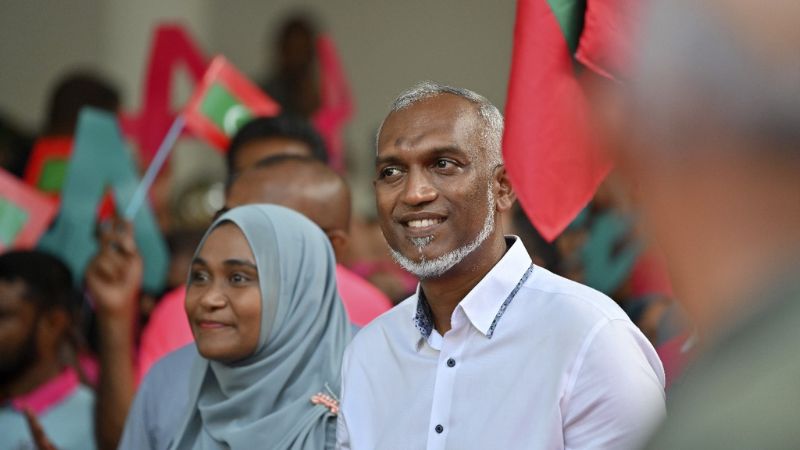
The People's National Congress (PNC) led by Maldives president Mohamed Muizzu clinched a commanding victory in Sunday's parliamentary election, a triumph that could reshape the nation's geopolitical landscape. With 66 seats secured out of the initial 86 declared, the PNC surged into a super-majority position in the 93-member majlis, marking a seismic shift in political dynamics.
The results of the election highlight the tremendous support that Muizzu's pro-China position has received from voters, marking a break from the conventional influence of India, a regional power. The president's vision for closer economic ties with China, including contentious land reclamation projects for thousands of apartments, resonated with the electorate.
Muizzu, a former construction minister, emerged as the face of this strategic realignment, vowing to combat the Maldives' vulnerability to rising sea levels through ambitious infrastructure initiatives. Environmentalists expressed worry about the possible repercussions, while voters hungry for growth and economic advancement were moved by Muizzu's promises. Known for its luxurious hotels and gorgeous beaches, the Maldives is not immune to global geopolitical currents. Due to its advantageous location in the Indian Ocean, the archipelago has been a focal point for rivalries between powerful nations.
Muizzu's electoral triumph comes on the heels of significant diplomatic maneuvers, including awarding infrastructure contracts to Chinese state-owned enterprises and the decision to send home Indian troops stationed in the Maldives. These steps indicate a strategic shift away from India and toward stronger connections with China, a move that has encountered opposition from the outgoing parliament, which is led by the Maldivian Democratic Party (MDP), which is pro-India.
The MDP's electoral defeat, since it only managed to win twelve seats as opposed to its prior super-majority, is indicative of the public's acceptance of Muizzu's policies. Although Muizzu's predecessor, former president Ibrahim Mohamed Solih, had first voiced optimism about the party's future, the results of the elections dealt a harsh blow to the MDP's hopes.
Election observers noticed the visibly evident undercurrents of global concerns influencing the electoral scene as voter turnout reached an astounding 73 percent. In the context of larger regional dynamics, the conflict between pro-China and pro-India forces revealed the Maldives' changing stance on the geopolitical chessboard of the Indian Ocean.
BOB Post