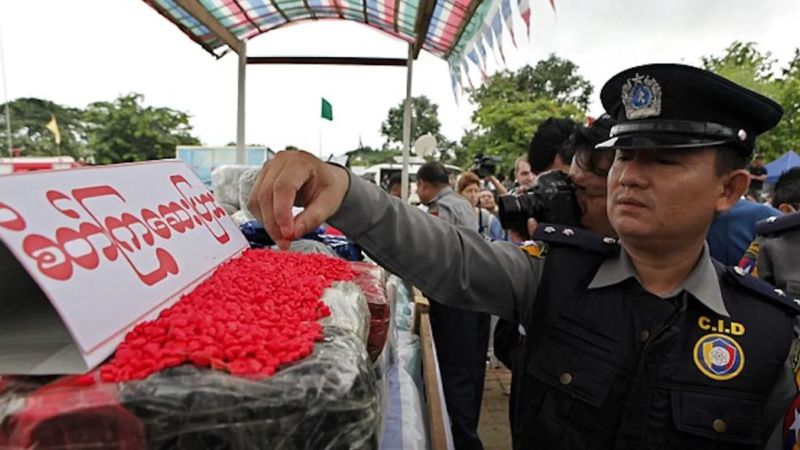
The ongoing civil war in Myanmar, now in its fourth year, has created a fertile ground for drug cartels, with Shan State emerging as a global hub for narcotics production. This development poses a growing threat to Bangladesh, as the country increasingly becomes a key destination for the illicit drugs flowing from Myanmar.
Shan State: A Narcotics Epicenter
According to the United Nations Office on Drugs and Crime (UNODC), Myanmar surpassed all nations in opium production in 2024, with Shan State leading the charge. Poppy cultivation on the mountainous slopes of Shan State feeds the heroin trade, while approximately 50 factories in the region manufacture methamphetamine-based drugs such as Yaba and crystal meth, commonly referred to as "ice."
The war-torn region’s drug operations have expanded dramatically, with the number of Yaba production factories more than doubling in recent years. This growth is fueled by raw materials sourced from the infamous Golden Triangle and China, where precursors such as ephedrine are readily available.
Bangladesh Grapples with Rising Drug Influx
The Department of Narcotics Control has identified Myanmar’s Shan State as the primary source of Yaba, the methamphetamine tablet that has become a scourge in Bangladesh. The affordability and availability of Yaba have led to widespread abuse. Once priced at over Tk1,200 per tablet in 2006, the current rate has plummeted to Tk100-120 in Cox's Bazar and Tk200-250 in Dhaka, highlighting the drug’s growing accessibility.
The rise of "ice" and heroin also adds to the challenge. Law enforcement agencies have reported an uptick in crystal meth seizures in affluent areas like Gulshan, Banani, and Uttara, while heroin shipments, often rerouted through India, are surging. In 2023, over 700 kilograms of heroin were seized, a sharp rise from the 210 kilograms confiscated in 2020.
Drug Trade Funds Insurgent Groups
The collapse of governmental authority in Myanmar due to civil unrest has allowed drug cartels and insurgent groups to thrive. Local warlords, armed groups, and smugglers dominate Shan State, using drug profits to finance their operations.
Reports indicate that intensified competition among traffickers has driven down drug prices. For example, a single Yaba tablet can be purchased for as little as 25 cents, making it more accessible than ever.
Efforts to Combat the Crisis
Despite calls for a zero-tolerance policy, Bangladesh’s efforts to stem the flow of narcotics remain fraught with challenges. The Teknaf border serves as the primary entry point for drugs, but traffickers increasingly use alternative routes to evade law enforcement.
Experts emphasize the need for heightened border vigilance and regional cooperation to combat the narcotics trade. "Drugs have become far more accessible than before, making their spread inevitable," said Dr. Touhidul Haque, an associate professor of criminology at Dhaka University.
According to UNODC estimates, law enforcement intercepts only 10% of incoming narcotics. Given Bangladesh’s proximity to Myanmar, this figure may be even lower, underscoring the urgency of stronger preventive measures.
The Path Forward
As narcotics continue to infiltrate the country, experts warn that Bangladesh must intensify its efforts to secure borders, disrupt trafficking networks, and combat the growing influence of drug cartels. Without decisive action, the country risks a worsening public health and security crisis fueled by the relentless influx of drugs.
BOB Post