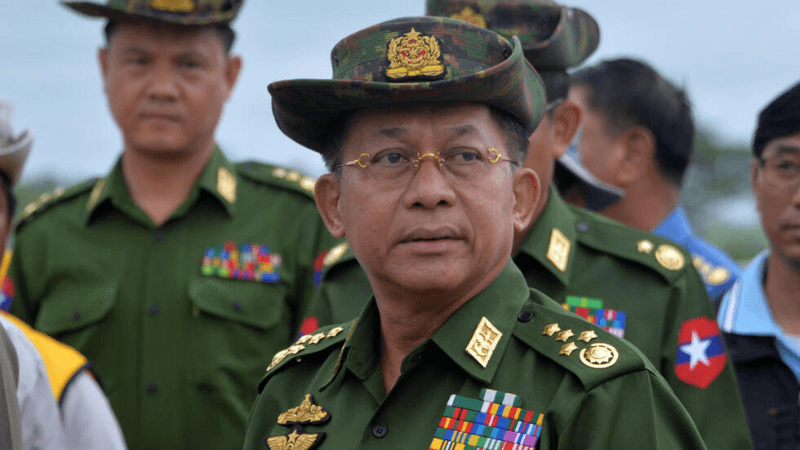
A prominent monk from the ultra-nationalist fringe of Myanmar's Buddhist clergy has openly called for the country's military ruler, Min Aung Hlaing, to step aside amid growing discontent over recent military defeats. Pauk Ko Taw, a bespectacled monk, delivered his startling suggestion in Pyin Oo Lwin, a hill town with historical ties to the military's top brass, further underscoring the gravity of the criticism within the ranks of one-time supporters. The monk's call for leadership change follows a series of significant setbacks suffered by the military at the hands of ethnic insurgents, prompting even staunch allies to reconsider their support for the ruling junta. Pauk Ko Taw's comments are reflective of a broader sentiment among junta supporters frustrated by the military's perceived inability to quell opposition forces.
The nexus between Myanmar's military and the Buddhist clergy is longstanding, with monks historically engaging in political activism against authority. While many monks opposed the 2021 coup, some have aligned themselves with the military, sharing a belief that Buddhism and Burmese culture need protection from external influences. The recent defeats suffered by the military in battles against ethnic armed groups have raised doubts about its capabilities and leadership. The once-strong alliance between the military and ultra-nationalist monks appears to be wavering, with some critics describing Min Aung Hlaing as "incompetent" and calling for a change in leadership.
The unexpected emergence of Pauk Ko Taw as a vocal critic within the monkhood adds a new dimension to Myanmar's complex political landscape. Previously aligned with the military, he now leads armed groups in central Myanmar, symbolizing a shift in the traditionally supportive stance of the Buddhist clergy toward the junta. The military's strategy to portray Min Aung Hlaing as a champion of Buddhism to bolster his legitimacy is facing challenges, as even monks from within the religious hierarchy express dissatisfaction. While some members of the State Sangha, the governing Buddhist council, have quietly urged restraint on the generals, others, like Sitagu Sayadaw, openly support the military, further highlighting divisions within the monkhood.
Myanmar's military ruler, Min Aung Hlaing, has demonstrated a shrewd ability to manage internal power dynamics by promoting and sidelining potential rivals. In a notable example, the once-presumed successor, General Moe Myint Tun, was abruptly arrested last September and later sentenced to life in prison on corruption charges. Despite facing criticism and military defeats, Min Aung Hlaing has maintained a grip on power, seemingly devoid of a clear successor. Even in the aftermath of significant battlefield setbacks, he continues to preside over official functions, projecting a regal image rather than that of a military commander. Whether this demeanor is a result of confidence or a detachment from reality remains unclear, but as the military grapples with substantial losses over the past three months, the absence of a clear leader and the potential collapse of forces in key regions may pose a serious threat to military morale, raising concerns about the regime's sustainability.
The collapse of the junta's forces in strategic locations like Lashio in northern Shan State, Rakhine State in the west, or the impending threat in Karenni State on the Thai border, where insurgents are nearing the capture of the state capital Loikaw, could precipitate a broader breakdown in military morale. Such a scenario might pave the way for the eventual implosion of the regime, as the military struggles to address internal dissent and mounting challenges from opposition forces. The absence of a viable successor and the persistent military setbacks underscore the precarious nature of the current political landscape in Myanmar.
BOB Post