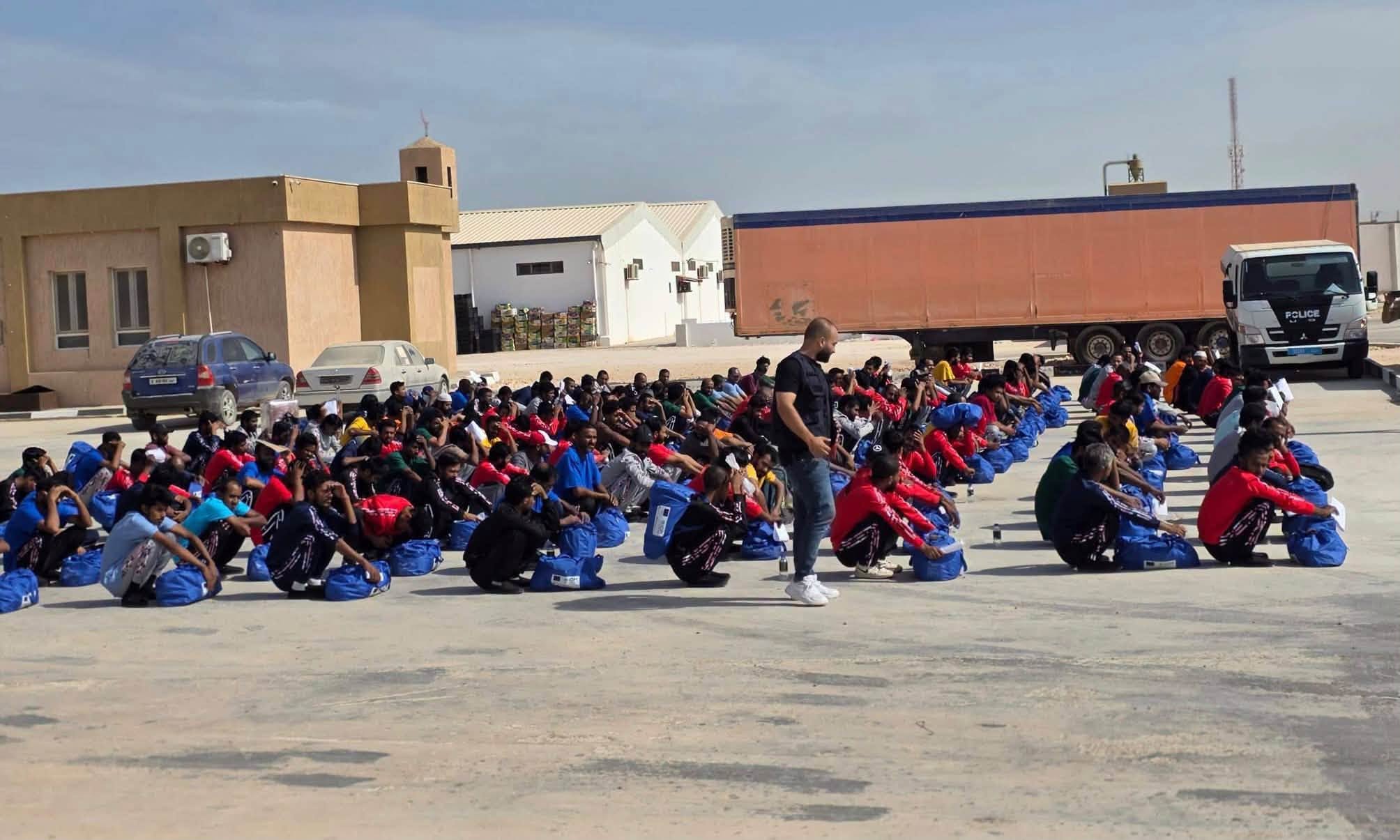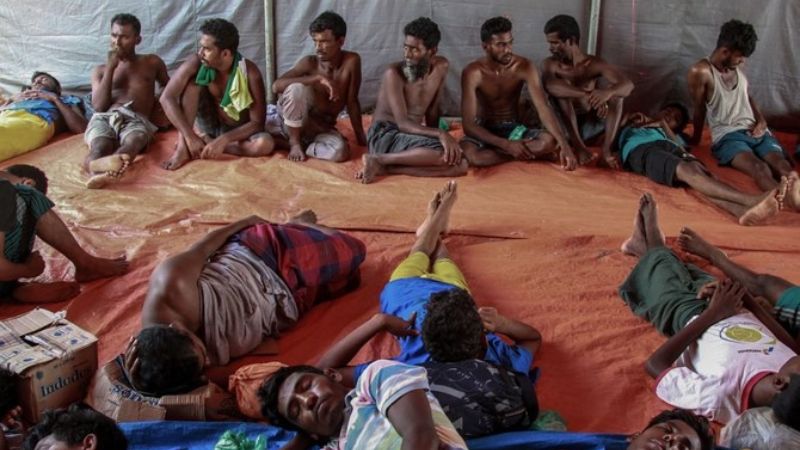
The UN and relief organizations report that as the fighting between the powerful ethnic Arakan army and the country's ruling junta intensifies in the western state of Rakhine, Myanmar's Muslim-minority Rohingya community is once again in danger. Since the middle of May, hundreds of Rohingya have fled to Bangladesh, a neighbor that is wary about taking in additional refugees. Humanitarian help is desperately needed for those who are still in Rakhine.
The Arakan Army (AA) claimed control of Buthidaung town earlier in May, following intense fighting during which the ethnic army was accused of targeting Rohingya community members. The AA denies these charges. Reuters could not independently verify the claims, and a junta spokesperson did not respond to requests for comment.
The AA is now advancing on the border town of Maungdaw, home to a large Rohingya population. The Myanmar junta is expected to hold this town, raising the specter of more severe violence. "We see clear and present risks of a serious expansion of violence as the battle for neighboring Maungdaw town has begun, where the military maintains outposts and where a large Rohingya community lives," a spokesperson for the UN High Commissioner for Human Rights stated.
The Rohingya have faced decades of persecution, culminating in a 2017 military crackdown that forced nearly one million to flee to Bangladesh. Many now live in crowded refugee camps. Mohammed Taher, a Rohingya refugee in Bangladesh, shared that he recently spoke with a friend in Maungdaw who described the community living in constant fear. "Many want to flee from Rakhine, but Bangladesh is not opening its door for Rohingya," Taher said.
According to a UN estimate, the ongoing violence has driven some 4,000 Rohingya to seek safety near the Naf river on the border. "There will be no entry of Rohingyas into Bangladesh," a senior border guard official in Bangladesh informed Reuters.
Myanmar has been in turmoil since a 2021 military coup, which spurred a grassroots armed resistance fighting the junta alongside long-established ethnic minority rebel groups.
The conflict in Rakhine reignited last November when a ceasefire between the AA and the junta collapsed, leading to a series of battlefield successes for the rebels. "Faced with mounting losses in Rakhine, the regime has resorted to arming members of the Rohingya ethnic minority to counter the Arakan Army's advance," Morgan Michaels of the International Institute for Strategic Studies said in a May report. "The AA has reacted with inflammatory rhetoric and violence directed at the Rohingya."
Amid the renewed conflict, Rohingya civilians are increasingly caught in the crossfire, the United Nations Office for the Coordination of Humanitarian Affairs (OCHA) reported last week. The agency estimates that over 350,000 people are displaced across Rakhine after years of conflict, many without access to basic services. "We are witnessing a near total absence of humanitarian assistance for communities who rely on it," said Médecins Sans Frontières, noting that hospitals in Buthidaung and Maungdaw are closed.
The AA, which aims to form an autonomous state, has warned of more battles to come, urging civilians in Buthidaung, Maungdaw, and Thandwe to dig bomb shelters or evacuate to safer areas. While denying that it has targeted the Rohingya, the AA has also called for international aid for some 200,000 internally displaced people sheltering in areas it controls in Buthidaung and Maungdaw.
"The situation is incredibly fraught and dangerous…In some ways, this is an early test of whether a post-military-rule Rakhine State with significant autonomy can work." said Scot Marciel, a former U.S. ambassador to Myanmar.
BOB Post