The junta's grasp on power in Myanmar is becoming more precarious three years after the military takeover amid a surge in armed rebellion. Tens of thousands of people have joined the anti-junta "People's Defense Forces" (PDFs), and ethnic minority militias have taken control of territory in the northern regions of Shan, Kayin, and Chin. Rising unity between democratic and ethnic forces has been brought out by the junta's efforts to crush rebellion. Meanwhile, Former UN official Charles Petrie notes a dramatic shift in Myanmar's dynamics toward the pursuit of alternative government systems, suggesting a deep paradigm shift, as the military puts on a show of might with its Armed Forces Day parade.
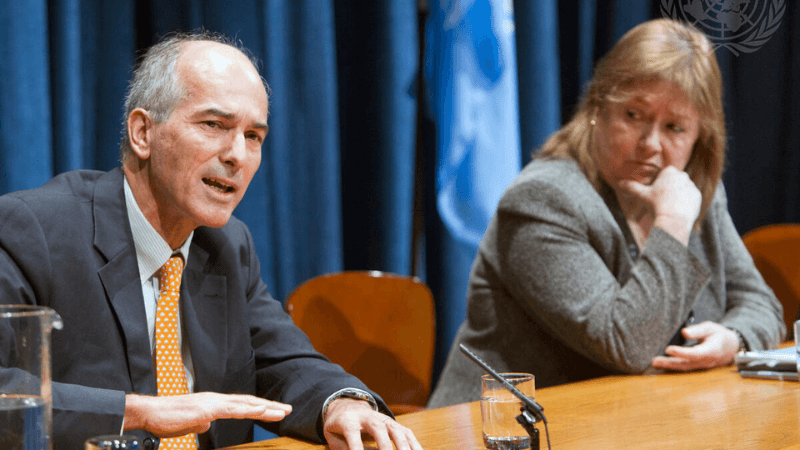
Charles Petrie provided DW with an overview of his two main goals when asked about his recent trip to Myanmar. “I went there for two reasons. The first was to get a sense of whether international humanitarian aid was reaching the population. But more importantly, I wanted to get a sense of the local governance structures that were starting to emerge.” Petrie noted the crucial role that the younger generation plays in opposing military authority while expressing surprise at the beneficial growth of these formations. Petrie defined this resistance as a revolutionary movement and said it was more than just a civil war. "You have this new generation, which is the backbone of the current resistance, in part because they don't have the same fear of the military that their parents had. They haven't inherited this level of self-censorship that defined how the Myanmar military controlled the country before." He noticed a paradigm shift in Myanmar toward the pursuit of alternative forms of government and administration, greatly impacted by the 2021 events. Petrie reiterated the opposition's rejection of quick fixes and argued in favor of a thorough approach to Myanmar's protracted problems.
In reaction to concerns over Myanmar's potential disintegration within the present conflict, Petrie emphasized the country's fragmentation as a result of the military's loss of power in various regions. “What we're seeing now is, in the space created, there's an emergence of new forms of governance. But — and this is important — none of the resistance or the ethnic groups are seeking independence." Petrie instead addressed the necessity of a federalist framework that upholds the rights of all ethnic communities and fosters mutual understanding. He downplayed concerns that foreigners might be held responsible for the country's collapse and focused more on how urgent it was to create a federalist state that could adjust to the different administrative realities that the country faced.
"Western institutions, the UN are very slow and, to a certain extent, almost unable to think outside the box, but that is what is needed in Myanmar." He added.
In order to successfully address the situation in Myanmar, Petrie identified several initiatives that the UN and international community could take. First and foremost, he insists on the value of humility, asking them to acknowledge the complexity of the issue and refrain from forcing their own points of view. “They feel severely let down by the UN. They have had to take care of themselves and they did. Therefore, be humble." Second, Petrie mentioned the need to modify earlier strategies to fit the new situation, pointing out that negotiating access with Naypyidaw alone is insufficient. "Which means that you have to start engaging with the administration, the governance structures in the other parts of the country. But engaging doesn't mean just going there to see them from time to time — it demands a lot of work and sustained engagement is needed. Basically, taking localization to the next level. Ask them how to channel the aid. Have the courage to engage with the non-state actors in a substantive way. Basically, it's about the willingness to operate differently."
Petrie addressed the major obstacles that the UN Country Team in Myanmar must overcome, most notably the lack of leadership following the coup. He stressed how the team's effectiveness was negatively impacted by this leadership gap and urged swift action to resolve the problem. "I think one of the big problems for the UN Country Team in Myanmar today is it does not have leadership. The team is basically orphaned. There has not been a UN resident coordinator in the country since the coup, which means that all of the UN's agency heads are more preoccupied with their own responsibilities and mandates, than the greater good of the system." Petrie noted how crucial it is to have capable leadership in order to negotiate the intricate complexities of Myanmar's prolonged turmoil.
BOB Post