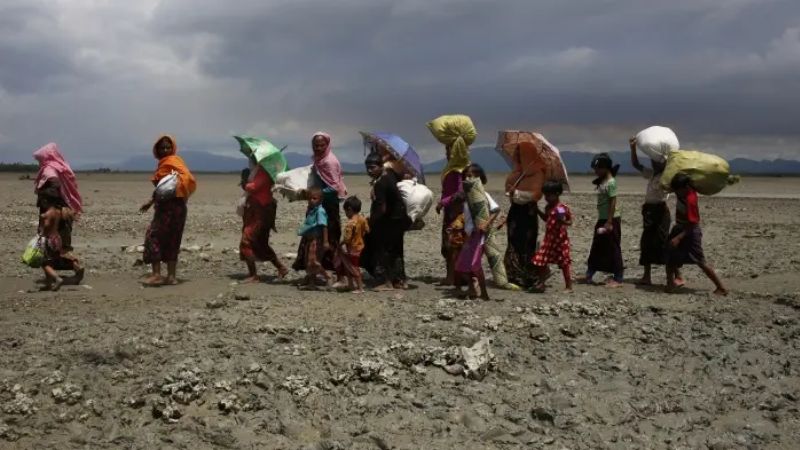
In the past 8 to 10 days, over 15,000 Rohingya have fled to Bangladesh as violence intensifies in Myanmar's Rakhine State, according to multiple sources. The influx has raised concerns, with another 50,000 Rohingya reportedly waiting to cross the border.
The Rohingya refugees are entering through areas like Ukhiya and Teknaf in Cox’s Bazar, as well as Naikhongchhari in Bandarban. Smuggling networks are reportedly helping them navigate dangerous routes across the Naf River.
Sources from the International Organization for Migration (IOM) and the Office of the Refugee Relief and Repatriation confirmed the recent wave of arrivals, noting that many of those fleeing are women and children in need of urgent medical attention.
The conflict, which reignited in February between Myanmar's government forces and the Arakan Army insurgents, has dramatically escalated since August. Drone attacks and heavy artillery fire have devastated Rohingya settlements, pushing thousands to seek safety in Bangladesh.
Local accounts describe the Rohingya crossing the border at 25 to 30 different points, including Teknaf’s Jadimora and Ukhiya’s Balukhali. On Sunday, a group of 30 Rohingya, including 15 children, crossed the Naf River and took refuge in a local home in Keruntali after fleeing from the Sudapara village near Maungdaw.
Zaheda Begum and Noor Jahan, two Rohingya women from the group, spoke about the dire situation in Myanmar. "Both sides are using powerful grenades and mortar shells. Bombs are being dropped from warplanes, destroying Rohingya villages. Many have been killed, and homes have been burned down," Zaheda told reporters.
Despite the growing number of arrivals, many Rohingya are struggling to cross due to a lack of boats. Smuggling rings have been charging refugees for assistance in crossing the river, according to reports.
Lieutenant Colonel Mohammad Mahiuddin Ahmed, Commander of Teknaf-2 Border Guard Bangladesh (BGB), downplayed the reported figures, stating that "isolated infiltrations" were occurring, and nearly 4,500 Rohingya had been turned back in the last month. He assured that patrols along the Naf River had been intensified.
Refugee Relief and Repatriation Commissioner Mohammad Mizanur Rahman emphasized the need to curb the influx due to dwindling foreign aid and increasing strain on overcrowded refugee camps. “Those crossing the border are staying with relatives in various camps. We don't have an official count of how many have entered," he said.
Meanwhile, Teknaf Upazila Nirbahi Officer Mohammad Adnan Chowdhury noted the challenges in monitoring the border, as most crossings happen under the cover of darkness.
The ongoing violence has rattled communities on both sides of the border. Arafa Begum, a local councillor in Teknaf, described the impact of the conflict on nearby residents. "The explosions are so loud that it feels like the bombs are landing right next to us. Children wake up crying at night from the noise," she said.
Rohingya expert Aman Ullah provided insight into the complex dynamics of the conflict, explaining that the Rohingya have become targets of both the Myanmar Army and the Arakan Army. He noted that around 2,000 Rohingya had undergone military training with the Myanmar Army, and many Rohingya remain caught in the crossfire, unable to find refuge.
As violence continues, the situation in the border regions remains tense, with international organizations and Bangladeshi authorities keeping a close watch on the humanitarian crisis.
BOB Post