

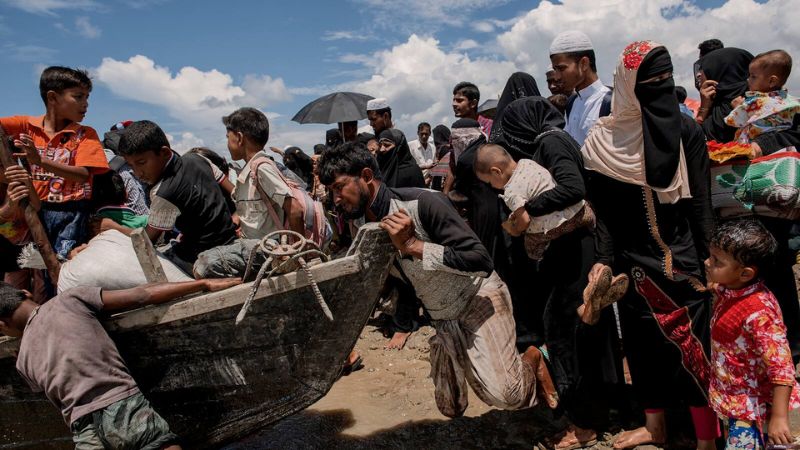


The ongoing conflict in Myanmar has driven an additional 80,000 Rohingyas to seek refuge in Bangladesh since August last year, exacerbating an already dire humanitarian situation. This brings the total number of Rohingya refugees in Bangladesh to a staggering 1.2 million, according to a joint study by the Bonn International Centre for Conflict Studies (BICC) and the Refugee and Migratory Movements Research Unit (RMMRU).
The sudden influx has placed immense pressure on Bangladesh, which is already struggling to manage the overcrowded camps in Cox’s Bazar. The crisis has been further complicated by funding shortages, intensified by the recent suspension of US aid for development projects in Bangladesh. The United States, which has provided nearly $2 billion in humanitarian assistance since 2017, has put its funding commitments under review, raising fears of deeper financial shortfalls.
The funding gap has widened significantly over the years. In 2024 alone, only $548.9 million was provided against the required $852.4 million, leaving essential services in the camps underfunded. The World Food Programme (WFP) has already slashed food rations multiple times due to financial constraints, forcing many refugees to turn to informal labor and criminal activities to survive.
The RMMRU study paints a grim picture of the deteriorating conditions in the camps, with rising incidents of gender-based violence, forced marriages, and psychological trauma. Armed groups such as ARSA, RSO, and the Arakan Army are reportedly recruiting Rohingya youth, with estimates suggesting that between 3,000 and 5,000 young men were forcibly conscripted in the first half of 2024 alone.
Bangladesh has repeatedly called on the international community to take urgent action, emphasizing that repatriation remains the only sustainable solution to the crisis. With donor fatigue setting in and security risks escalating, experts warn that without immediate intervention, the situation could spiral further out of control.
BOB Post