The Rohingya have experienced a brutal campaign that began seven years ago. Nevertheless, justice and liberation for such subjugated minorities remain elusive. The Rohingya population in the northern Rakhine state has fallen into incredible despair since the Burmese military launched a devastating operation that involved murders, rapes, and burnings on August 25th, 2017. Justice should prevail but for all these years no one has paid the price for their crimes against them.
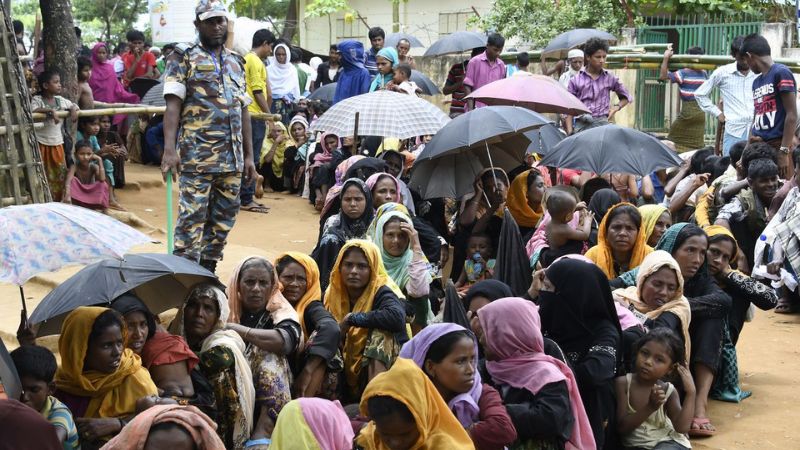
Human Rights Watch reports that more than 960,000 Rohingya fled to risky and overcrowded internment camps in Bangladesh, leaving thousands more stuck in Myanmar where they continue to face discrimination and persecution. The dire circumstances faced by these people expose a serious lack of action on the part of the global community in tackling one of the most urgent humanitarian crises of our era.
Human Rights Watch's interim director for Asia, Elaine Pearson, emphasized the pressing requirement for a coordinated global effort to guarantee accountability and justice for the Rohingya. She reiterated how crucial it is to include the perspectives of the Rohingya people in the process and encouraged states to act decisively to make the Myanmar military answerable for its crimes against humanity.
Survivors share harrowing accounts of abuse and displacement. According to Abdul Halim, 30, a Rohingya refugee in Bangladesh, "Myanmar authorities brutalized us." Their homes were set on fire, sisters and mothers were sexually assaulted, and kids were burnt alive. They fled that violence to Bangladesh, and sought refuge. Having now spent seven years residing in Kutupalong Camp. When they left Myanmar in 2017, Abdul carried his very sick mother on his back. She passed very soon after arriving in Bangladesh.
Rohingya still living in Rakhine State, are subjected to systematic abuses, persecution, and loss of liberties that classify as crimes against humanity . They are denied access to adequate sustenance, healthcare, education, and a means of livelihood, and they endure confinement in camps and villages with no freedom of movement.
“Since we were children in Myanmar, we never had any freedom,” Abdul said. “They called me ‘nowa kalar’ [a slur for Muslims], to say we are like animals.”
According to Myanmar's 1982 Citizenship Law, Rohingya are essentially denied citizenship and became stateless. Decades of brutality, bigotry, and legally binding oppression laid the foundation for the crimes of 2017.
“In Myanmar, we struggled through life,” Hasina Hatu, 40, said. “When we raised goats, the border guard forces took away the goats. When we raised cattle, they took away the cattle. When we farmed paddy fields, they took away the rice.” As they fled in 2017, her father fell down a muddy slope and died.
The crisis was made worse by the military takeover in February 2021, which threw Myanmar into even greater chaos and led to massive oppression and bloodshed. The Rohingya, who are trapped in the crosshairs of a new battle, are suffering even more as a result of the junta's ongoing assault on the resistance.
Concerns about the dwindling support from foreign donors are growing in Bangladesh, where more than a million Rohingya refugees reside. The Rohingya refugees cannot be returned to their country unless they are granted safe passage and suitable repatriation in accordance with the international rules of non-refoulement, which forbid the forcible return of refugees to nations where their lives are in threat.
To address the crisis' fundamental causes and protect the safety and dignity of the Rohingya people, the worldwide community must make a comprehensive and coordinated effort. The outgoing UN High Commissioner for Human Rights, Michelle Bachelet, implored states to place a high priority on accountability and justice while stressing the need for ongoing support for Rohingya refugees and their host communities.
In an urgent appeal to international leaders, Special Rapporteur on the crisis in Myanmar Tom Andrews called on them to break free from their "deadly paralysis of indifference" and act decisively to prosecute those accountable for the brutality against the Rohingya. He demanded an end to the practice of offenders going free and stressed the need of international investigative efforts.
BOB Post