Pakistan's much-anticipated general elections kicked off today with over 128 million registered voters preparing to cast their ballots. However, the electoral process is overshadowed by controversy, security concerns, and the absence of former Prime Minister Imran Khan, currently incarcerated. Imran Khan, leader of the Pakistan Tehreek-e-Insaf (PTI) party, holds historical significance in Pakistani politics, raising questions about the fairness of the election in his absence.
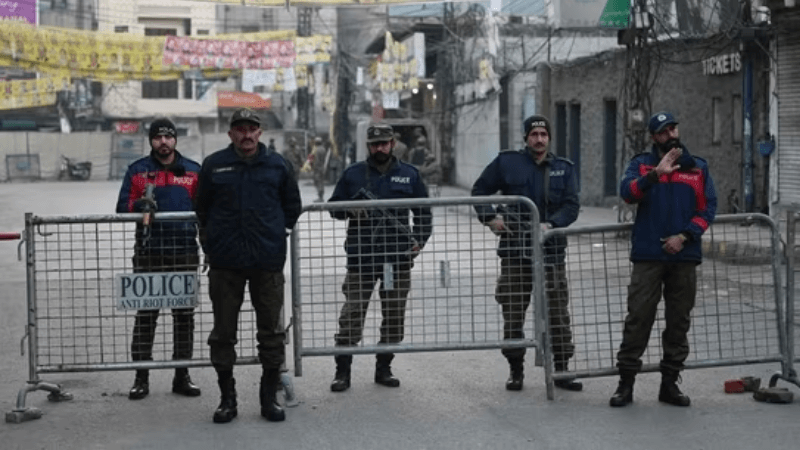
Authorities, aiming to maintain "law and order," took the drastic step of shutting down mobile phone services across the country during the voting period. While intended to prevent untoward incidents, this measure contributes to the tense atmosphere created by the crackdown on Imran Khan and his party, fueling concerns about potential violence or disruptions during the electoral process.
The three main political parties in this election are the Pakistan Muslim League-Nawaz (PML-N), PTI, and the Pakistan People’s Party (PPP). Notably, the PTI has been denied the right to contest under its own election symbol and is instead supporting a list of independent candidates. The challenges and controversies surrounding the electoral process are significant. The absence of Imran Khan, a key political figure, due to his incarceration poses uncertainties about the fairness of the elections. The shutdown of mobile phone services, ostensibly for maintaining "law and order," adds to the apprehension, creating a tense environment during the voting period.
Recent tragic events, such as the blasts in Balochistan province resulting in at least 30 casualties, underscore the volatile security situation in the region. Despite these challenges, Pakistani voters exhibit resilience and determination to exercise their democratic rights, emphasizing the importance they place on participating in the electoral process.
The economic landscape further complicates the situation, with inflation around 30 percent, a fast-depreciating currency, and a significant portion of the population below the poverty line. The elections feature prominent players, including three-time former Prime Minister Nawaz Sharif, who could potentially secure a record fourth term if his Pakistan Muslim League-Nawaz (PML-N) performs well.
Critics argue that Sharif's prominence is influenced more by the military establishment than an inspirational campaign. The political landscape has witnessed a crackdown on Imran Khan's PTI, raising questions about the election's legitimacy. Political analyst Danyal Adam Khan describes the pre-poll situation as a "flagrant mockery" of the democratic process.
Despite these challenges, young voters, comprising over 45 percent of the 128 million electorate, have the opportunity to influence the outcome. The history of low turnout in previous elections might see a shift as young voters have a chance to make their voices heard. Former Prime Minister Shahid Khaqan Abbasi emphasizes the incoming government's responsibility to address the economic situation, highlighting the need for credibility. As polling concludes at 5 p.m. local time, the counting of votes will promptly begin, with tentative results expected within a few hours. Stay tuned for further updates as the results unfold.
BOB Post