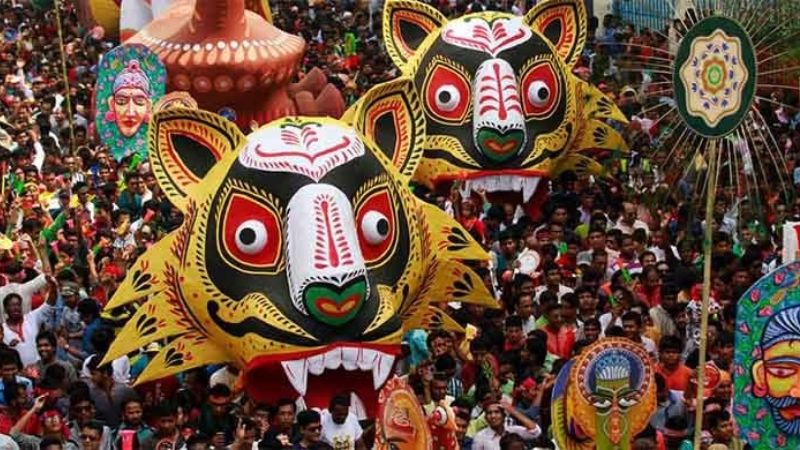
Asia burst into vibrant celebration on April 14 as millions across the continent ushered in the traditional New Year with cultural festivals, water fights, and colorful processions. From the rhythmic beats of Dhaka’s Pohela Boishakh to the water-soaked streets of Bangkok’s Songkran, the spirit of renewal and unity echoed across borders.
Bangladesh: The Heartbeat of Pohela Boishakh

In Bangladesh, the streets of Dhaka transformed into a sea of red and white as people gathered to celebrate Pohela Boishakh, the Bengali New Year. Organized by Dhaka University’s Faculty of Fine Arts, the iconic Mangal Shobhajatra, a UNESCO-recognized heritage—took to the streets with giant paper-mâché masks, colorful floats, and thousands chanting songs of harmony and hope.
Families feasted on panta ilish (fermented rice with fried hilsa fish), while traditional music and dance lit up neighborhoods from Dhaka to Chattogram. This year’s celebrations emphasized eco-consciousness, with artists promoting sustainable crafts and zero-waste gatherings.
Thailand: Splashing into Songkran

Meanwhile in Thailand, the Songkran festival turned the nation into a water wonderland. Celebrated as the Thai New Year, Songkran festivities involved massive water fights on the streets of Bangkok, Chiang Mai, and Phuket, symbolizing the washing away of bad luck.
In addition to the playful chaos, Thais also paid homage to elders through traditional Rod Nam Dam Hua ceremonies—pouring fragrant water over their hands to seek blessings. Temples held rituals, while locals cleaned Buddha statues and offered alms to monks as a sign of spiritual renewal.
Cambodia, Laos, and Myanmar: Shared Heritage, Unique Flavors

In Cambodia, the Choul Chnam Thmey festival brought families together to celebrate with temple visits and traditional games. Similar cultural threads ran through Pi Mai in Laos and Thingyan in Myanmar, where water rituals and offerings to ancestors echoed the shared Buddhist roots of these New Year traditions.
Though each country has its unique customs and flavors, the essence of the April New Year festivals is universal—cleansing the old, embracing the new, and celebrating community. From South Asia to Southeast Asia, these festivals foster cross-cultural understanding and remind the world of Asia's deep-rooted traditions and dynamic spirit.
As the sun set on this vibrant day, one thing was clear: across Asia, April 14 is more than just a date, it's a celebration of identity, resilience, and joy.
BOB Post