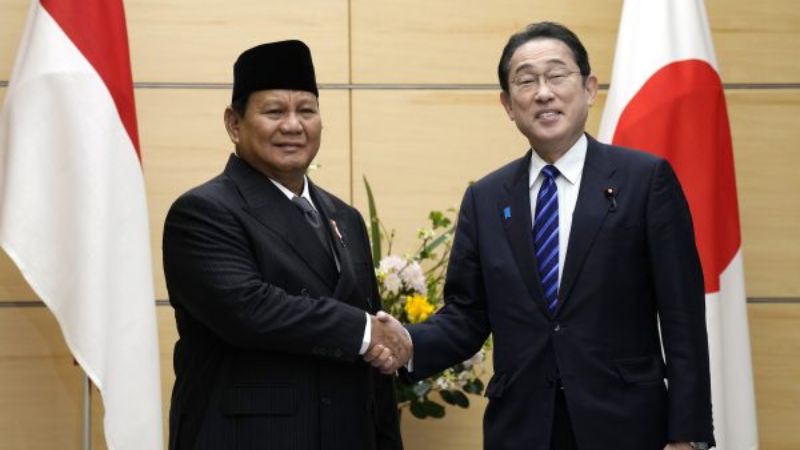
Indonesian President-elect Prabowo Subianto paid a visit to Tokyo to improve defense relations with Japan, following talks in Beijing about extending a collaboration. As opposing nations compete for influence in Southeast Asia, many see Prabowo's travels as a balancing effort.
Prabowo, who will take over as president of Indonesia in October, is the first president-elect to make such trips. Appealing to Japan for increased defense sector collaboration, while Japanese Prime Minister Kishida stressed the need of an open and free Indo-Pacific area. They talked on North Korea, Myanmar, and the East and South China Seas. Japan is in favor of Indonesia joining the OECD and working together to uphold an international system founded on the rule of law.
The visit is reflective of the close connections and shared commitment to advancing collaboration between the two nations. Prabowo made it a point to strengthen his ties with neighbors by visiting Malaysia after his trip to Japan. Both presidents promised to collaborate on shared principles and ideals, indicating a willingness to work together on strategic and security concerns in the region.
Kishida reaffirmed Japan's commitment to security cooperation by granting Indonesia patrol boats worth 9.05 billion yen in December 2023. Xi's invitation to Prabowo, Indonesia's future president, raised concerns in Jakarta as it was unprecedented for an uninstalled leader. During Prabowo's visit to Beijing, Xi expressed China's willingness to enhance cooperation with Indonesia for regional and world peace.
Analysts believe Prabowo's visit to Japan aimed to balance regional relations, especially given Indonesia's defense ties with Western nations. Rather than receiving an official invitation from the Japanese government, Prabowo initiated the visit, according to Raden Mokhamad Luthfi, an international relations lecturer at Al Azhar University of Indonesia.
Luthfi stressed the importance of the visit in light of Indonesia's wide-ranging defense alliances with Japan and the West.
"During his meeting with Kishida, Prabowo should offer specific proposals like strengthening military and coast guard collaboration to address China's assertiveness in the South China Sea." Luthfi stated
Erik Purnama Putra, an analyst at the Indonesian Strategic and Defence Studies (ISDS), countered that given Indonesia's reliance on support from the United States and Western nations in both defense and the economy, the trip to Tokyo was likely intended to counter any perception of China-synergy.
"Japan's tense relationship with China and its position as a projection of U.S. power in East Asia are widely acknowledged," he said. “While Indonesia may have economic inclinations towards China, our military alliances are firmly rooted in the West.”
Prabowo's diplomatic skills are seen as an asset in ensuring Indonesia's independence and foreign policy.
A study revealed that most Indonesians view China's actions in the South China Sea as a threat. Prabowo's Tokyo visit is seen as a reflection of Indonesia's independent foreign policy stance, aiming to show a balance between Western and China-centric alignments.
Muradi, a professor of political science and security at Padjajaran University in Bandung, said, “Prabowo is well-versed in Western political culture and doesn’t want to appear China-centric,” “The visit to Japan is his way of affirming that his foreign engagements are not limited to China,” he said.
Muradi, who goes by one name, said he believed that Prabowo’s focus, when he takes office in more than six months, would be on sustaining Japanese investment in Indonesia rather than solely on defense cooperation.
“Prabowo places great importance on Japan’s economic contributions, as Japan is one of the major investors in Indonesia,” he said.
Prabowo expressed his desire for enhanced security and economic cooperation with Japan, following a similar sentiment expressed to Chinese President Xi Jinping.
Indonesia, being courted by both Japan and China due to its strategic location in the South China Sea, is of interest to both nations. Prabowo, known for his military background, will be sworn in as President in October by President Joko Widodo.
Criticisms have been raised by human rights groups due to alleged abuses committed by Prabowo during his military career, which he denies. Prabowo's meetings with Japanese officials in Tokyo come after his visit to China to strengthen ties and cooperation. Xi Jinping also emphasized the deepening of strategic cooperation with Indonesia, aiming to build a community with shared benefits and contribute to regional peace and development.
BOB Post