The ruling military junta has officially admitted to facing "heavy assaults" from anti-coup forces in multiple regions. This development marks a critical shift in the dynamic of the two-year struggle, potentially signaling a turning point in the fight for control of the Southeast Asian nation.
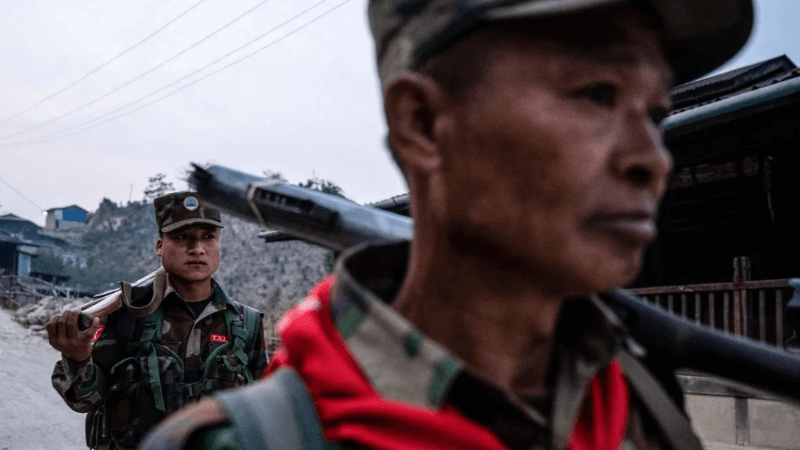
The junta's spokesperson, Zaw Min Tun, confirmed on November 16, 2023, that anti-coup forces, composed of ethnic armed groups and civilian resistance, were launching coordinated offensives in Shan, Kayah, and Rakhine states. The attacks targeted military outposts, strategic towns, and even prisons, showcasing the growing boldness and capability of the resistance.
This open acknowledgment of "heavy assaults" stands in stark contrast to the junta's previous narrative of maintaining control. Analysts view it as a sign of growing pressure on the military regime, facing both internal dissent and an increasingly effective resistance movement.
Reports indicate that the anti-coup forces, under the banner of Operation 1027, initiated the offensive in Shan State near the Chinese border on October 27, 2023. The Three Brotherhood Alliance, consisting of the Myanmar National Democratic Alliance Army (MNDAA), Ta’ang National Liberation Army (TNLA), and Arakan Army (AA), aims to eradicate the "oppressive military dictatorship." The fighting has since spread to other areas, including western Rakhine and Chin states bordering Bangladesh and India.
Junta reports highlight the use of drones by anti-coup forces, dropping "hundreds of bombs" on military outposts. This indicates advancements in the resistance's tactics and access to technology, potentially signaling growing international support.
The coordinated nature of the offensives across multiple regions marks a significant departure from the earlier, localized resistance tactics. This newfound unity and strategic collaboration suggest a maturing and professionalized opposition capable of posing a more serious threat to the junta.
As fighting intensifies, humanitarian concerns mount. Reports of civilian casualties, displacement, and food shortages are already emerging, prompting calls for international intervention and increased aid. More than 200,000 people have been displaced, and at least 75 civilians, including children, have been killed, according to the United Nations. UN Secretary-General Antonio Guterres expressed deep concern about the expansion of the conflict, stating that fighting had forced more than two million people from their homes.
The long-term implications of this escalation remain unclear. While the junta's acknowledgment suggests vulnerability, it is too early to predict their response or the resistance's ultimate success. Myanmar's Southeast Asian neighbors have attempted to encourage a peace process, but the generals have ignored their efforts. At a meeting of defense ministers from the Association of Southeast Asian Nations (ASEAN), Indonesia’s Defense Minister Prabowo Subianto reiterated the need for peace. The AA, which had previously observed a ceasefire with the military agreed shortly before the coup, claimed that dozens of police and military personnel had surrendered or been captured as its forces advanced.
Myanmar’s representatives are barred from ASEAN’s top summits because of their failure to implement an April 2021 agreement with the grouping in which they agreed to end the violence.
BOB Post