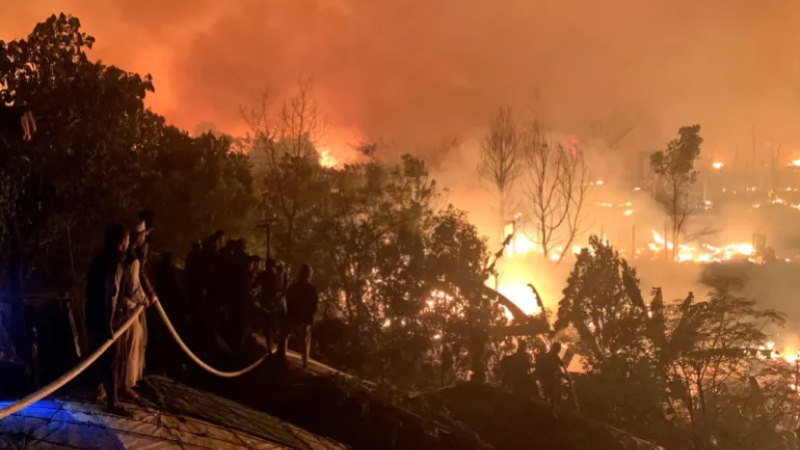
A devastating fire has left thousands of Rohingya refugees in Bangladesh without shelter as it ravaged a refugee camp, destroying hundreds of homes, according to officials.
The inferno swept through the densely populated complex of bamboo and tarpaulin shelters early in the day at a camp in the southeastern part of the country, revealed refugee commissioner Mizanur Rahman on Sunday. Suspicions of arson surround the incident, as Rahman stated.
Bangladesh has been a haven for hundreds of thousands of Rohingya, many of whom sought refuge there following a 2017 military crackdown on the predominantly Muslim minority in neighboring Myanmar. The events of that crackdown are currently under investigation by the United Nations for potential genocide.

Rahman disclosed, "At least 711 shelters were fully burned, and 63 were partially damaged," further noting that five education centers and two mosques were also obliterated, rendering 4,000 people homeless.
Despite the extensive property damage, no casualties were reported, and authorities have successfully brought the fire under control. Rahman announced, “We have ordered a probe into the fire. We suspect it is an act of arson.”
Shafiqul Islam, the head of the Ukhiya Fire Station, shared with The Associated Press that the fire erupted around midnight at the Kutupalong camp in Ukhiya and rapidly spread due to strong winds. He explained, “The fire was big, and it destroyed about 1,040 shelters in the camp. We took about two hours to get the blaze under control, engaging 10 fire units from Ukhiya and other stations in the district.”
Islam mentioned that although not confirmed, preliminary statements from refugees hinted that the fire might have been caused by a mud oven. The UN refugee agency reported that the "large fire damaged many refugee shelters" and assured that they are "supporting people affected."
BOB Post