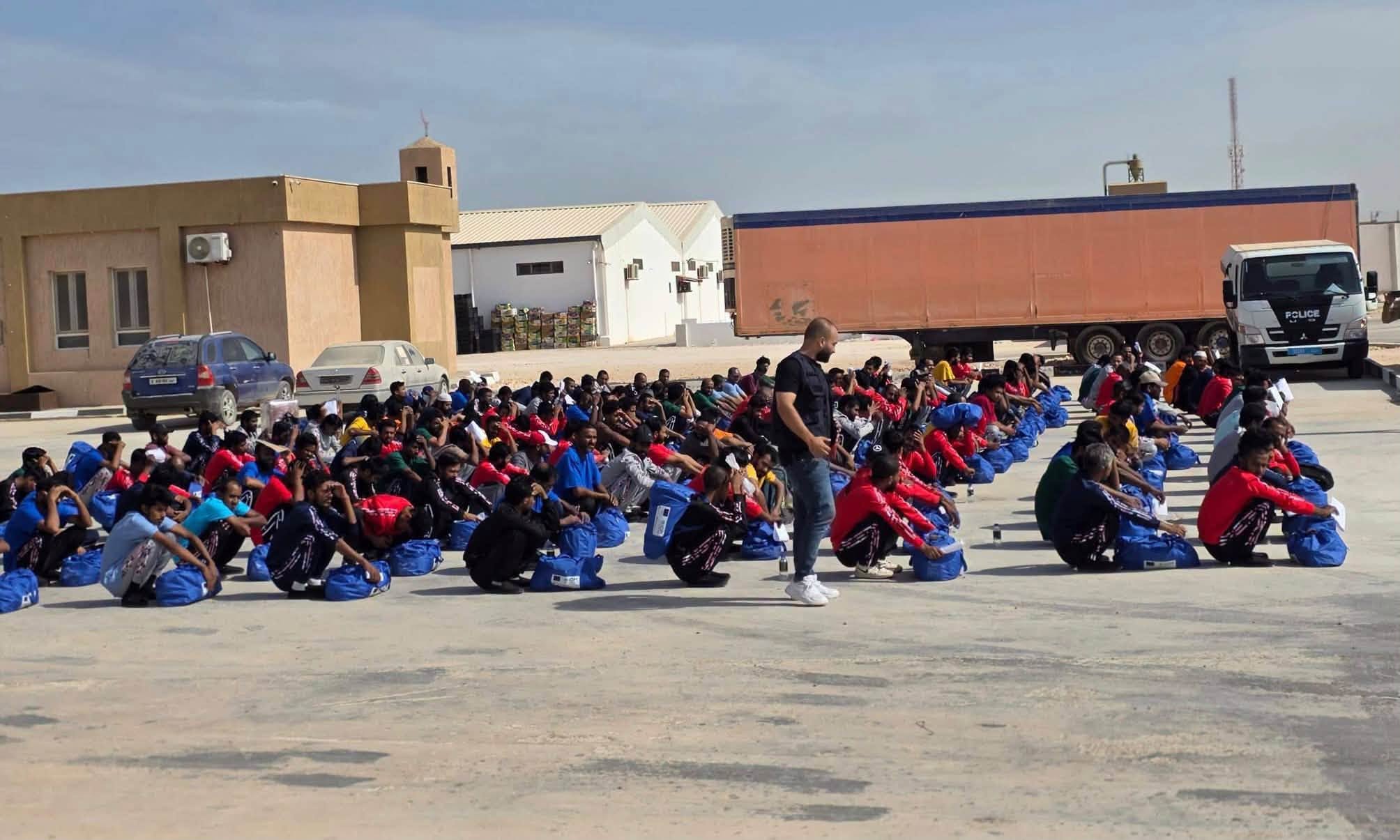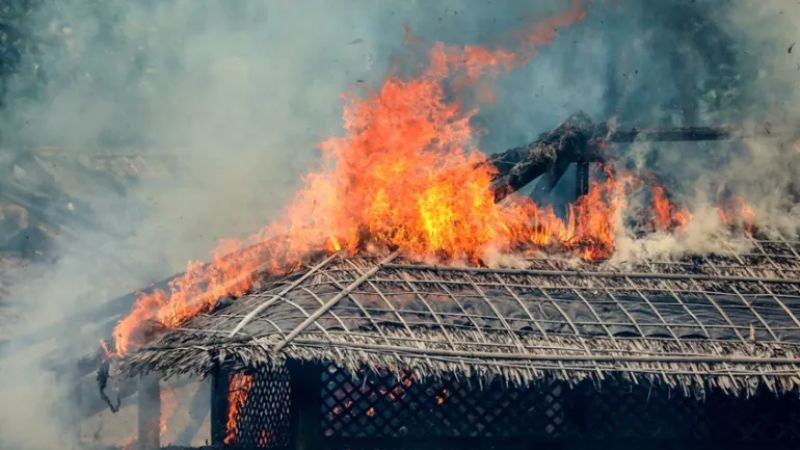
The Rohingya in Rakhine State, targeted by Myanmar military since 2017, are trapped in escalating violence with Arakan Army. Recent days have seen increased risk for Rohingya, with reports of large-scale fires in Buthidaung. Activists blame Arakan Army for arson, while AA denies and blames Myanmar military for air attacks. Rohingya face renewed danger and insecurity.
Nay San Lwin, co-founder of the Free Rohingya Coalition, told Al Jazeera, “As of now, people are still on the road looking for a safe place. There is no food or medicine at all. Most of them couldn’t carry their personal belongings.”
The predominantly Buddhist Rakhine people of the state is represented by the Arakan Army, an ethnic armed group with over 30,000 soldiers that aspires to autonomy for Arakan, the region's original name. The AA and the military had a truce until November of last year, but there have lately been fierce skirmishes.
Nay San Lwin alleges that the AA issued an ultimatum last week, demanding the Rohingya vacate Buthidaung by 10 a.m. on May 18, 2024. He claims the AA attacked key locations where the Rohingya had sought shelter, including a school and a hospital, resulting in numerous injuries and fatalities. “The entire town witnessed AA troops setting fire to their houses,” he said.
Since May 17, thousands of Rohingya have sought safety in central Buthidaung, occupying any available space, including houses, government buildings, a hospital, and schools. At least four different sources confirmed to Al Jazeera that fleeing Rohingya had been forced from their homes.
Due to internet and mobile phone network shutdowns in the state, Al Jazeera could not independently verify these claims. The Arakan Army denies involvement in the arson but announced over the weekend that it had taken control of Buthidaung. On May 19, AA Commander-In-Chief Twan Mrat Naing posted a warning on his X account, using the term “Bengali” which the Rohingya consider a slur. He accused the Rohingya diaspora of selfishly dragging the struggle in the wrong direction and condemned the notion of creating a separate Islamic safe zone.
On Monday, the United League of Arakan blamed the Myanmar military for the fires, condemning its “prolonged aerial attacks on Buthidaung” and stating that the SAC and its allies had destroyed the town.
Regardless of the perpetrator, human rights groups are alarmed, warning of another wave of ethnic and communal violence potentially worse than in 2017. That year, over 750,000 Rohingya fled to Bangladesh after the military launched brutal attacks on their villages. The United Nations has accused the military of committing crimes against humanity and genocide, now under investigation by the International Court of Justice.
Fortify Rights, a human rights organization, reports the situation in Rakhine is extremely tense. The AA and junta must refrain from harming civilians or targeting infrastructure, said Sai Arkar, a human rights associate at Fortify Rights. “Reports indicate thousands of Rohingya being trapped in rice fields at night, including children,” he added.
The Special Advisory Council to Myanmar (SAC-M), a group of former UN special rapporteurs, highlighted the urgency. Yanghee Lee, former UN special rapporteur on Myanmar and founder of SAC-M, said there are credible reports of Rohingya being targeted in attacks by the AA. She warned of the real risk of escalating violence and urged the UN Human Rights Council to take immediate action.
Satellite evidence corroborates local witness accounts. Nathan Russer, a geospatial analyst at the Australian Strategic Policy Institute (ASPI), told Al Jazeera that recent arson attacks were most likely carried out by the AA, targeting Rohingya settlements in Buthidaung.
Local Rohingya say military air attacks occurred on the afternoon of May 19, while the arson began later that evening. Nay San Lwin emphasized that the military had left the town three days earlier, adding credibility to the allegations against the AA.
Wai Wai Nu, director of the Women’s Peace Support Network, suspects the AA is behind the attacks. “My community on the ground tells me it feels like the end of the world and that it is worse than in 2017,” she said. The Rohingya have long lived under an “apartheid regime” enforced by the military, facing discriminatory laws and severe restrictions.
“They have nowhere to go,” Wai Wai Nu stressed.
Over the past 24 hours, Nay San Lwin has been trying to gather more details about the attacks despite the network blackout. “I spoke to six people yesterday, but the mobile network is extremely poor,” he said. “The Arakan Army troops suddenly came into the town, forced people to leave their homes, and set the town on fire. Almost the entire town has been burned to the ground.”
BOB Post