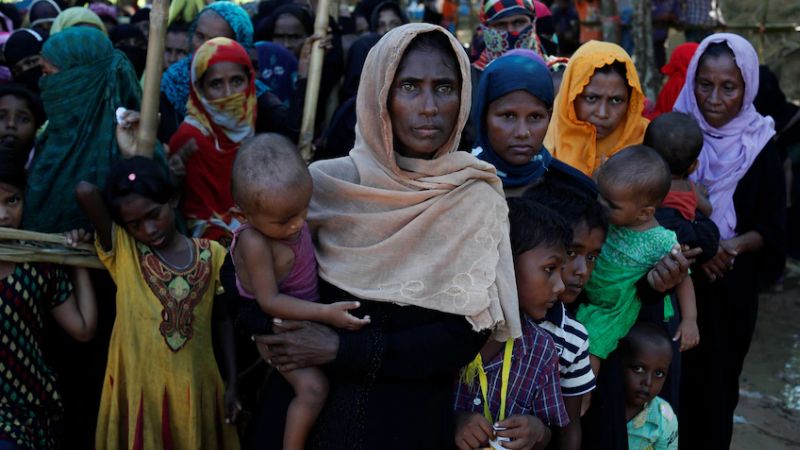
The surge in deadly attacks against the Rohingya community in Myanmar's Rakhine State since May 2024 mirrors the brutal violence of August 2017, when the military's crackdown forced thousands of Rohingyas to flee. Seven years later, the situation has worsened, with scenes of Rohingya families being killed or fleeing once again. This time, however, the violence is attributed to an ethnic armed group—the Arakan Army (AA)—as it seeks to control Rakhine State and topple military rule.
Since November 2023, the AA has intensified its efforts to gain control over the region, escalating violence in Rohingya-populated areas. On May 17, large-scale arson attacks in Buthidaung displaced thousands of Rohingyas. By August 5, another attack in Maungdaw, believed to be carried out by the AA, left several Rohingya civilians dead. While the AA denies targeting the Rohingyas, mounting evidence suggests otherwise.
Rohingya’s Stateless Plight
The Rohingya, a Muslim minority in Myanmar’s Rakhine State, have long been rendered stateless due to the country’s 1982 Citizenship Act, which denies them citizenship and basic rights. Perceived as "illegal immigrants" from Bangladesh, the Rohingya have faced systematic discrimination, including arrests, forced labor, and the seizure of property. Religious tensions between the primarily Muslim Rohingya and the predominantly Buddhist AA have further fueled the violence.
The Myanmar military has exploited these divisions, reportedly coercing Rohingyas into participating in anti-AA protests and retaliatory attacks. This has only deepened hostilities, and the future of the stateless community remains precarious.
Fleeing to Bangladesh Amid Political Unrest
As the Rohingya crisis escalates, nearly 8,000 refugees have fled to neighboring Bangladesh, where the nation is grappling with its own political turmoil. Following student-led protests in August, Bangladesh’s long-standing Hasina government resigned, and Nobel laureate Mohammed Yunus assumed leadership of an interim government.
Despite hosting nearly 1 million Rohingya refugees in 33 overcrowded camps, Bangladesh faces severe challenges, including food shortages, poor living conditions, and natural disasters. Fires and Cyclone Mocha in 2023 displaced over 12,000 people, while funding shortages have exacerbated insecurity within the camps.
Exploring Third-Country Resettlement
In a shift from previous policies, the Bangladeshi government is now exploring third-country resettlement options for the displaced Rohingya. Countries like the U.S., U.K., Canada, and Japan have been considered potential destinations. This change in approach comes as the international community, led by Yunus, steps up its support. In September, the U.S. pledged $199 million in aid for Rohingya refugees, while the EU allocated an additional $39 million to support humanitarian efforts in Bangladesh.
International Cooperation Key to Resolving Rohingya Crisis
Bangladesh continues to push for a long-term solution to the Rohingya crisis, advocating for increased international cooperation and equitable burden-sharing. At the 79th UN General Assembly, Yunus reiterated the need for international support and urged the Myanmar government and ethnic groups to adhere to humanitarian laws. Bangladesh is also engaging with ASEAN and regional partners to address the root causes of the crisis, seeking a comprehensive solution that ensures the safe return of the Rohingya to their homeland.
As violence persists, the fate of the Rohingya people remains uncertain, with international intervention becoming increasingly urgent to end the cycle of violence and displacement.
BOB Post