




In a devastating drone attack on Rohingya refugees attempting to flee Myanmar, dozens of people, including families with children, were killed, according to multiple witnesses. Survivors were seen sifting through piles of bodies, trying to identify their deceased and injured relatives.
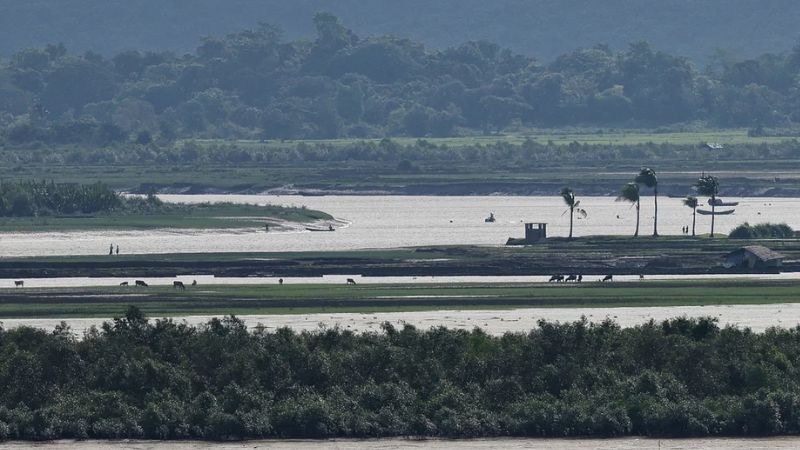
The attack took place on Monday as families gathered near the border, hoping to cross into Bangladesh. Witnesses, activists, and a diplomat reported that drones targeted the group, marking the deadliest known assault on civilians in Rakhine state amid the ongoing conflict between Myanmar's military and rebel forces.
Among the victims were a heavily pregnant woman and her 2-year-old daughter. Witnesses allege that the Arakan Army, a rebel group, was responsible for the attack, although the group denies these claims, pointing fingers at the Myanmar military instead. Reuters has not been able to independently verify the number of casualties or determine responsibility for the attack.
Footage shared on social media showed the horrific aftermath, with bodies scattered across the muddy terrain, surrounded by personal belongings. Survivors estimate that over 200 people were killed, while a witness reported seeing at least 70 bodies.
One survivor, 35-year-old Mohammed Eleyas, recounted the harrowing experience from a refugee camp in Bangladesh. He described how his pregnant wife and young daughter were critically injured in the drone strike and later succumbed to their wounds. "I heard the deafening sound of shelling multiple times,” Eleyas said, adding that when he got up from the ground, he saw many of his relatives dead.
Another survivor, 28-year-old Shamsuddin, managed to escape with his wife and newborn son. Speaking from another refugee camp, he recalled the aftermath of the attack, where "some people were shouting out from the pain of their injuries."
In addition to the drone attack, boats carrying fleeing Rohingya sank in the Naf River, which separates Myanmar and Bangladesh, leading to more fatalities. Medecins Sans Frontieres reported treating 39 people who had crossed into Bangladesh with injuries from the violence, including mortar and gunshot wounds.
The United Nations High Commission for Refugees acknowledged reports of refugee deaths from boat capsizes and civilian casualties in Maungdaw but could not confirm the exact numbers.
The Rohingya, a predominantly Muslim minority in Myanmar, have long faced persecution in the Buddhist-majority country. Over 730,000 Rohingya fled Myanmar in 2017 following a military crackdown that the United Nations described as genocidal. Recently, the situation has worsened, with increased fighting between the Arakan Army and Myanmar's military.
Western diplomats and activist groups have condemned the recent attacks. Canada’s ambassador to the United Nations, Bob Rae, confirmed the reports of hundreds of Rohingya casualties on the Bangladesh-Myanmar border, calling them "accurate."
The Myanmar junta and the Arakan Army continue to blame each other for the attack. The Arakan Army claimed that the junta targeted Muslims attempting to flee, while the military accused the rebel group of being responsible.
Despite the chaos, Eleyas managed to find a boat around midnight and crossed into Bangladesh, although his wife and daughter did not survive the journey.
BOB Post