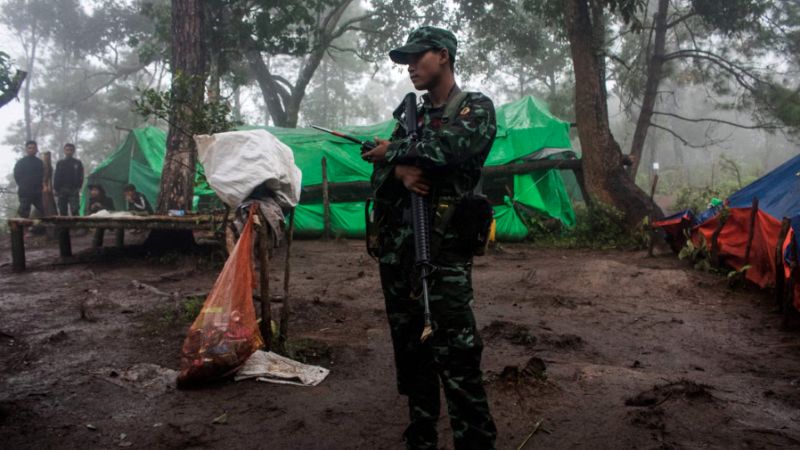
A new chapter is unfolding in the Rohingya crisis as thousands of refugees in Cox’s Bazar are reportedly taking up arms, abandoning hopes for a diplomatic solution and instead preparing to fight their way back to their homeland in Myanmar.
After years of displacement and deteriorating conditions in the camps, many Rohingya have concluded that international negotiations and diplomatic appeals have failed them. With little progress on repatriation and worsening safety in the overcrowded camps, armed resistance is increasingly seen as the only viable path forward.
According to a report by The Independent, young men like 25-year-old Mohammad Ayas, who fled Myanmar during the brutal military crackdown in 2017, are now undergoing military training in the jungles of Myanmar. “We are ready,” Ayas said. “I am ready to die for my people. I don’t care what happens to me in this fight to reclaim our motherland, our rights, and our freedom in Myanmar.”
Estimates suggest that between 3,000 to 5,000 Rohingya have already been recruited into armed groups, often through a mix of ideological motivation, promises of protection, and in some cases, coercion. An internal briefing by humanitarian agencies revealed that recruitment efforts are using “ideological, nationalist, and financial inducements, coupled with false promises, threats, and coercion.”
These developments have alarmed aid organizations and Bangladeshi authorities, who are grappling with rising insecurity in the camps. Violence, extortion, and targeted killings have escalated, straining humanitarian operations and endangering the broader refugee population.
“Camp violence is at its worst since the crisis began in 2017,” said John Quinley, Director at human rights group Fortify Rights. “The presence of armed actors, often with competing interests, is destabilizing the fragile environment inside the camps.”
The armed Rohingya groups are not only preparing to fight the Myanmar military but are also entering a complicated battlefield involving ethnic militias like the Arakan Army. These overlapping alliances and conflicts risk entrenching the instability in Rakhine State and complicate any future political solution.
For many Rohingya, however, the time for negotiations is over.
“There is no more hope left in diplomacy,” said a refugee involved in recruitment activities who wished to remain anonymous. “We've waited for years in these camps while the world did nothing. Now we will take back what is ours.”
As the international community continues to call for dialogue and peaceful repatriation, the reality on the ground is shifting rapidly. The growing militarization among Rohingya refugees marks a dramatic turning point—one driven by despair, anger, and a fading belief in global promises.
With tensions mounting and the potential for a wider regional conflict growing, the stakes for finding a sustainable resolution to the Rohingya crisis have never been higher.
BOB Post