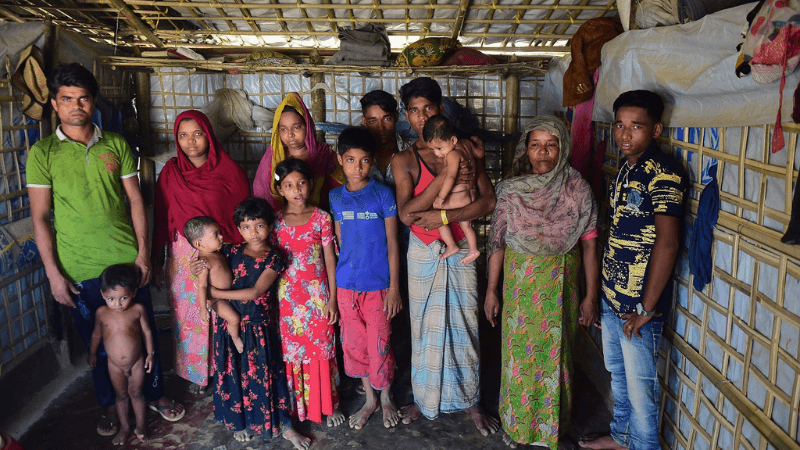
A considerable number of Rohingyas have sought sanctuary in rented accommodations across Cox's Bazar Sadar, Teknaf, and Ukhiya, marking a distinctive shift in their settlement patterns. Notably, affluent individuals among the Rohingya community, particularly those with overseas connections, have opted for these rented residences. Despite periodic crackdowns by authorities, a substantial Rohingya populace persists in these dwellings.
Law enforcement authorities acknowledge the existence of Rohingyas possessing national identity cards (NIDs), limiting the efficacy of policing efforts in addressing the issue effectively.
Numerous Rohingya families have taken up residence in rented houses scattered across Balukhali, Thaingkhali, Palongkhali, and Kutupalong localities in Ukhiya Sadar. Many have reportedly acquired NIDs through illicit means, with some even procuring passports, thereby establishing themselves as residents of Cox's Bazar with the aid of intermediaries.
Police reports indicate a surge in criminal activities perpetrated by Rohingyas dwelling in rented accommodations, exacerbating law and order challenges. Notably, armed criminal factions operating within the camps exhibit a vested interest in dissuading Rohingyas from contemplating repatriation.
Consequently, discussions surrounding repatriation often coincide with escalations in violent incidents and terrorist acts within the camps. Between August 25, 2017, and December 2023, Ukhiya camp alone witnessed over 150 instances of homicide, alongside numerous abductions. Perpetrators primarily target camp leaders, compelling many Rohingya leaders to seek refuge in rented residences for their safety.
Syed Mohammad Anwar, President of the Ukhiya Press Club, sheds light on the Rohingyas' involvement in drug trade and hundi operations, enabling them to exert influence locally while engaging in criminal enterprises.
However, Rohingya leaders, preferring anonymity, attribute the prevailing circumstances to the activities of the Arakan Rohingya Salvation Army (ARSA), which exercises control over the camps during nighttime hours, prompting camp leaders to relocate to urban areas out of security concerns.
Local officials express apprehensions regarding the escalating abduction incidents, urging bolstered police presence in Ukhiya and Teknaf to curb criminal activities effectively.
In Cox's Bazar, District Superintendent of Police Mohammad Mahfuzul Islam issues warnings to property owners housing Rohingyas, citing concerns over illicit activities and lawlessness. Refugee Relief and Repatriation Commissioner Mohammed Mizanur Rahman echoes these sentiments, emphasizing the need to address the issue and uphold legal norms. Dhaka University professor Shantanu Majumdar calls for international intervention to ensure the safety and rights of Rohingyas before repatriation. The Rohingya population in Bangladesh has surpassed 1.2 million, with over 725,000 seeking refuge in 2017 alone, according to UN data.
BOB Post