The human trafficking of Rohingya refugees is escalating at an alarming pace, with fresh evidence implicating the Arakan Army (AA) and other armed actors in orchestrating exploitative smuggling networks stretching from the refugee camps in Bangladesh to conflict zones in Myanmar.
Sources across both countries reveal a complex, well-structured operation preying on the despair of Rohingya families trapped between persecution and poverty. With conditions in the camps and in Rakhine State continuing to deteriorate, thousands are turning to traffickers as a last resort—often at the cost of their lives, freedom, or family safety.
Rights activists and community leaders in Cox’s Bazar say the long-standing denial of fundamental rights—such as the right to work, move freely, or access education—has left the Rohingya with no viable future.
“The youth see no future. Families are pushed to risk everything—selling land, livestock, even taking loans—just for a chance to escape,” said a local leader from Camp-7.
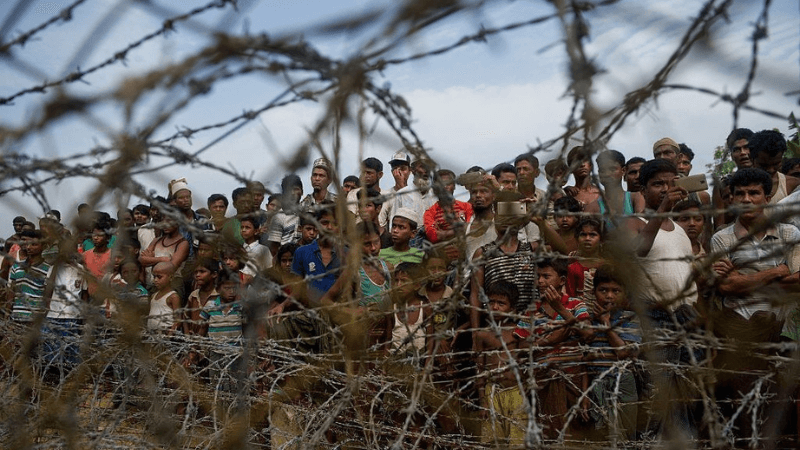
Since the 2017 mass exodus, over a million Rohingya have lived in limbo. The lack of durable solutions has only heightened their vulnerability to trafficking rings that promise safe passage to countries like Thailand, Malaysia, or Indonesia.
In Buthidaung and Maungdaw townships, residents describe a two-front oppression—military scrutiny on one side and Arakan Army abuses on the other. Reports include forced labor, extortion, and disappearances allegedly linked to AA operatives. Families say they are forced into debt to pay smugglers, with fees starting from 3 lakh kyat and rising up to 17 lakh for full transit to Southeast Asia.
“These are not isolated cases. This is a network—well-structured and protected,” said one Rohingya activist with direct knowledge of the trafficking corridors.
A key figure, Mawlawi Maung Saud, has been named in multiple testimonies as a broker moving people from Maungdaw to Pauktaw—an AA stronghold. Coordination is also reportedly occurring with People’s Defence Forces (PDFs) and local militias to bypass checkpoints.
Trafficking doesn’t stop at Rakhine’s borders. Victims report being moved to Yangon through organized channels that involve bribery and state complicity. Neighborhoods like Mingaladon, Thaketa, and Thingangyun are emerging as trafficking hotspots, where illegal migration is quietly tolerated by corrupt officials.
The crisis is spilling back into the camps. In one recent case, a young man named Abdur Rahamat was trafficked from Camp-5 in Cox’s Bazar all the way to Rathedaung Township in Myanmar. Human rights groups confirm that dozens of similar incidents have occurred across multiple camps in recent months, revealing a dangerous erosion of camp security and governance.
Rohingya community leaders and international advocates are demanding a robust investigation into the Arakan Army’s involvement in cross-border trafficking. Many warn that if left unchecked, the AA's growing power could trigger deeper instability in both Rakhine State and the refugee camps, feeding cycles of social unrest, insecurity, and radicalization.
The Urgent Need for Protection
There are growing calls for immediate international intervention to:
Investigate armed group involvement in trafficking.
Establish safe and legal migration pathways.
Strengthen protection mechanisms in camps and conflict zones.
As the trafficking crisis deepens, many fear that without accountability, the future for Rohingya communities on both sides of the border will become even more perilous.
“This is not just a human trafficking crisis—it’s a crisis of protection, of failed promises, and of armed exploitation,” said a leading rights worker in Cox’s Bazar. “The world cannot look away any longer.”
BOB Post