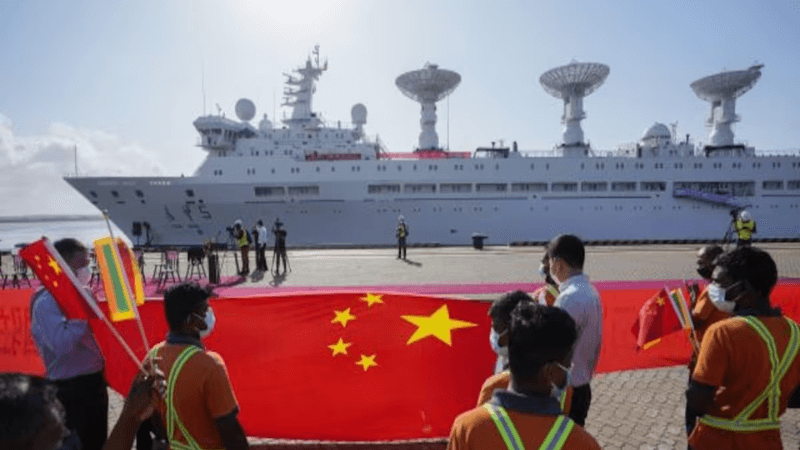
Sri Lanka has imposed a one-year ban on Chinese research vessels entering its ports or operating within its Exclusive Economic Zone (EEZ). This decision, notified to India last week, marks a potential shift in Sri Lanka's strategic alignment amidst intensifying regional competition.
The ban comes close on the heels of a meeting between Prime Minister Narendra Modi and President Ranil Wickremesinghe in July 2023, during which Modi urged Sri Lanka to respect Indian strategic and security concerns. This move signals a notable departure from Sri Lanka's previous stance on Chinese research vessels operating in its waters. While the Sri Lankan government has not officially stated the reasons behind the ban, several factors are believed to have influenced this decision.
New Delhi has long expressed apprehensions about Chinese research vessels conducting dual-use activities, potentially gathering maritime data for military purposes, within the Indian Ocean. The ban aligns with India's security interests and its efforts to counterbalance China's influence in the region.
The United States has consistently voiced similar concerns about China's maritime activities and has urged regional partners to limit cooperation with China on sensitive projects. Sri Lanka's decision aligns with the broader international context of countering China's assertiveness.
Some Sri Lankan security experts and politicians have raised concerns about China's growing influence in the country. There have been calls for a rebalancing of strategic partnerships to safeguard Sri Lanka's national interests.
China has not officially commented on the ban, but it is likely to view the move negatively. Beijing has previously criticized what it perceives as "Cold War-era" thinking and attempts to contain its rise. The ban poses potential challenges to China's maritime activities in the Indian Ocean.
The one-year ban could have several implications for Sri Lanka's geopolitical landscape. The decision might temporarily strain relations between Colombo and Beijing, which have been warming in recent years due to extensive Chinese investments in Sri Lankan infrastructure projects. The ban could signal a renewed closeness between Sri Lanka and India, its traditional strategic partner. Strengthening ties with India could serve Sri Lanka's security and economic interests. The ban could impact Sri Lanka's economic ties with China, as Chinese research vessels often contribute to revenue through port fees and supplies. The economic implications will be closely monitored.
The one-year ban is viewed as a temporary measure, allowing Sri Lanka to navigate the complex geostrategic landscape without jeopardizing its relationships with key partners. It remains to be seen whether the ban will be extended or if Sri Lanka will develop long-term policies regarding Chinese research vessels in its waters.
BOB Post