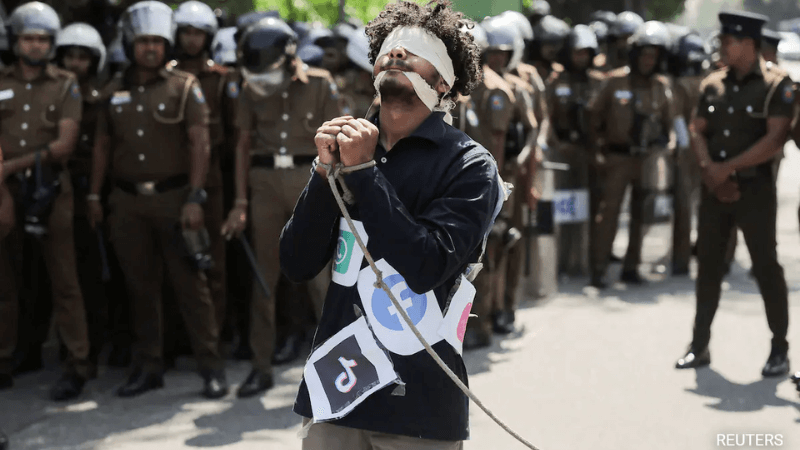
Sri Lanka's parliament has overwhelmingly approved the Online Safety bill. Criticized for its potential to stifle speech, especially in an election year and amidst an ongoing economic crisis, the legislation grants the government significant powers to regulate online content, leading to fears of increased censorship and a crackdown on dissent. The Online Safety bill enables the government to establish a commission with broad powers, including the authority to order the removal of online posts deemed "prohibited statements." These statements are broadly defined to include content causing annoyance, inconvenience, harassment, threat, damage, or loss to any person, as well as material promoting extremism or terrorism or violating public morals. Users who publish such content may face legal consequences, including imprisonment and fines.
The government, led by President Ranil Wickremesinghe, argues that the bill is crucial to address concerns related to online fraud, abuse, and false statements that pose threats to national security and stability. The bill comes in the wake of over 8,000 complaints filed last year related to online crimes, including sexual abuse, financial scams, cyber harassment, and data theft.
Opposition lawmakers, media organizations, and civil rights groups have strongly criticized the bill, labeling it as creating a highly oppressive environment. Organizations such as Human Rights Watch and the Asia Internet Coalition, representing major tech companies like Apple, Amazon, Google, and Yahoo, have expressed concerns about the legislation's potential impact on freedom of expression and foreign direct investment in Sri Lanka's digital economy. Critics, including Kalum Shivantha, the secretary of the Sri Lanka Professional Web Journalists Association, argue that the bill could severely impact journalism, leading to self-censorship and potential shutdowns of news websites. The lack of clarity in the bill's language and the absence of independent oversight in the content removal process raise worries about arbitrary decisions and government overreach.
The passing of the Online Safety bill has brought Sri Lanka into the international spotlight, with the United Nations Human Rights Office urging the government to reconsider the legislation. As the country grapples with its worst economic crisis and prepares for a presidential election later this year, the balance between addressing online abuses and safeguarding democratic values remains a critical concern.
BOB Post