Just before former Bangladeshi Prime Minister Sheikh Hasina fled the country due to a student-led uprising, Mohammad Sabur and his family were escaping the civil war in neighboring Myanmar.
Amid intense clashes between rebels and government forces, Sabur's Rohingya family attempted to cross a river towards the relative safety of Bangladesh. Tragically, all five of Sabur’s children drowned when their boat capsized, the youngest just three and a half years old.
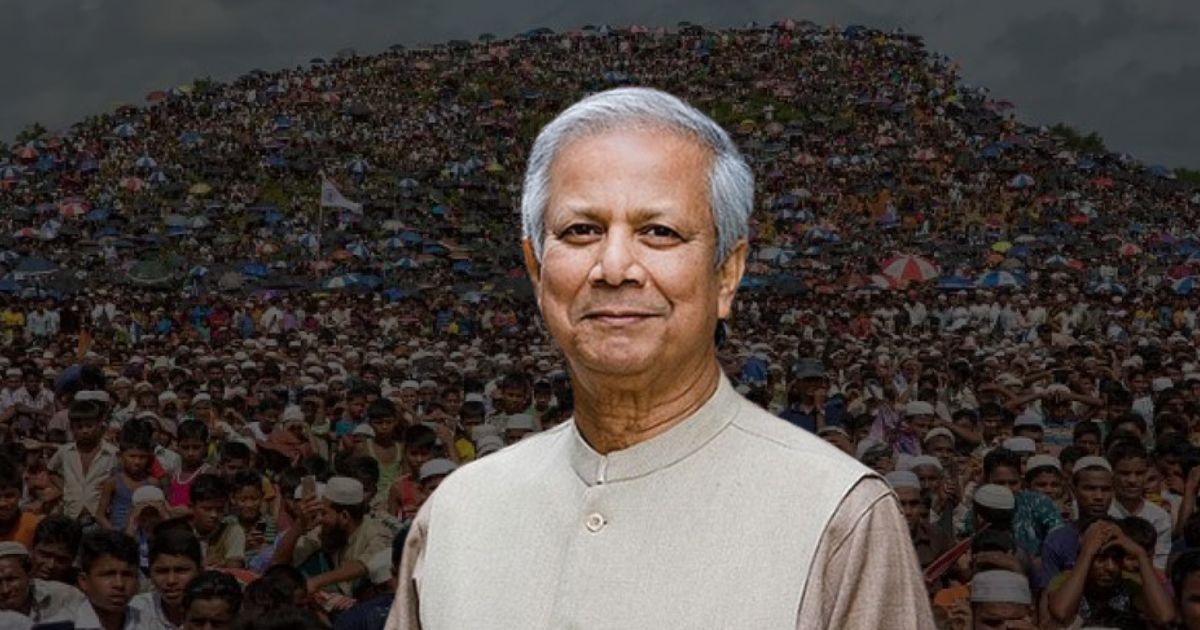
Now, weeks later, a grieving Sabur and his wife are sheltering under a blue tarpaulin tent in Cox’s Bazar, the world’s largest refugee camp. Approximately 1.3 million Rohingya live here in constant uncertainty as stateless people who fled Myanmar, where the United Nations has documented "a textbook case" of ethnic cleansing and genocide.
However, dramatic events in Bangladesh, which saw Nobel Prize-winning economist Muhammad Yunus assume leadership of a caretaker government, removing the Rohingya-hostile Hasina, have sparked renewed hope for a resolution to the refugee crisis.
Sabur, a former NGO worker, is aware of Yunus' groundbreaking work with microcredit loans for the poor.
“I know how renowned Dr. Yunus is and how his initiatives have alleviated poverty,” the 42-year-old told Nikkei Asia. “He’s also known for his humanitarian efforts. I hope that under his government, our rights in the camp will be safeguarded.”
Yunus faces the formidable task of leading a nation in the throes of political turmoil and economic instability. Whether he can revive stalled efforts to resolve the Rohingya crisis remains to be seen. Last week, Yunus assured diplomats and U.N. officials that his interim government "will continue to support" Rohingya refugees in Bangladesh.
“For all the praise Hasina received for managing Bangladesh's complex and sensitive Rohingya refugee issue, her administration had long aimed to repatriate many refugees to a country where their safety was not guaranteed,” said Michael Kugelman, director of the South Asia Institute at the Wilson Center in Washington. "I suspect the interim government will halt repatriation plans for now and seek to develop a different approach."

In Myanmar, the predominantly Buddhist nation does not recognize the mostly Muslim Rohingya as an indigenous group, labeling them "Bengalis" and effectively rendering them stateless.
Refugee Mohammad Nur, 24, is hopeful about the changes unfolding in his adopted country.
"I aspire to be a doctor and need the chance to study medicine," said Nur, who arrived at the camp in 2017 and didn't complete high school. "I appeal to the new Bangladeshi government to provide us with educational opportunities so we can secure meaningful employment."
Last Sunday, tens of thousands in the camps commemorated the seventh "Rohingya Genocide Day," with large crowds gathering in a field, chanting slogans like "we want rights" and "ensure our dignified return to Myanmar."
The event recalls one of the most significant refugee crises in history when approximately 750,000 Rohingya fled across the Myanmar-Bangladesh border in 2017, escaping rape, beatings, and extrajudicial killings by Myanmar’s military. It marked the largest Rohingya exodus since the mass departure that began decades earlier.
Despite signing an agreement to begin repatriating Rohingya, Myanmar has yet to create favorable conditions for their return, despite repeated assurances.
The events that forced Sabur and his family to flee this month, and the tragic loss of his children, were precipitated by renewed violence in Rakhine State on the Bangladesh border.
Arakan Army rebels, fighting Myanmar’s military junta that seized power in a 2021 coup, had been advancing on the government-held border town of Maungdaw, bombarding the area with heavy artillery.
As the conflict neared Sabur’s home in Maungdaw, he knew they had to flee immediately or face death.

“The Arakan Army was attacking us with drones and rocket launchers while we were waiting by the river,” he said. “Our boats capsized during our desperate escape.”
The very next day, Hasina's government fell. Her departure led to many Bangladeshi border guards, who had been redeployed to suppress protests in Dhaka and other cities, going into hiding.
This left the border unprotected and vulnerable. Since early August, over 2,000 additional Rohingya have crossed into Bangladesh from Myanmar.
A local border commander, who returned to his post after several days in hiding, confirmed to Nikkei the significant rise in refugee arrivals and the efforts to prevent further crossings.
“We’ve detained at least two dozen new Rohingya refugees today,” said the official, who requested anonymity.
Unverified reports indicate that at least 200 people, mostly Rohingya, have been killed in the recent fighting, making it one of the deadliest assaults on civilians in Myanmar’s ongoing civil war.
On Friday, U.N. Human Rights Chief Volker Turk voiced concern over the worsening situation in Myanmar, highlighting the rising death toll and the thousands fleeing a major offensive by the Arakan Army, including the battle that Sabur’s family was escaping.
Amnesty International warned that the violence against the Rohingya in Rakhine State "bears a disturbing resemblance to the atrocities committed in 2017."
With Yunus now in power, his global recognition could help galvanize the international community to exert greater diplomatic and economic pressure on Myanmar to end the civil war and find a permanent solution for Rohingya refugees, suggested Shahab Enam Khan, a professor of international relations at Dhaka's Jahangirnagar University.
“The Western powers, along with China and Japan as key Eastern influencers, have considerable confidence in Dr. Yunus,” Khan told Nikkei. "So, Yunus’ potential to influence global powers is expected to play a significant role in advancing the Rohingya repatriation process," he added.
At the sprawling camp, 55-year-old Zahed Hossain clings to hope that he will one day return to his village in Rakhine State.
"My heart aches for my home," he said. "I appeal to [Yunus] to ensure our safe return to Myanmar."
BOB Post